

Twenty kilometers north of Gulu City, Panykworo Primary School serves as a critical educational hub for over 1,200 learners, standing as the sole primary institution within a six-kilometer radius. However, for young girls traversing these long distances daily, the barrier to educational retention extends far beyond geographic constraints. In a socio-cultural landscape where patriarchal norms frequently devalue female education as a “wastage of resources” and stigmatize menstruation as a period of “unworthiness and dirt,” the onset of puberty triggers a distinct protection and drop-out crisis. Lacking institutional and family support structures, managing a natural biological process becomes a compounding vulnerability, forcing girls to choose between chronic absenteeism, severe academic underperformance, or early school dropout.
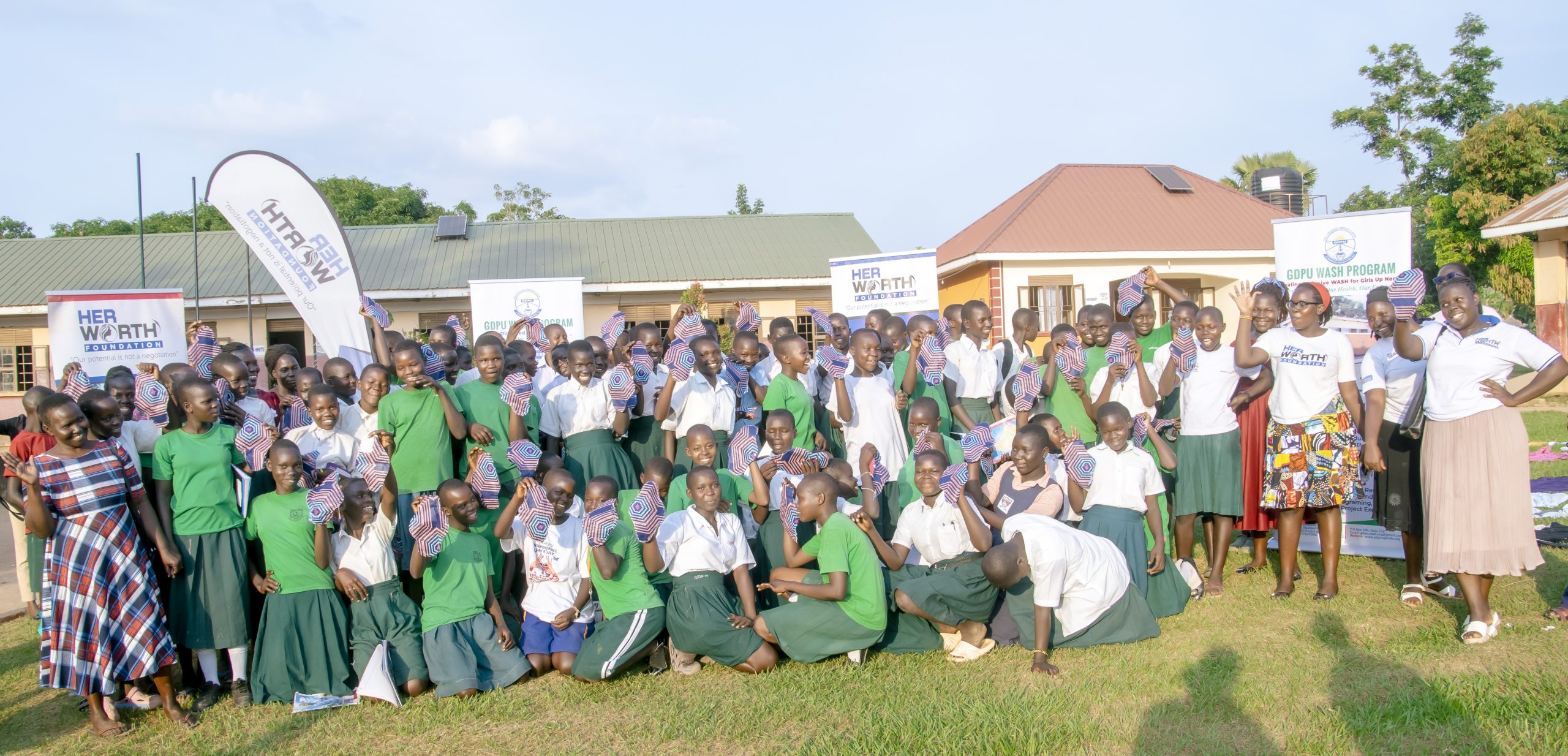
Stitch by Stitch, Breaking Barriers: Proud pupils at Panykworo Primary School celebrate completing their practical pad-making training alongside the GDPU and Her Worth Foundation teams.
Our baseline data reveals that last year alone, 19 girls dropped out of Panykworo Primary School due directly to menstrual-related poverty. In the absence of menstrual hygiene management (MHM) commodities, many of these young girls migrated from their primary households to cohabit with older men effectively trading their bodily autonomy and academic futures for basic sanitary supplies, only to find themselves ensnared in early pregnancies and cycles of gender-based violence (GBV). The school’s deputy headteacher, Madam Acayo Evelyn, noted that “while previous humanitarian actors had implemented MHM awareness initiatives, these interventions remained strictly theoretical. This lack of practical, skills-based capacity building left a critical knowledge gap, resulting in girls routinely missing between four to eight vital instructional days every single month”.

Allies in the Making: Dr. Anna Oyat conducts a joint life-skills session, challenging young boys to dismantle menstrual stigma and become active support systems for their female peers.
The coping mechanisms adopted by these learners under acute resource scarcity underscore a severe public health and protection gap. Akello Lucky Jenneth, a Primary 5 pupil, highlighted the intersection of economic deprivation, physical distress, and improvised sanitation, explaining that “girls frequently resort to cutting up foam mattresses to use as makeshift pads. Because these materials fail to dry rapidly after washing, she is forced into systemic isolation”, staying home during the drying process without any alternative sanitary protection. Jenneth’s own older sister succumbed to this exact vulnerability last year, entering a violent, premature marriage after a predatory perpetrator exploited her family’s denial of basic hygiene materials a cycle Jenneth is now determined to break.
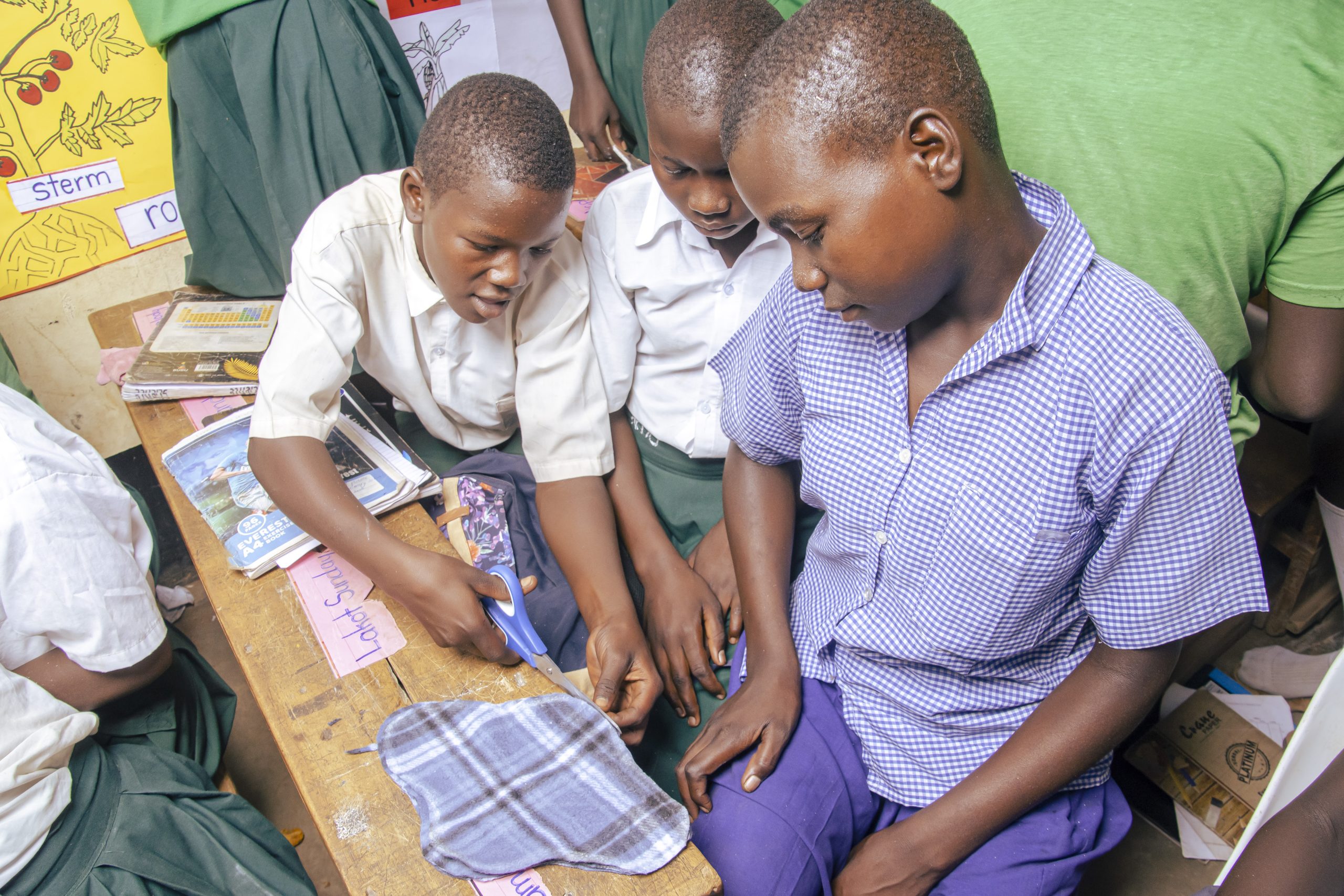
Precision and Agency: Armed with the correct measurements, girls carefully cut their fabric at Panykworo Primary School before stitching their own handmade, reusable sanitary pads.
In direct response to this systemic crisis, our team at the Gulu Disabled Persons Union (GDPU), under our Water, Sanitation, and Hygiene (WASH) program, partnered with the Her Worth Foundation and with support from The Advocacy Project, we executed a targeted, evidence-based MHM intervention at Panykworo. Grounded in insights from our previous cycle’s pilot studies which identified male peers as the primary drivers of school-based stigma and harassment, we pioneered an inclusive approach by engaging boys and girls together in initial life-skills sessions. By deliberately targeting young men with specialized sensitization training, the training successfully converted potential institutional barriers into active support systems, shifting peer dynamics from stigmatization to active allyship.

Laying the Foundation: An instructor introduces girlchild learners to the various shapes and sizes of reusable pads, ensuring they understand the specifications before beginning production.
Following this collective sensitization, the cohort was stratified to provide the girls with intensive, hands-on technical capacity building. Deviating from passive pedagogical lectures, the practical sessions equipped the learners with sustainable tailoring skills to fabricate their own reusable sanitary pads using cost-effective, durable fabrics easily procured from local village markets. This strategic focus on localized supply chains ensures long-term community ownership and project sustainability. Empowered with tangible production skills, Jenneth committed herself to peer-to-peer training, transforming her personal experience into community-led advocacy designed to sustain female retention in school.
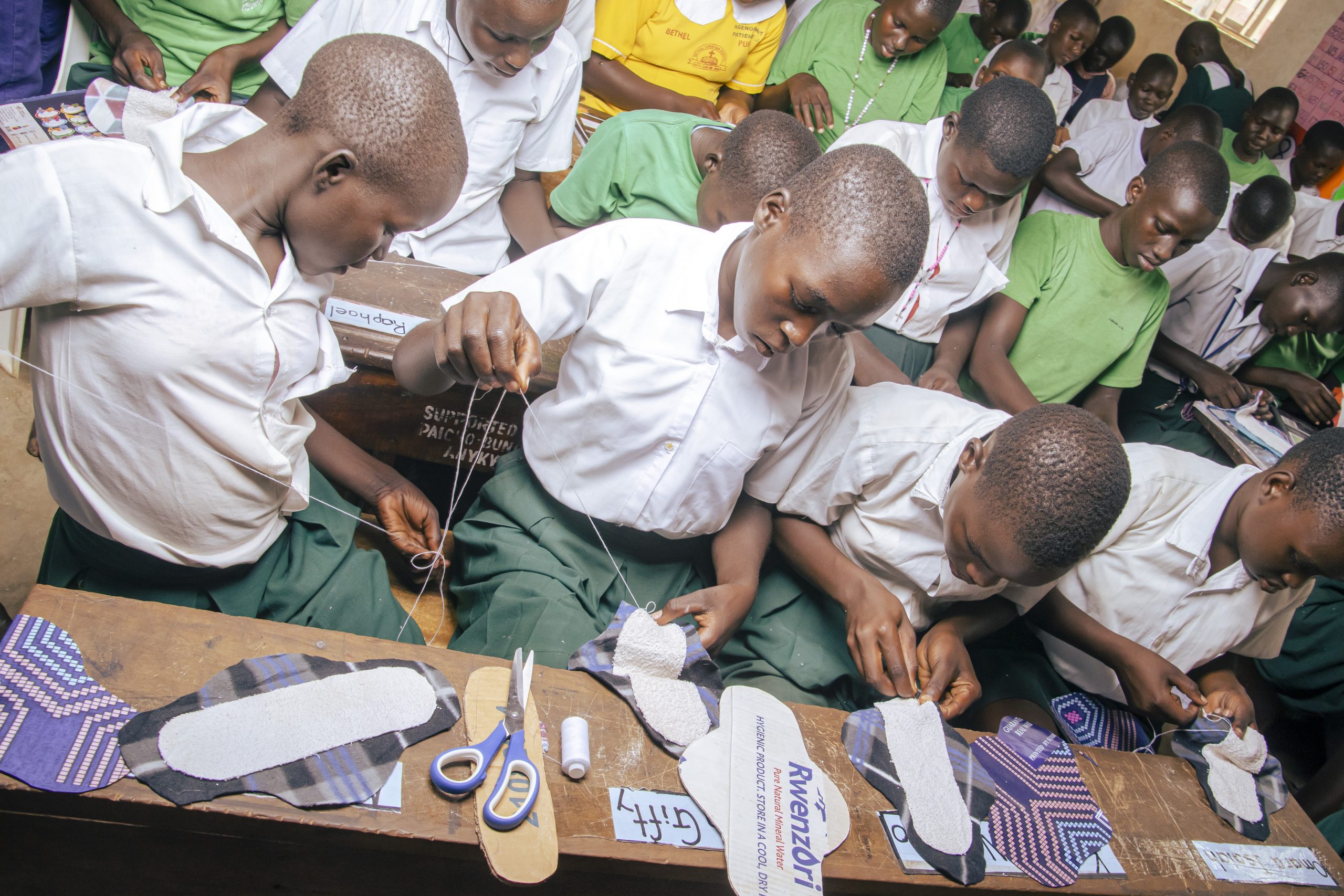
Stitch by Stitch, Step by Step: Panykworo learners carefully sew their own reusable sanitary pads, crafting a sustainable future and bringing their community one step closer to ending menstrual poverty.
Ultimately, when the reproductive health needs of adolescent girls are neglected, systemic protection failures inevitably follow. Denying a girl basic MHM materials is not merely a sanitation omission; it is an active institutional barrier that drives educational exclusion and heightens vulnerability to exploitation. A fragmented piece of foam mattress must never dictate the boundary line between an adolescent girl’s educational attainment and her socioeconomic vulnerability. By converting schoolboys into allies and putting the tangible power of self-reliance into the hands of these young women, we are rewriting the narrative in Gulu District. We are proving that a girl’s period is not a “mark of unworthiness”, it is a natural cycle in her life, not a taboo. The cycle of poverty is heavy, but as Panykworo Primary School is proving, the thread of resilience is infinitely stronger.
Posted By OKWIR JOSEPH JOHNS
Posted Jun 22nd, 2026
6 Comments
Auma Zillah Fortunate
June 22, 2026
Well done to GDPU and Her Worth Foundation. Being part of this activity was both inspiring and rewarding. The enthusiasm, curiosity and active participation of the pupils showed how important menstrual awareness is in our schools. I am proud to contribute to GDPU’s mission of empowering communities through knowledge, practical skills and inclusive development. Every informed pupil is a step toward a healthier and more confident generation.
Anna Kate Connors
June 23, 2026
This article is amazing at demonstrating not only the direct effects of a lack of reproductive care for women, but also the broader impacts on society and further stigmatization. It is clear to see that the work that has been done to provide more menstrual materials and to provide a greater education to girls and boys has had a positive impact and will continue to do so. Well done!
Emma Badach
June 23, 2026
What a great approach to tackle this issue, well done Joe!
AHAM GENEVIVE NANTONGO
June 24, 2026
Indeed a girl’s period is not a “Mark of unworthiness”
Thank you for raising this important Topic. No girl should miss school because of something so NATURAL. And special thanks GDPU for equipping Girl-child with the skill to sew their own reusable sanitary pads.
Acaham Genevieve
June 24, 2026
Indeed a girl’s period is not a “Mark of unworthiness”. No girl should miss or drop out of school because of something so Natural .
Special thanks to HER WORTH and GDPU for equipping girls with skills to sew their own reusable sanitary pads.
Iain Guest
July 2, 2026
Excellent blog, Joe – well-written, full of important facts, and very nice insights. You really capture the mood of these trainings. I must say, however, that its very alarming to hear that 19 girls dropped out and in some cases went off to live with men who were much older than they were. Now that you know who the girls were can you meet with them and persuade them to return home and go back to school? It’s also shocking to read that before this training girls used to cut up foam mattress to serve as a substitute for sanitary pads. This is such important work….