

The streets, empty just a week ago, have resumed their normal activity. Shops are open, traffic is thick, the music of the city has commenced again at once. “It’s kind of like nothing happened,” Niraj said to me. I felt it, too — a sense of normalcy seems to have returned almost as quickly as it left. It’s a misleading feeling and a privilege enjoyed only by outsiders like me and those who were less affected.
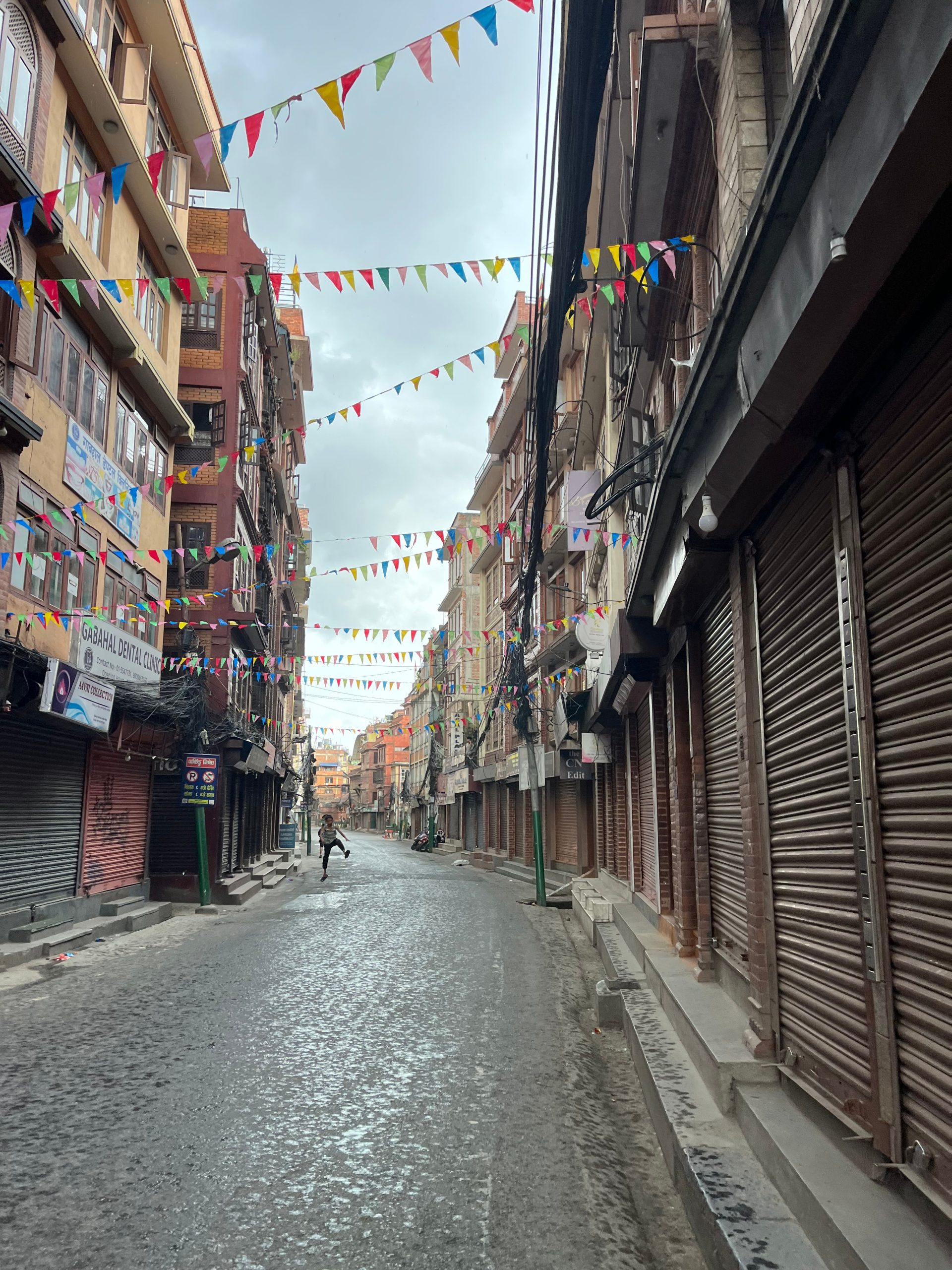
An empty street in Patan Friday 12 September
But even for as normal as it sometimes feels to me, there are reminders that it is not. I walked home from a meeting with Ram and Niraj at Coffee Talk last Sunday, taking the long way down Tanka Prasad Ghumti Sadak. I passed by Singha Durbar, the gate only part way open and security forces guarding the entrance. But even with a partial view I could still see the damage. I stopped at the Supreme Court, joining others who were peering through the fence at blackened walls and broken windows. Car skeletons were piled up in the parking lot next to tents propped up as makeshift courtrooms. A group of attorneys in suits and ties seemed out of place. It took me a while to recognize the cafeteria where I had eaten with Ram and Niraj just a few weeks ago — we had been celebrating the victim movement’s mass petition finally being registered.
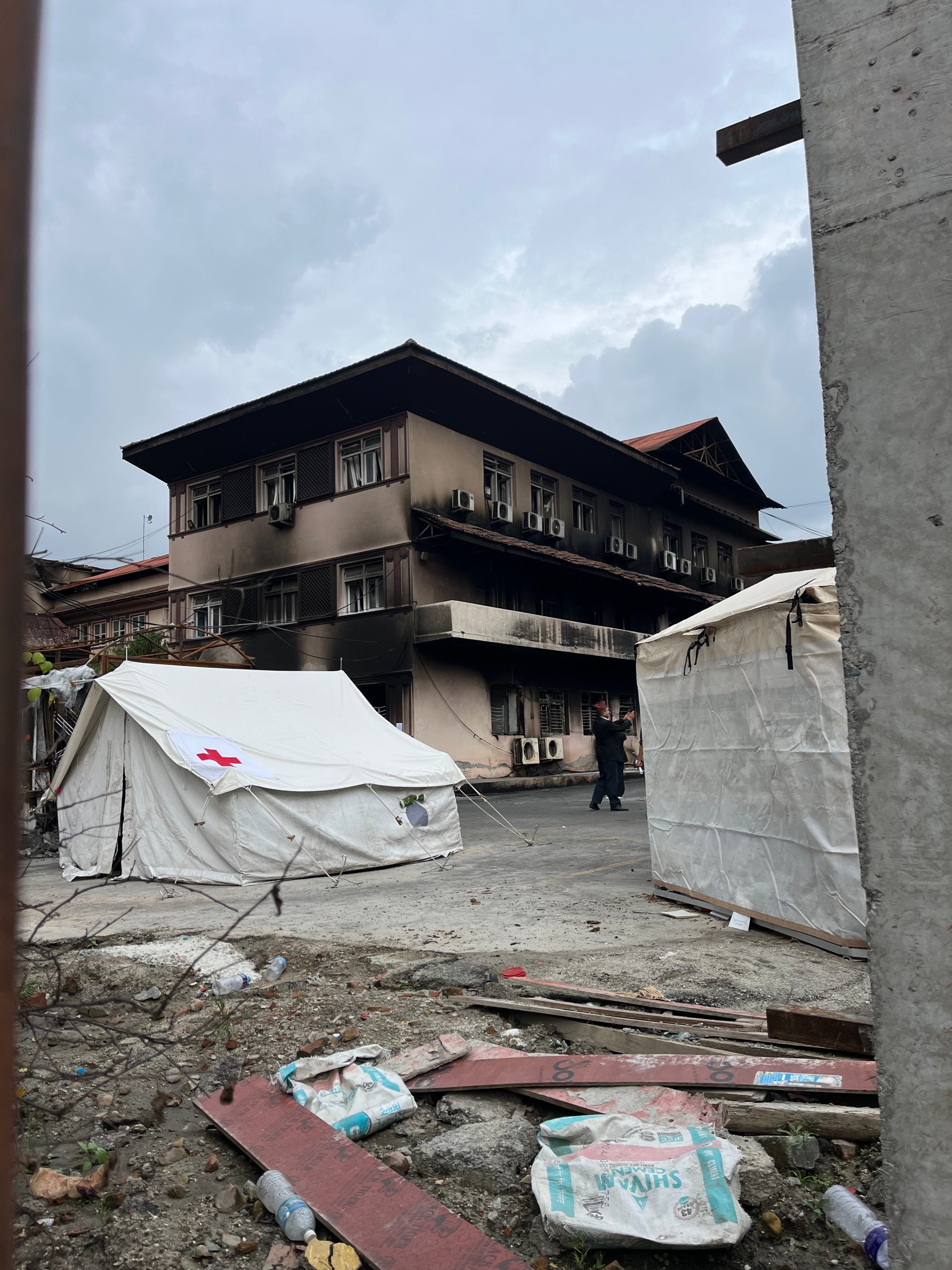
Tents set up outside of the Supreme Court
I continued my walk past the Bar Association and Ministry of Health, the Nepal Government Employees Organization, the Department of Roads, all with broken windows and damage from fire. I was one of many walking from building to building, wide-eyed, staring, taking pictures, talking in small groups, attempting to process. One man I spoke to could only shake his head and say, “this is really bad.” As shocking as it all is for me to see, these are the buildings meant to serve them, their country, their home.
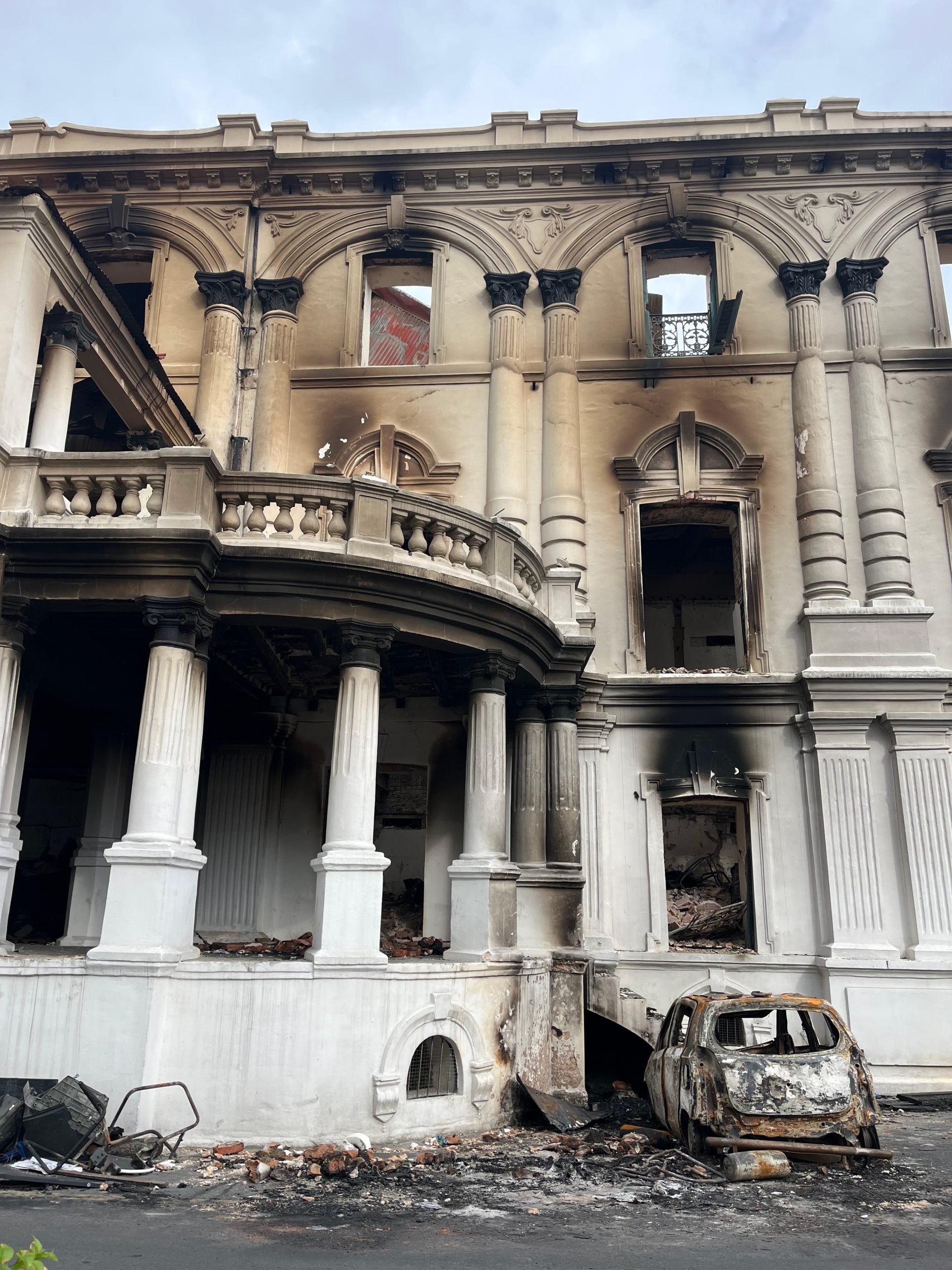
The Department of Roads
While the physical destruction is a jarring reminder of all that went down last week, it comes nowhere close to capturing the true scale of loss. The death toll, now at 72, continues to rise. Most of these are youth. They were sons and daughters and siblings, students working for their and their family’s future. Many were from villages outside of Kathmandu who had come to the city to study, who as children had experienced the armed conflict, had witnessed first-hand the violence and loss, who believed at some point in the promise of democracy, and were angry that they had been betrayed.
There are others still missing. Mothers in remote villages that have not heard from their children. Bodies in hospitals unidentified.
And, as Zeudi Liew reminds us in her blog, many of these students were killed by firearm. Security forces shot them, not in the legs, but the head, the chest, the throat.
Dashain and Tihar are just around the corner and many families are heading into the festival season without their loved ones. For them there is no normalcy.
“We cannot forget,” Ram repeats. We are talking about how quickly life in Kathmandu has resumed and he acknowledges that it is important to continue moving forward, but that we cannot move on. No family will forget, and the larger society must not either. Ram and I are on the same page — we are referring both to recent events and the longer history of violence, oppression, and resistance. For the past several decades Ram and thousands of others have entered festival season without their loved ones. The country must remember the students killed in these recent protests as well as all of those martyred and disappeared during the People’s War.
But it will take more than memory. All of the questions and demands raised by the victim movement for the past 20 years now seem more urgent than ever.
Ram says that Nepal has seen a kind of “detransition” over the last two decades, away from the representative democracy promised by the CPA and towards kleptocracy and elite-led politics that resemble those that preceded the jana andolan. The current crisis has halted this detransition. And now the country must choose what direction to go in. Unless victims and survivors are active participants in the process, it seems unlikely that things will move forward.
But even then, these are big questions to tackle. How to heal? How to repair? How to transform?
In another one of our conversations on the topic, Ram was reminded of something he wrote many years ago: “In Nepal, the road is long and hard, but the mountains are always ahead.”
That is exactly where we are headed this week, for some much needed reflection, discussion, and peace. Our work is often done in walking meetings anyway.
Posted By Emma Cohen
Posted Sep 21st, 2025
1 Comment
Iain Guest
September 21, 2025
Good, strong blog Emma. Very much looking forward to your updates.