
 As part of our Master’s in Sustainable Development Practice with the School for International Training, we are required to complete a practicum semester consisting of at least ten weeks of fieldwork and ground experience. As my classmates began confirming their placements one by one, I eventually found mine with The Advocacy Project. Finding AP felt like discovering a pot of gold at the end of a rainbow.
My semesters with SIT had already been quite the experience; full of experiential learning, interesting classes with stimulating discussions, and on-the-ground engagement with local communities. It was like prep school for entering the development sector, a career path I hope to pursue after graduation. An AP fellowship felt like the perfect opportunity to tie together everything I had learned, all of my previous work experience, and apply it on an entirely new level. It was everything I had hoped for in a practicum and more. I could hardly believe my luck. Uganda would become another place added to my map, and I would be working on a WaSH project with Gulu Disabled Persons Union. WaSH is one of the most critical sectors in development, and I was eager to contribute.
But just as luck would have it, the U.S. Department of State issued a Level 4 travel advisory for the country due to the Ebola outbreak. Suddenly, I was no longer just an SIT student and incoming AP fellow – I had become a security risk. AP does not send fellows to Level 3 or 4 countries, and my school insurance didn’t cover me for a Level 4 country. It was something no one could have predicted, and yet it happened anyway.
Sitting in my hostel room in Kampala, I was still prepared to travel onward to Gulu. I had transport booked for the next morning, an apartment secured, and even a grocery list ready for when I arrived. I was committed to this project. I had spent weeks reading and researching WaSH, and I was ready to begin the work. At that moment, the outbreak almost felt irrelevant to me. I was determined to go.
I would even say I was angry at Ebola for happening at that exact time, just as I was beginning. It did not matter to me that my parents were worried, or that the AP board and my school board were concerned. I felt convinced that I was needed in Gulu and that I had to get there.
But it seemed Gulu was not meant to happen… at least not yet.
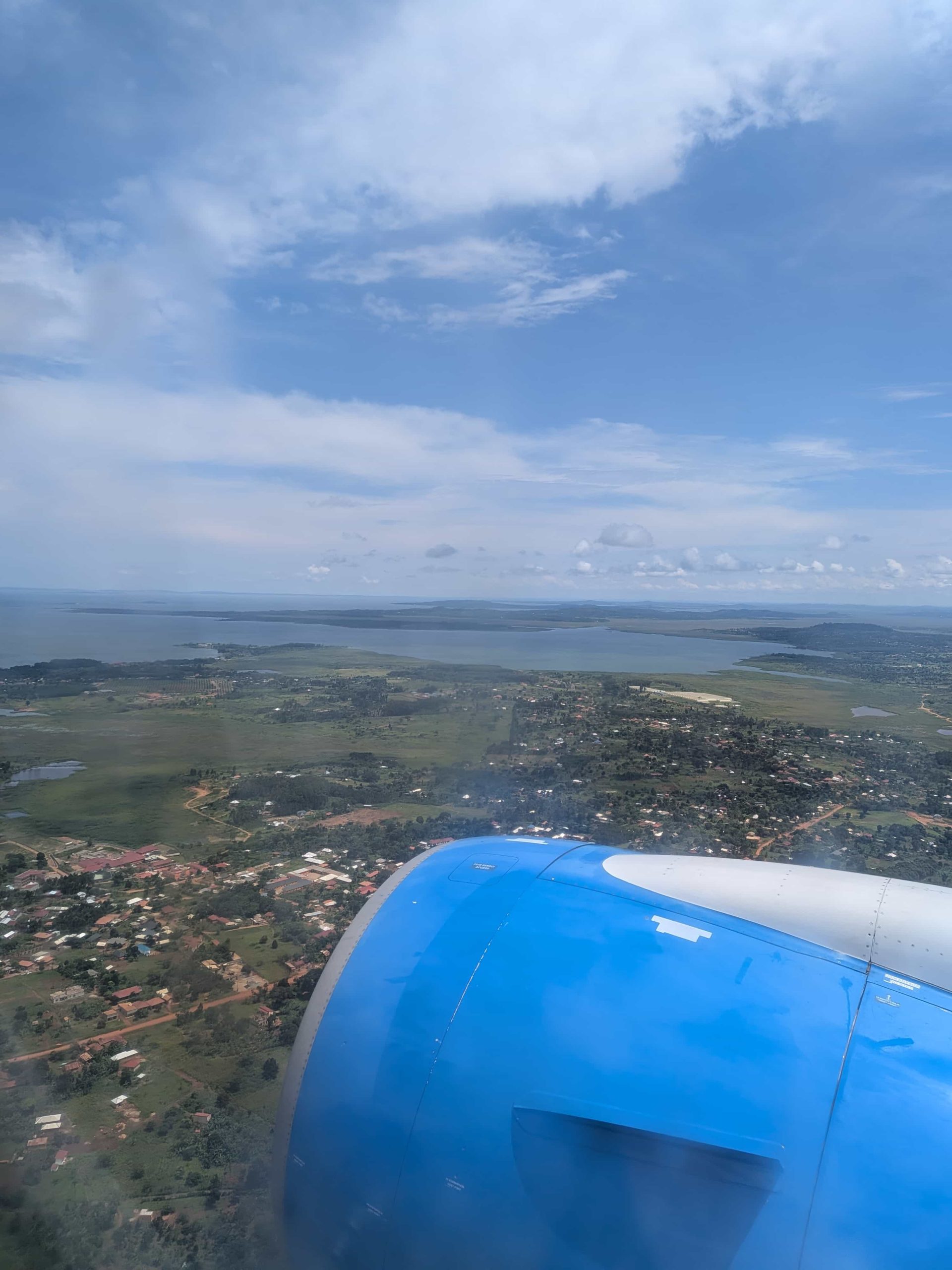
Instead of taking my ride north to Gulu, I found myself taking another ride to the airport and flying out to Nairobi. Normally, before arriving somewhere new, I would research everything: what the city looked like, how transportation worked, what areas to avoid, and all the practical details. This time, none of that happened. I simply got off the plane and somehow made my way to the hostel in Nairobi that I had booked hours before. Nothing mattered except getting out. I remember feeling dazed and exhausted.
Now, sitting in my hostel room in Nairobi after having a few days to recover, I fi nd myself reflecting on how ready I was to continue despite everyone else’s concerns. Even with all the warnings surrounding me, I still wanted to go to Gulu no matter what anyone said. I was willing to brave the Ebola risk for the sake of the project.
Perhaps the risk in Gulu would actually have been much lower or non-existent during my time there, but the situation made me question where the line is drawn.
As someone who hopes to work in development long-term, this question feels unavoidable. During our time at SIT, we learned extensively about how to operate in the field. We studied development economics, gender, agriculture and climate change, monitoring and evaluation, global health, and other subjects focused on how to support communities and implement projects responsibly.
But what about us, as development workers?
Where do we draw the line between commitment and personal risk? At what point do we decide something is too dangerous? What about the communities and organizations we leave behind? Over the years, so many aid workers, activists, journalists, and community leaders have lost their lives across conflicts, outbreaks, and crises. I find myself wondering where their line was, or whether the work became greater than their own lives, a sacrifice they knowingly accepted.
Part of me feels almost guilty calling this an evacuation, especially when compared to what so many others around the world are currently enduring. I only want to contribute, in whatever way I can, toward shaping the world for the better. Yet sitting here in Nairobi has forced me to confront a difficult question about my own future in this field:
How far would I go for this work?
How much would I be willing to risk?
I still do not have the answer.
And perhaps that uncertainty is part of the journey itself.
Posted By Rhonwyn Hagedorn
Posted May 27th, 2026