
As the heat and humidity filled the airplane cabin after depressurizing, I exited the cabin and set foot once again in Africa.
This journey, which seems to get longer and more cramped each time, would actually be my fourth time on the continent. The first time, I came bearing arms—as a soldier in the US Army stationed in Djibouti. The second, I came bearing cameras, as a tourist accompanying my father on safari to the Serengeti. The third time, I came with beach gear, interning in Mozambique during my undergraduate studies, helping a PhD student collect data on oceanic mega fauna.
This time, I came bearing thread.
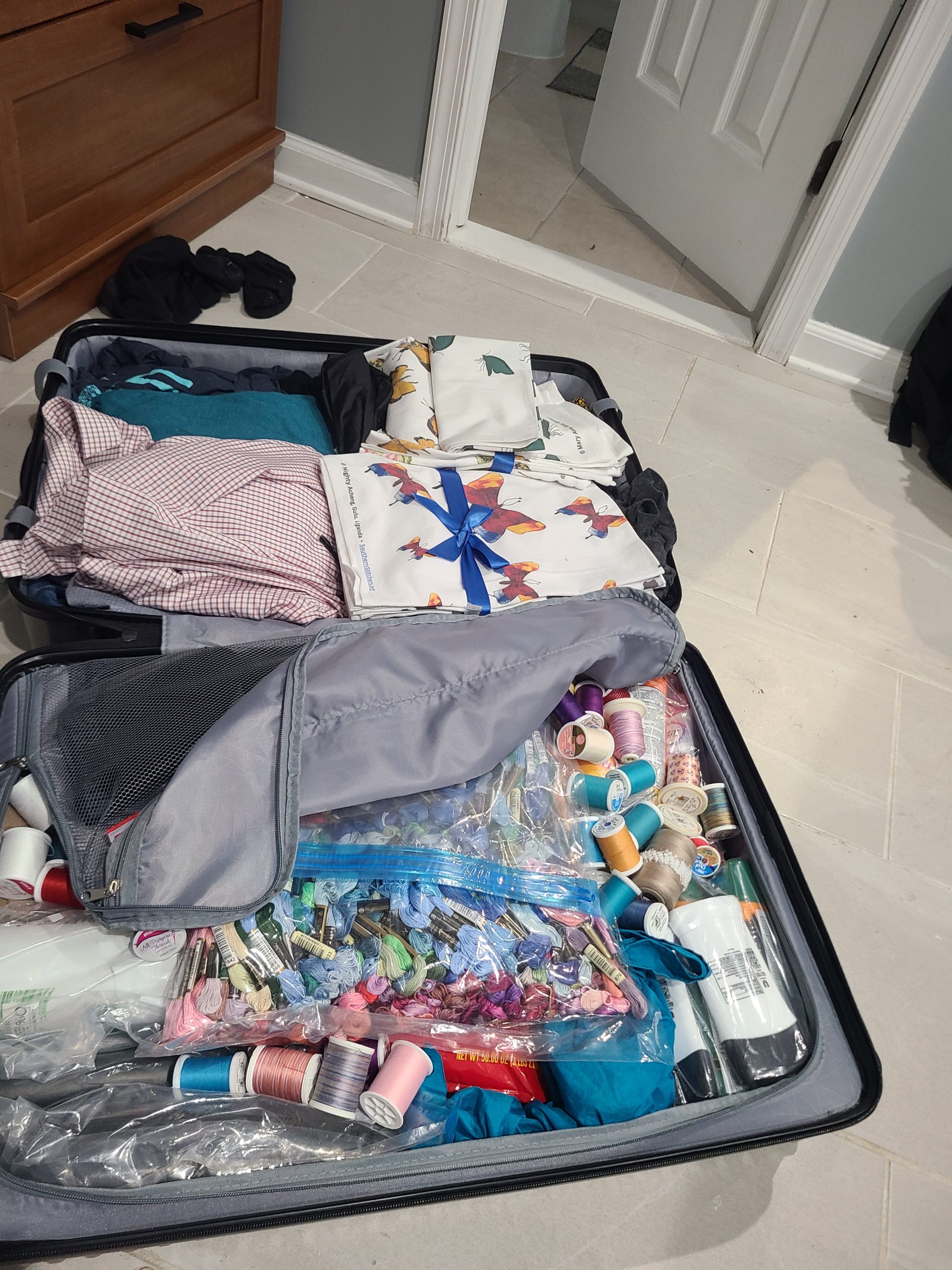
Busy suitcase!
In order to help with one of two projects I was tasked with this summer, I loaded my suitcase past the airline approved limit of 50lbs. This jeopardized my immaculately packed luggage and gave the airline reason to demand a little more of my money. Luckily, a bit of old-fashioned Texas charm worked its magic, and the attendant waived the fee.
The reason for this dramatic episode was to bring to a group of Ugandan women thread and sewing supplies, graciously donated, that would be either expensive and/or hard to acquire for them. Every penny, or Ugandan shilling as it were, would need to be saved to give their fledgling business a chance.
The second of the aforementioned projects I would be working on this summer would be with the GDPU (Gulu Disabled Persons Union), specifically with a WASH (Water, Sanitation and Hygiene) project for schools in the region. Although I had arrived in Uganda my journey to Gulu was not yet over;
My initial plan was to tough-out the journey; head straight from the 24 hour (flights plus layover) trek to the bus station, for the 6-9 hour bus ride to Gulu. However, and perhaps fortuitously, the buses only run twice a day, and I would have to stay overnight regardless of my will to continue. This allowed me to be able to see Lake Victoria, to which 5 years ago I had been on the Tanzanian side, and experience the madness that is Kampala. The bus ride was long, and uncomfortable, as the seating arrangements just weren’t built for someone of my size. But compared to Kampala, Gulu was figuratively and literally a breath of fresh air.
I was met at the bus station by Okwir Joe, an employee at GDPU and a partner on the WASH project, he helped me secure a boda boda (dirt bike taxi) and we whisked away toward my lodging.
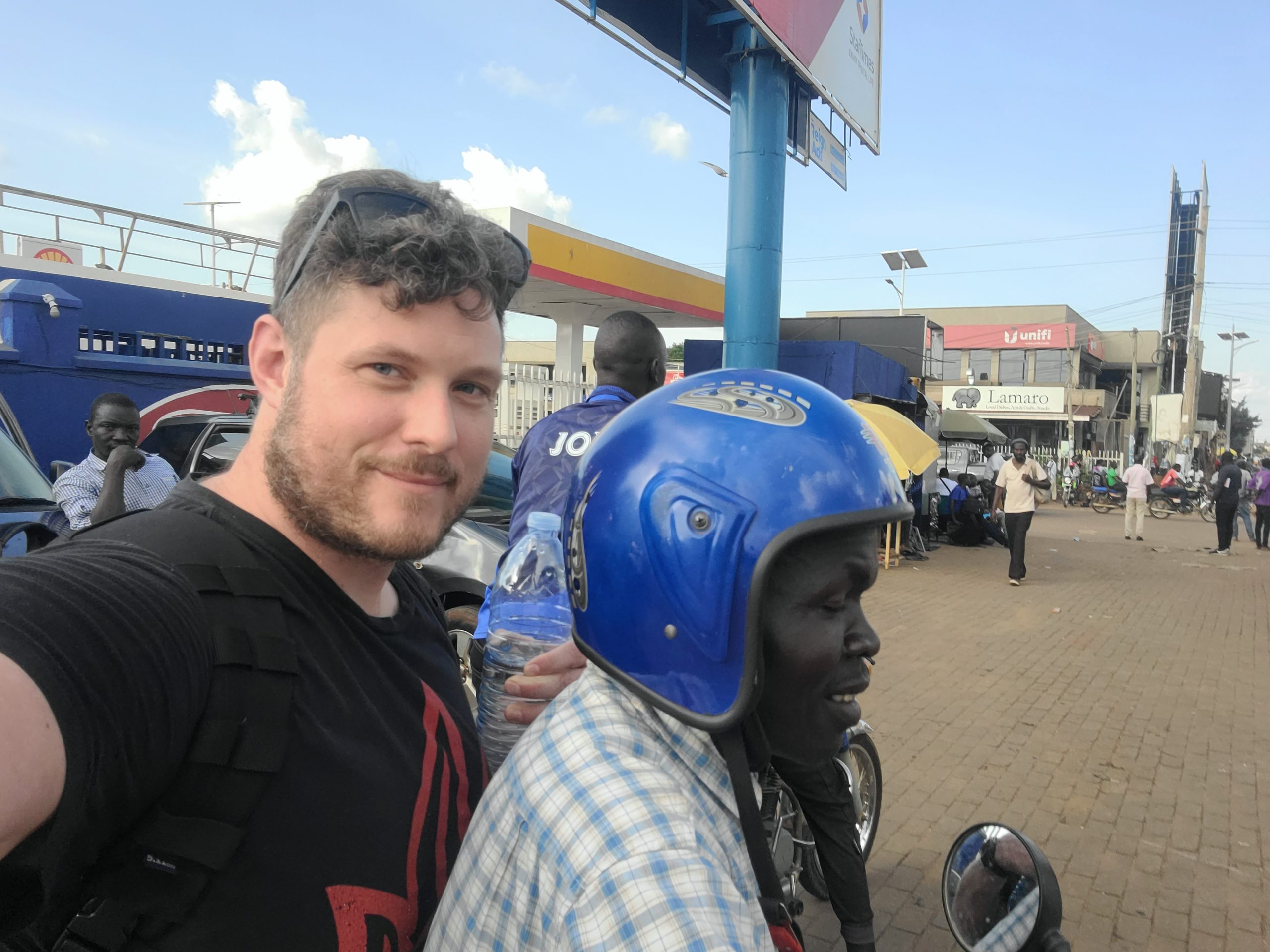
First Boda Boda ride
It’s a decent place, walking distance to the GDPU, and equipped with a café and rooftop bar. It’s also close to a Rolex stand, which is a Ugandan street food consisting of an omelet rolled between two chapatis, which has been a staple of my lunches. And directly across the street from a convenience store that has a refrigeration unit where I purchase cold water and energy drinks — a terrible Army-acquired vice.
As my first week in Gulu draws to a close, I have begun to establish a routine, and have initiated the projects I wish to accomplish this summer in earnest. The GDPU, which has been recently rebranded as the GDPO (Gulu Disabled People’s Organization), is an umbrella organization, and a literal hive of activity to which I had not previously recognized.
The team I am working with this summer on the WASH project are Emma, and the previously mentioned Joe. Emma is an extremely tough woman, who is able to cut through excuses and malingering to effectively deliver the results and help the children in the rural communities. She is also very knowledgeable about all the actors and comings and goings of what happens at the GDPO, and is the lynchpin in the organization. Joe is a super passionate, and very sharp grad student, who has already taught me quite a bit about the project, and this, my temporary home in Gulu.
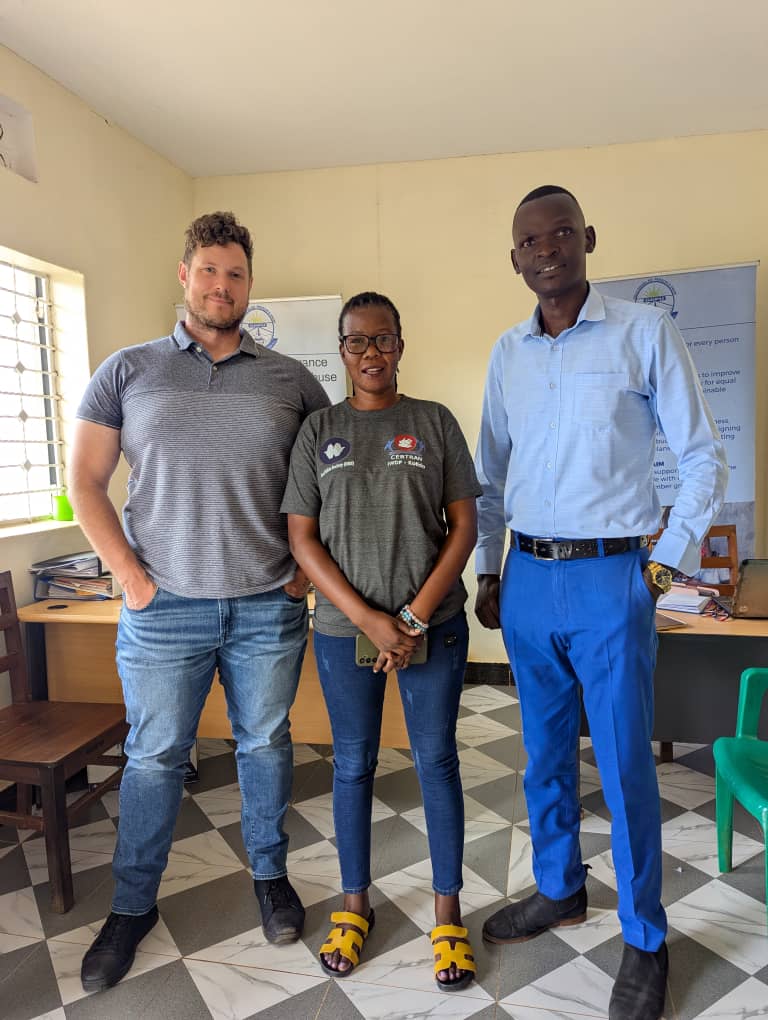
The Team – myself, Emma, and Joe
Although the WASH program is my prerogative, working with Emma and Joe, the GDPU has a myriad of altruistic activities. The different teams around the property directly impact the lives of over 1500 individuals in Gulu and the surrounding areas. One such project is V+, which is a vocational training program that focuses on 6 areas of employment for the differently abled; knitting, tailoring, mechanics, welding, electronic repair, and design.
Another, Viva la Visa, helps those with disabilities explore their creative outlet, offering coaching, practice and a recording studio for singing, keyboards and guitars. In order to help with exercise and inclusivity, Faruk, another member of GDPU, helps develop games and sports that all children can play together in the large yard. The basketball court, that used to be the venue for weekly intramural wheelchair basketball is now out of service, pending repairs to the concrete.
The grounds also house the GWDU (Gulu Women’s with Disabilities Union) which offers advocacy services for women that have been the victims of abuse along with a clinic for their reproductive health. The grounds also has a school for children with visual and hearing impairments. What was even more striking is the welding training area, where they repair and construct wheelchairs for those in need, from donated materials.
The inspiring work done here is done without the support from the local government, and only through donors. Which makes the deliberate scarcity of foreign aid all the more frustrating.
Stitching Past Wounds
For a brief period of time in 2012, Joseph Kony and the Lord’s Resistance Army (LRA) was famous. A global campaign calling for an end to his brutal campaign and for him to be brought to justice was launched, promulgated social media, and then precipitously faded from collective consciousness. Kony’s global infamy was quickly eclipsed by the scandal surrounding Invisible Children Inc., the NGO behind the campaign—accusations of financial mismanagement, factual misrepresentation, and a now-infamous public meltdown by its co-founder. The outrage faded; the victims remained.
The victims of the LRA however did not forget. A group of women survivors in the Gulu area has been collaborating with the Advocacy Project (AP), learning embroidery and tailoring in order to tell their stories and rebuild their livelihoods. These ladies are the recipients of the aforementioned thread I packed, and the other project I am undertaking this summer; to assist them with starting their own business.
Getting a hold of these ladies has been a real struggle. Their de-facto leader died a few months ago, and their liaison at Women in Action for Women (WAW) -Victoria- is extremely busy and hard to pin down. But I was able to meet with her and the other ladies. This would also serve as an introduction to Mama Cave, an impressive woman in her own right, would be able to offer the ladies advanced instruction on tailoring and embroidery. A prerequisite for opening a sew shop, or similar business.
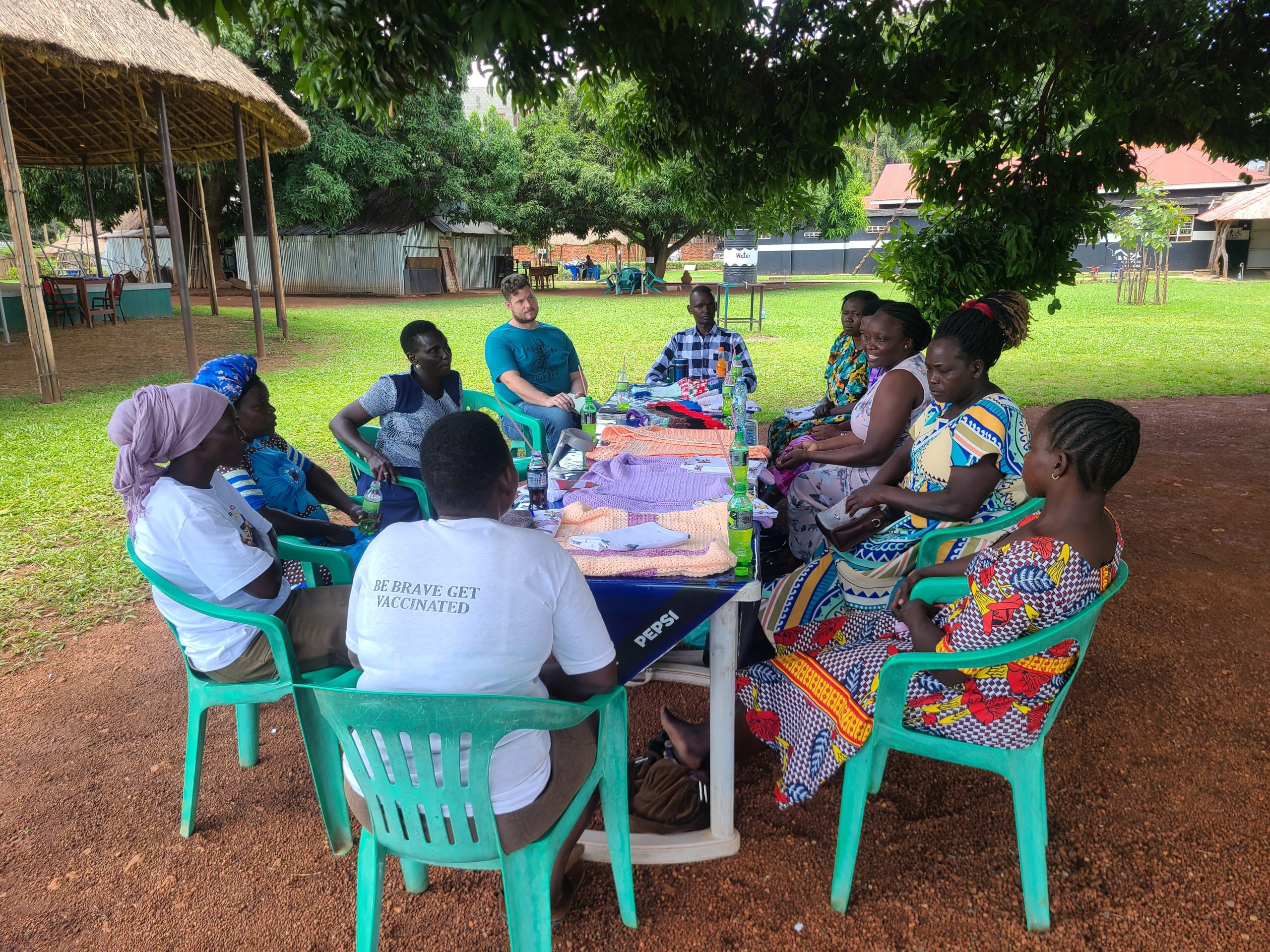
First meeting with members of Women in Action for Women (WAW)
We met at a neutral, open-spaced venue under a large mango tree. To break the ice, we introduced ourselves around the table, while being given bottles of mountain dew, of all drinks.
With the help of Joe translating, I was able to witness the discussion around the table as Victoria moderated. The women let Mama Cave explain her program, they then in turn displayed their interest and commitment to learning. They then discussed their schedules and which days and at what time works best for them. Lastly any residual questions or qualms were heard and elaborated on.
This was done remarkably quickly and with civility, and everyone seemed pleased and eager to start. You may have been born poor, but it is a crime to die poor,’ Victoria quipped, and the ladies chuckled in agreement, and myself belatedly as soon as Joe translated for me.
The training would take 3-6 months, depending on skill level and hour of practice. Victoria and I made arrangements for more regular communication, so I could with the next phase the ladies decided on. We then finished with me distributing the previously mentioned thread and sewing paraphernalia, but also tea towels that the AP made with their butterfly patterns they had made.
I thanked them once again for meeting with me and that I looked forward to helping them this summer. I arrived apprehensive and left thoroughly impressed. Thread may mend fabric, but it’s people who stitch together a future.
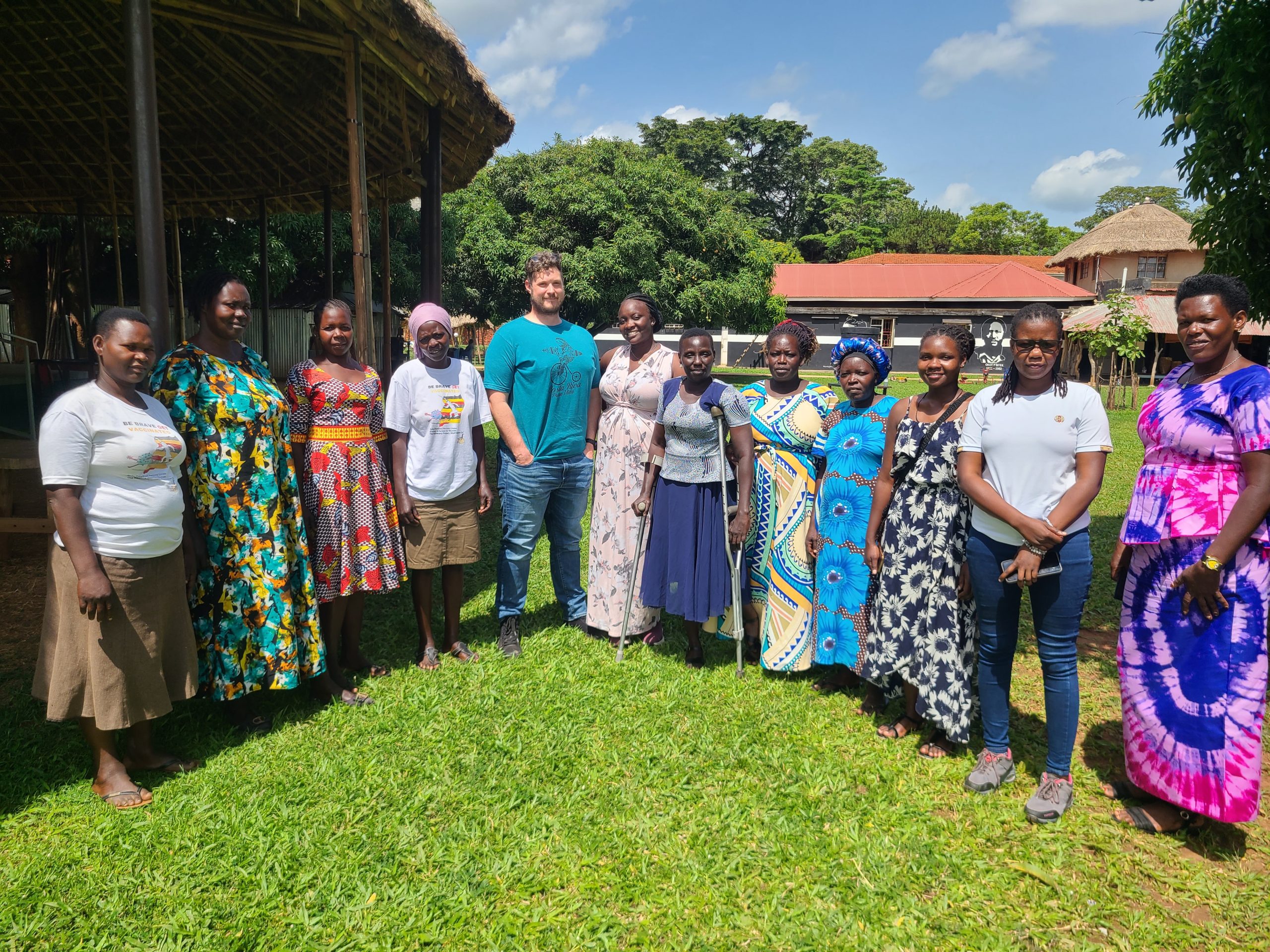
My meeting with the members of Women in Action for Women in Gulu
Posted By Aaron Bailey
Posted May 31st, 2025
7 Comments
Iain Guest
June 3, 2025
Tons of old-fashioned Texas charm on show in this first blog, Aaron! And dare I say it – the fourth time in Africa will be a charm! I relish the image of a former army vet carrying thread to survivors of rebel brutality in Northern Uganda – truly, a noble mission. You’ve set out your two projects really well and seem to be on very good terms with both of your organizations. Can’t wait to read more blogs…
OKWIR JOSEPH JOHNS
June 6, 2025
Welcome to the pearl of Africa Aaron, your dedication to the community of Gulu is profoundly impactful. Through clean water, sanitation program for school going girls and health advocacy for the community, you are driving resilience and transformation. The unwavering commitment from the Advocacy Project, despite lacking government support speaks volume of its strength and determination for the reformation of our community.
Empowering women survivors through embroidery and tailoring is more than skill-building, it’s reclaiming dignity and fostering hope. Your efforts, alongside myself and Emma, are fostering long term change and impact. Let’s keep pushing forward,
Together, our work is not just shaping a legacy of empowerment, but making an undeniable difference.
Beatriz Lloret
June 14, 2025
What an incredible story. Thank you for sharing all of it so openly. I was really moved reading about your journey, from the thread you packed in your suitcase to sitting under that mango tree with the women. It’s so clear how much heart you are pouring into this work, and how deeply you care about showing up with respect and intention. I love how you’re not just “helping,” but really building something with people, side by side with them. That line, “thread may mend fabric, but it’s people who stitch together a future,” gave me chills. Truly inspiring stuff. Can’t wait to keep following along.
Maddy
June 18, 2025
Great blog!
Shuyuan Zhang
June 21, 2025
Aaron, this is such a powerful and beautifully written first blog! I’m learning so much from your reflections—it’s clear that you’ve arrived with not just thread in your suitcase, but deep humility, empathy, and commitment. Your storytelling brings Gulu to life and really honors the resilience and strength of the communities you’re working with. The image of gathering under a mango tree to plan a future stitched with dignity and solidarity will stay with me. Keep up the amazing work—you’re making a real impact, and it’s incredibly inspiring to follow your journey. Looking forward to your next update!
Alexis Lopez
June 22, 2025
Aaron, this blog was the perfect read just after landing in Nepal a few short weeks go! It’s fascinating how you reflect on your time in the military and your transition into international development, having once arrived bearing arms, and now returning as a graduate student. I do think that both of these experiences provide you with a unique set of lenses and skills to be able to navigate these projects at GDPO with insight, adaptability and a grounded understanding of the complexities of Uganda. Amazing to see you out there in Gulu and the spirit of collaboration driving everything forward…fueled by one energy drink at a time!
Angie Zheng
July 14, 2025
Aaron, I laughed seeing the thread from our fellowship meeting make its way into your first blog post! And Victoria’s line, “You may have been born poor, but it is a crime to die poor,” is so powerful.