
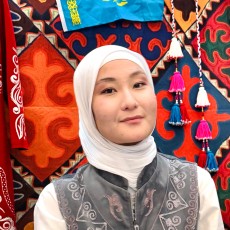
Nepal. A country I knew almost nothing about when I decided to apply for this fellowship.
Before arriving in Kathmandu, I spent two days in India. One person I met there told me: “You’ll like Nepal. The weather is better, and the people are kind.” Indeed, whether it was a teenage boy driving a bike taxi, a shopkeeper, or the owners of both homestays where I stayed checking how I was adapting, people greeted me with smiles.
When I told my friends I was moving to Nepal, they immediately mentioned the Himalayas. Around the same time, the Nepali song Lau Suna Suna (“Come, Listen”) went viral on social media. Its images of remote mountain villages, traditional life, and Himalayan landscapes reminded me of my own childhood growing up in a village in Kazakhstan. Later, I learned that the song comes from the film The Silent Echo, where children dream of becoming musicians despite poverty and isolation. That song became my first introduction to Nepal.
I knew there had been a civil war. I knew that many communities had experienced marginalisation and injustice. Moreover, the concept of transitional justice was completely new to me. I had only recently encountered it while studying Bosnia and Herzegovina at Boston University. I understood the legal concepts like truth, justice, reparations, and accountability, but I had never spoken with the people whose lives those concepts actually shaped.
When I arrived in Kathmandu, Emma, a former Advocacy Project Fellow, welcomed me at the airport and helped me settle in. Soon afterwards, we met women whose stories would reshape my understanding of justice.
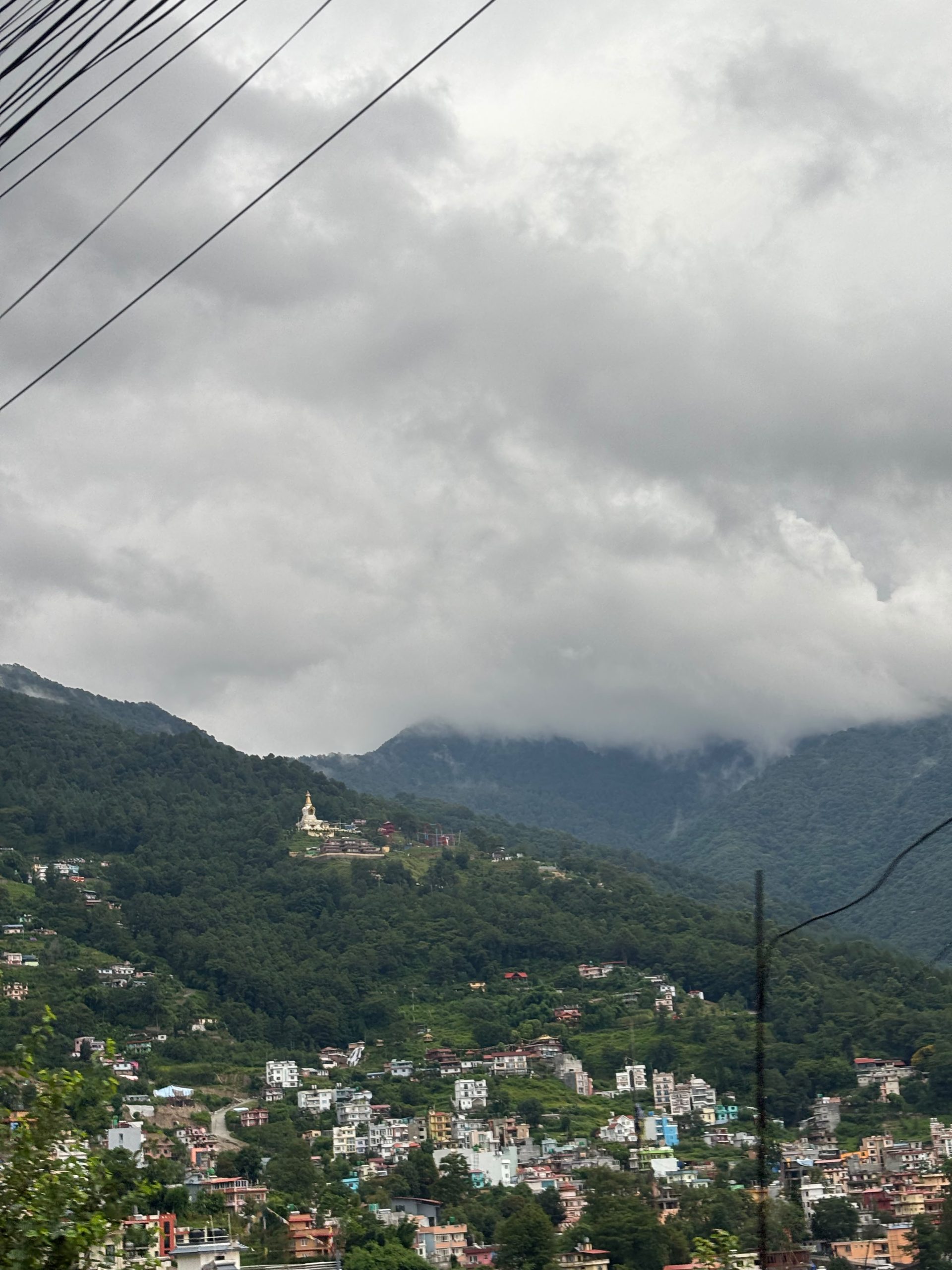
View from our homestay – my first picture from Kathmandu
Among them were Gita Rasaili, Chairperson of the Conflict Victim Women National Network (CVWN), and Maina Karki. Each had lived through the conflict from a different perspective. They spoke about discrimination, interrupted education, displacement, loss of family members, and the long struggle for recognition. Yet what resonated with me most was not only their resilience, but the way they had become leaders for other victims.

Meeting with Gita and Maina
One moment has stayed with me. Gita explained that, for many years, she believed the only “real” victims were those who had suffered at the hands of the state. It was only after meeting people whose families had suffered because of the Maoists that her perspective changed. As she told us, “The pain is the same, no matter which side you are on.”
That sentence, for me, captures the true meaning of transitional justice. These two women had experienced the conflict from opposing sides of the conflict. Politics and ideology could have divided them. Instead, they chose to recognise one another’s suffering and build a movement together.
One of the biggest lessons I took away was that transitional justice in Nepal is not only about dealing with the legacy of the civil war. It is also about confronting the inequalities that existed long before the conflict. The caste system and discriminatory social practices, especially those affecting women, widows, lower-caste communities, and other marginalised groups, were often reinforced by the war. It is about the term “intersectional marginalisation” when people experience multiple forms of marginalisation. Reconciliation, therefore, means changing relationships within society, not simply addressing the actions.
Before coming to Nepal, I had read about the practice of untouchability and the stigma surrounding widows. Hearing women describe these experiences gave those concepts an entirely different meaning. I saw how many courageous Nepalis are working to change these social norms and traditions.
One phrase stayed with me while listening to these women: the lotus flower. I had first heard about it while watching a film in India about widows’ suffering. In both Buddhism and Hinduism, the lotus grows from muddy water yet blooms untouched by the mud around it. It symbolises resilience, dignity, and strength despite a hostile environment. They did not allow suffering to define them. Instead, they transformed it into leadership, ensuring that other victims also would find courage and support.
Before all of this, as part of our fellowship, Mr. Ram took us to Maitighar Mandala, Kathmandu’s main protest site, to observe advocacy in practice. We witnessed two demonstrations taking place side by side. One was led by conflict victims, including our professor, Ram, who were demanding a transparent and victim-centred Truth and Reconciliation Commission. The other one was organised by landless settlers, who were calling for land rights and an end to forced evictions.
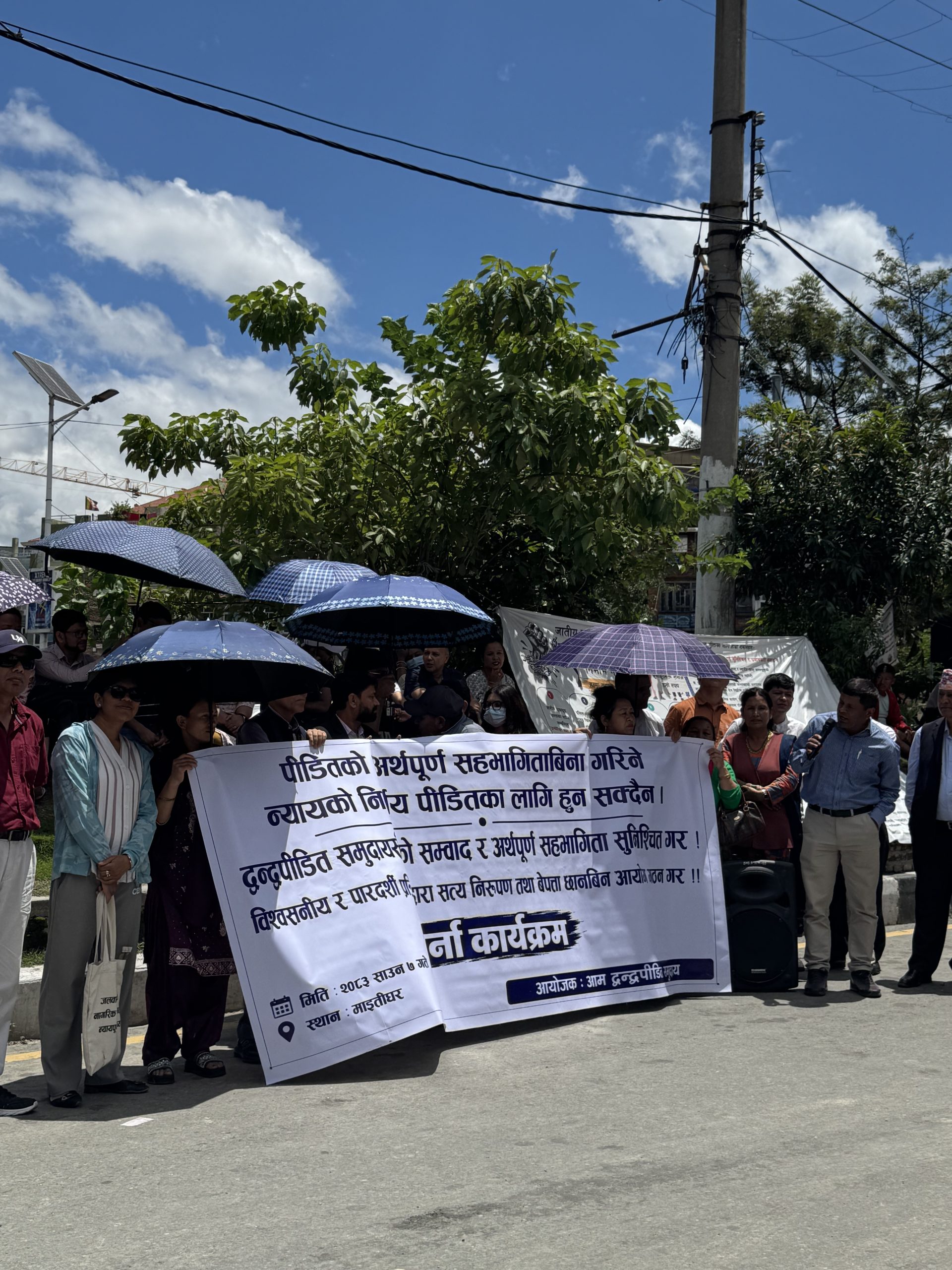
The victim-led protest
It was the first protest I had ever attended. I realised that justice is not only discussed in classrooms or written into laws, it is also shaped by ordinary people who continue to advocate for their rights. Coming from Kazakhstan, where public demonstrations are heavily restricted, it was especially meaningful to witness people expressing their demands openly. Of course, studying at an American university had exposed me to the idea of civic activism, but seeing it firsthand in Nepal was a completely different experience.
Before that day, we had watched a 20-minute documentary on Nepal’s Civil War with Leo and Joe at our homestay. Rather than focusing only on the political and military dimensions of the conflict, it highlighted the experiences of ordinary people and showed how the war deepened existing social and economic inequalities. That background helped me better understand the stories we would later hear from survivors themselves.
I am grateful that I did not just learn about Nepal’s history or the civil war from books and lectures. I learned from the people who lived through it.
The lesson I carried home from the first week is simple: transitional justice is not only about courts. It begins with listening. When people are willing to recognise each other’s suffering despite caste, gender, politics, or background, it rebuilds trust. That is what Nepal’s women taught me.

My favourite picture of Kathmandu so far (I like capturing the pics of roads)
Posted By Tomiris Ottesh
Posted Jul 27th, 2026
1 Comment
Iain Guest
July 30, 2026
This is a wonderful, rich first blog Tomiris! You included so many different ideas and experiences into it that I hardly know where to start. But this alone shows that you are experiencing the core message from Ram and his team – transitional justice can ONLY be understood through people and direct experience (as opposed to laws and reports). You write that this was the first public protest you had ever seen and attended. Coming from a country where action and debate are restricted, this must have been eye-opening indeed. I was also interested to read how Gita Rasaili explained that the abuses were caused by both sides – security forces and Maoists. Survivors have been brought together by the common experience and formed a movement which is non-partisan. That’s a very important point – does it mean survivors are “non political”? Finally, I found your your thoughts out the structural inequality in Nepal – and the part it has played in conflict – very interesting. I learned a lot from this blog, Tomiris! Thank you,