
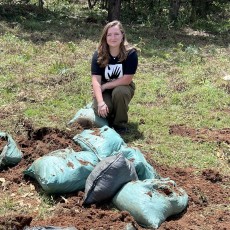
Deminers know how to throw a dinner party. On a breezy summer evening in Xieng Khouang, Laos, I joined a demining team for post-work barbeque, karaoke, and many rounds of pétanque (a game with apparently ever-changing rules, all ending with our team of beginners taking another “penalty drink” of Beer Lao).
To feel nostalgia in a place you’ve never been sparks a little bit of magic, I think. This night brought to mind the many midwest tailgates and barbeques on summer days growing up in Columbus, Ohio. While the setting couldn’t have been further away or more different from home, somehow the joy was the exact same – good food, music to dance to, and a silly game to argue over. It’s one of those nights you don’t forget, feeling this embedded in a community of hope.
The demining sector is built on hope.
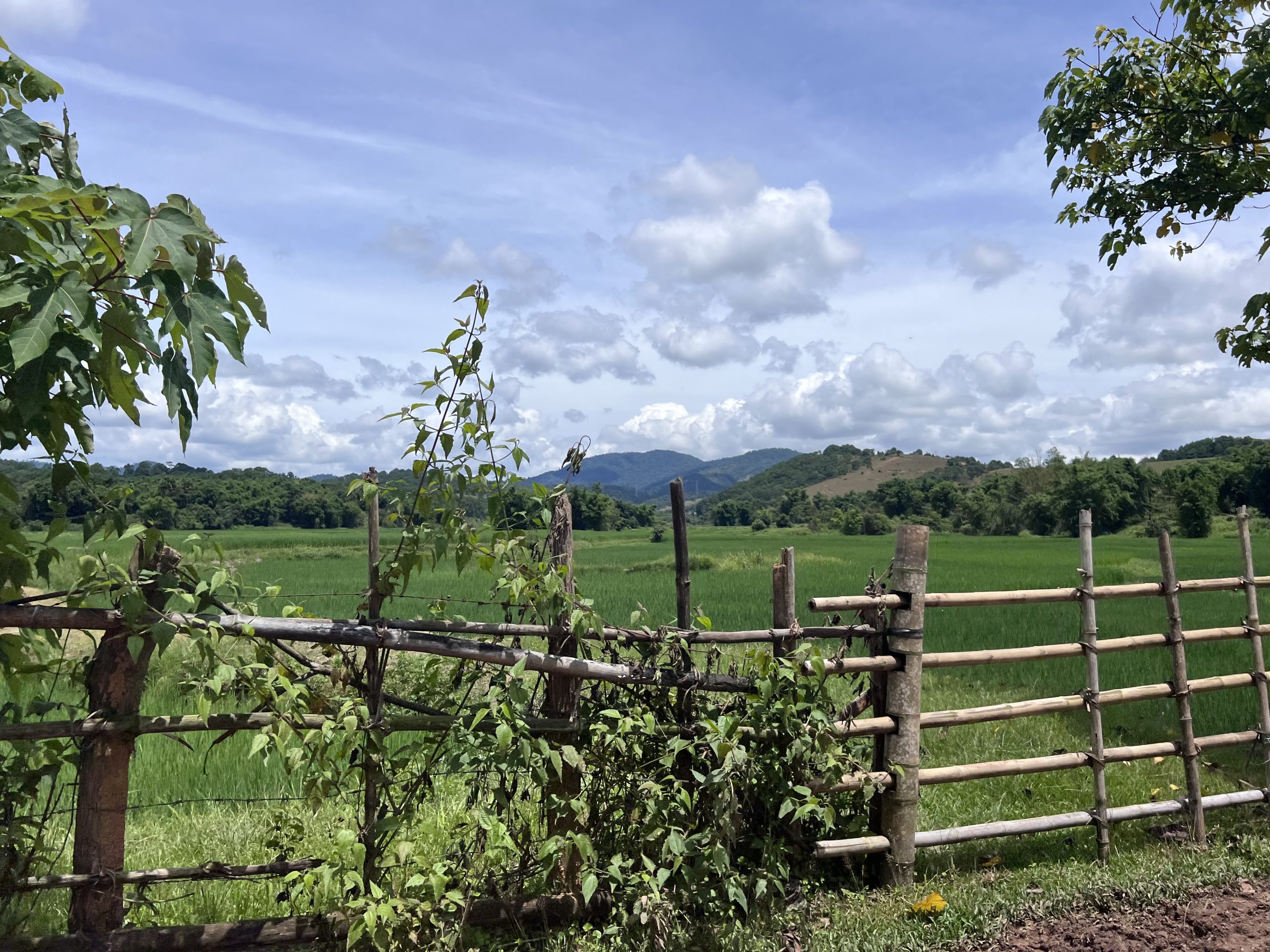
Finding “home” in this sector really wasn’t so hard. But my path to working in this industry was not linear. It involved a bracelet, a cake, and many patient teachers (all necessary ingredients to the best stories).
Growing up, I heard stories of how my parents first met – in Washington DC, working for a weapons contractor for the US government, mom in accounting and dad in sales. I’m still not sure whether his stories of carrying briefcases handcuffed to his arm through airports were embellished – but these tales were thrilling, invoking images of spies and heroes.
Both ended up pursuing less covert career paths, but a curiosity, maybe sparked from their early years, brought me to DC for college. Like most first-years on the Hilltop, I took many government classes, but found myself giving all my energy to a single 101-level class, “Introduction to Justice and Peace Studies”. Our goal: to ask questions of the systems built to protect justice and promote peace, those same systems I studied in other classes. Of course, one system to immediately poke holes in was the Military Industrial Complex…more on that later.
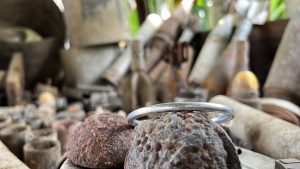
That same semester, I stumbled upon a bracelet inthe Spy Museum gift shop engraved with the words “Dropped and Made in Laos”. This bangle was made of recycled aluminum from shrapnel and war waste found in Laos after the American Secret War (what I knew at the time as the “Vietnam War”). I sheepishly admit that this was my first time learning about the history of Laos, a country the US bombed so heavily over nine years that it became the most heavily bombed per capita in the world. Today, cluster munitions and other unexploded ordnance are still found in farmland, roads, near schools and cities throughout the country.
I soon declared my major to my parents in one late night phone call; “I’m going to study Justice and Peace Studies”. This was not quite the career-focused path they expected from me, and neither hid their confusion and surprise very well; they made up for this disappointing reaction over Thanksgiving, presenting me with my favorite cake printed with the major logo to celebrate my chosen field of study.

Fast forward a few years and I have just returned from teaching in China at the beginning of the Covid 19 pandemic, and I run into a woman selling jewelry from that same company that made the Peacebomb Bangle. After many shopping trips back to see her, she asked if I had any time to work with her; five years later, I’ve worked many roles with this jewelry company, ARTICLE22, and it’s exactly this work which brought me to Laos in 2023 to visit the artisans who transform, creating art out of war remnants and funding clearance of farmland in Laos. I’ll return again this fall to continue advocacy work for nonprofits and NGOs like Mines Advisory Group, who are still today cleaning up US bombs dropped 50 years ago.
So, why am I so fixated on demining? Somewhere between the mentors, the bracelet, and the cake, I found a path in this niche nonprofit sector.
And to be honest, I don’t know why this. There are a lot of good causes. But this one sticks with me.
Maybe it’s the total and pure hope in it. This is a coalition of people from around the world who have chosen not to accept wounds of the past. It’s a group not held up with condemning the past, people prepared to forgive or at least move on from horrendous wrongs in human history, because they are most concerned with cleaning up and moving forward.
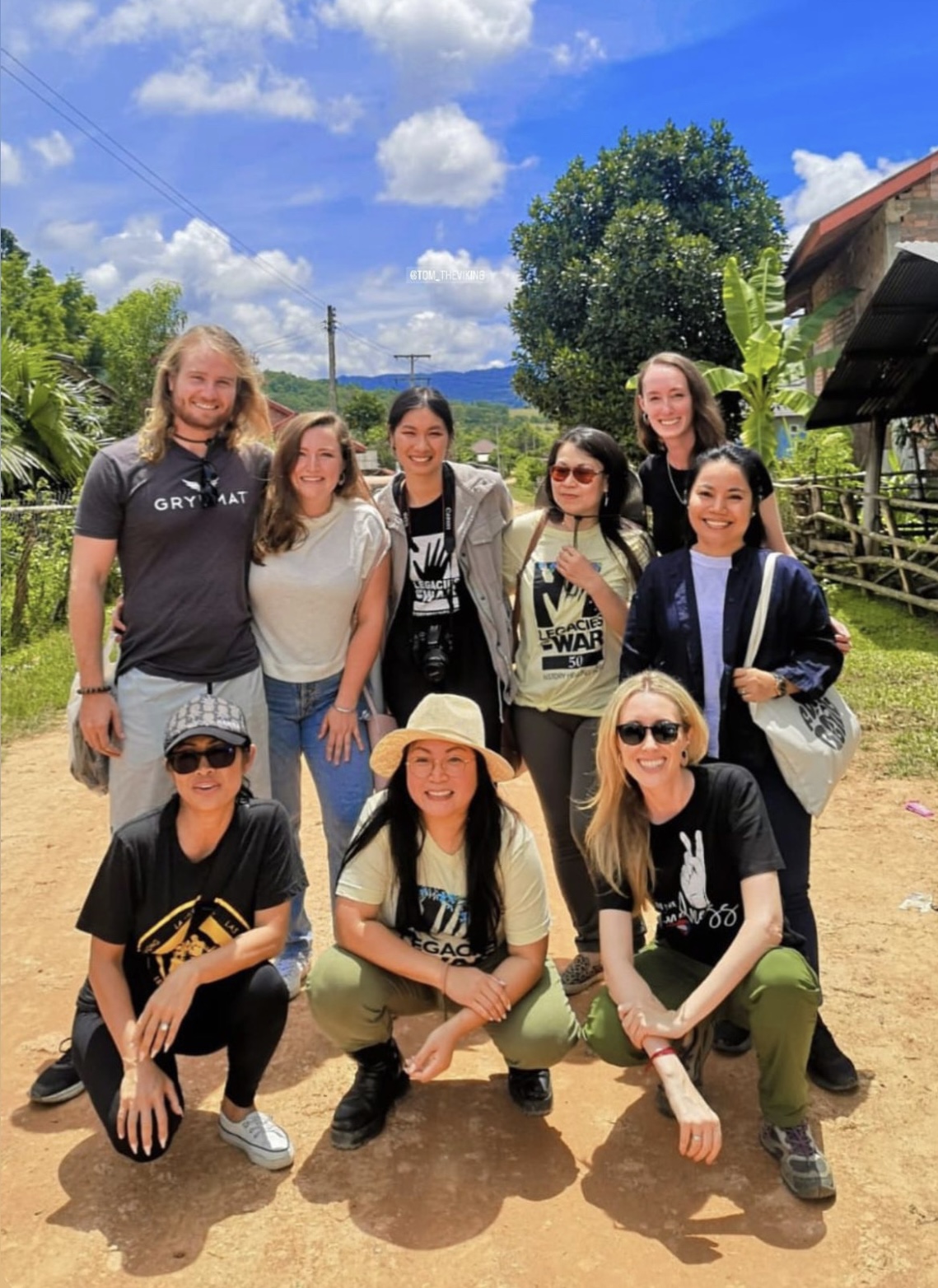
Some days it feels easy to get bogged down by all the bad. It feels like that a lot lately. But in this movement, there’s not time to only pontificate. This group knows there’s physical work that must be done today, and they are at work doing it. Literally, inch by inch, making land safe with metal detectors and shovels. That’s what’s saving lives tomorrow.
There’s a very tangible link between the work of demining today and safe lives in decades to come.
This piece of the world found me through and with it I’ve seen so much more of the good in the world. There’s real, tangible hope in this work. And there’s plenty of good food, good music, and beautiful community in between days at work.
Posted By Kendall Silwonuk
Posted Sep 15th, 2026
2 Comments
Iain Guest
September 15, 2026
I totally GET your admiration for de-miners – particularly those from the NGO sector who put themselves in harm’s way to help local partners get rid of the hideous mess left by the fighters. Certainly one of the noblest contributions to peace-building. I have not come across any example of turning the detritus of war into something of value and beauty, like ARTICLE22. We need to know more! Finally, Kendall, I appreciate your own story and the Georgetown connection. We’ve sent many brave GU students out as Peace Fellows and you are upholding the tradition! Anxious to read your next blog, setting the scene for the conference. Write on and may the Muse be with you!
Bobbi Fitzsimmons
September 19, 2026
I love (and believe I have felt) your idea of “nostalgia in a place you’ve never been.” It explains beautifully what unites us all as citizens of the world. I too look forward to learning more about ARTICLE22 and wonder if their work might be included in The Advocacy Project store.