

[I wrote this blog because I believe it’s important to do some context-setting for the upcoming posts on my blog page. Not every blog post will have a history lesson. But, I feel it’s important to understand Shield of Faith’s operational environment so that we can all begin to understand the experiences of Kibera residents and students.]
In the heart of Kibera, one of Africa’s largest informal settlements, waste is more than just a bad smell. It’s a public health crisis, a symptom of inequality, and a daily reality for hundreds of thousands of families.
Kibera’s Origins
Kibera’s roots trace back to the end of World War I, when Nubian soldiers in the King’s African Rifles were settled on forested land outside Nairobi as a reward for their military service. The name “Kibera” comes from a Nubian word meaning “forest.”
Following Kenya’s independence in 1963, the government nationalized the land. However, instead of formalizing property rights, the area remained informally structured, with plots unofficially rented out by landlords. Today, most residents lack legal land tenure, making them vulnerable to eviction and limiting government investment in infrastructure and services, including waste management.
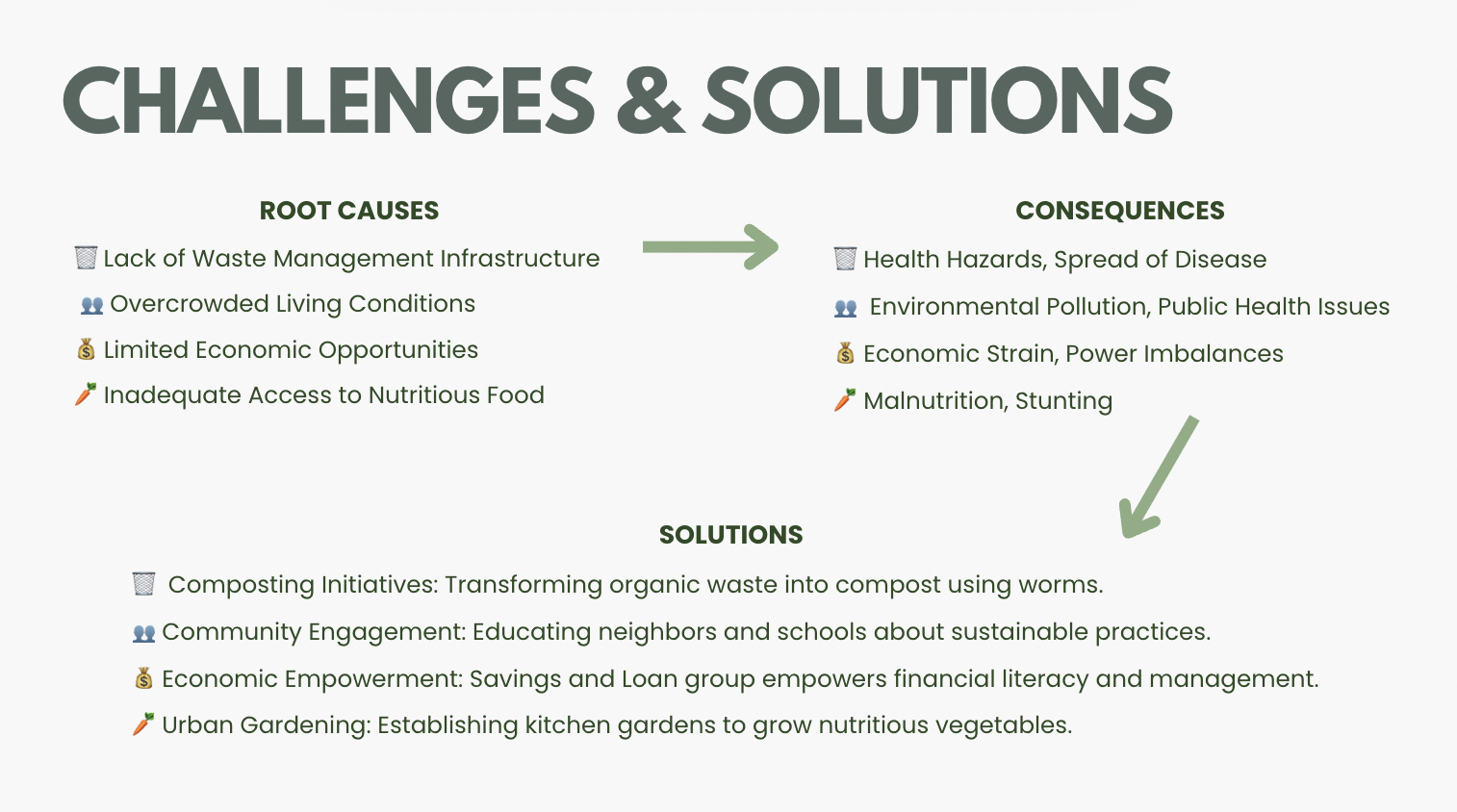
What Fuels the Waste Crisis?
Because Kibera is largely excluded from formal urban planning, the settlement has experienced decades of neglect. There is no structured waste collection system, meaning garbage piles up in shared spaces or is burned in the open. During rainy seasons, flooding carries waste and sewage into streams, rivers, and homes.
High population density compounds the problem. With limited sanitation facilities and shared living spaces, residents struggle to manage household waste safely. Poverty further worsens the situation. Most residents can’t afford private waste collection or healthier food options, creating a vicious cycle where hunger, disease, and environmental degradation reinforce one another.
Consequences for Health, Environment, and Food Insecurity
The consequences of this waste crisis touch every part of life in Kibera.
Health hazards and spread of disease are rampant in areas where waste is unmanaged and sanitation is lacking. Poor waste disposal leads to disease outbreaks, especially during the rainy season when waste clogs drainage. Garbage dumped near homes or water sources contaminates drinking water and food, increasing gastrointestinal illnesses. With few toilets and waste services, human waste often mixes with household trash, compounding health risks.
Malnutrition and stunting result from a lack of affordable, healthy food, made worse by poor soil and limited space for growing crops. Without composting infrastructure, valuable organic waste ends up in dump sites or rivers instead of being used to enrich soil and support local food systems. Poor sanitation and environmental hazards disrupt informal food markets—where most Kibera residents shop—causing food losses or price spikes, especially during floods or disease outbreaks.
Environmental pollution and degradation Issues increase as plastic, food scraps, and sewage mix in open drains and alleyways. Uncollected waste clogs narrow pathways and drainage channels, causing frequent flash floods and sewage overflow. Waste dumped into the Nairobi River and other streams destroys aquatic ecosystems and affects downstream communities. Burning plastic, diapers, and mixed waste releases harmful chemicals into the air, affecting air quality and contributing to climate change.
Community Solutions: Composting with Shield of Faith
Despite these challenges, community-based organizations like Shield of Faith are leading the way with practical solutions. Stella Makena noticed these challenges and began introducing composting to the women in the Shield of Faith embroidery collective. Using Red Wriggler worms, members transform kitchen waste into nutrient-rich compost and leachate fertilizer, branded as Lishe-Grow. By turning organic waste into compost, families reduce landfill waste while boosting soil fertility. Shield of Faith members have also improved the quality of their home-grown vegetables, improving both diets and household savings.
This small-scale initiative is already making a big impact: So far, SOF has:
- – Diverted tons of organic waste from dumps and drains
- – Enabled women to grow up to 40% of their own vegetables
- – Increased household food security
- – Supported 14 mothers to grow enough produce for 3 nutritious meals a week
- – Lowered food costs and increased financial literacy through savings and loan groups
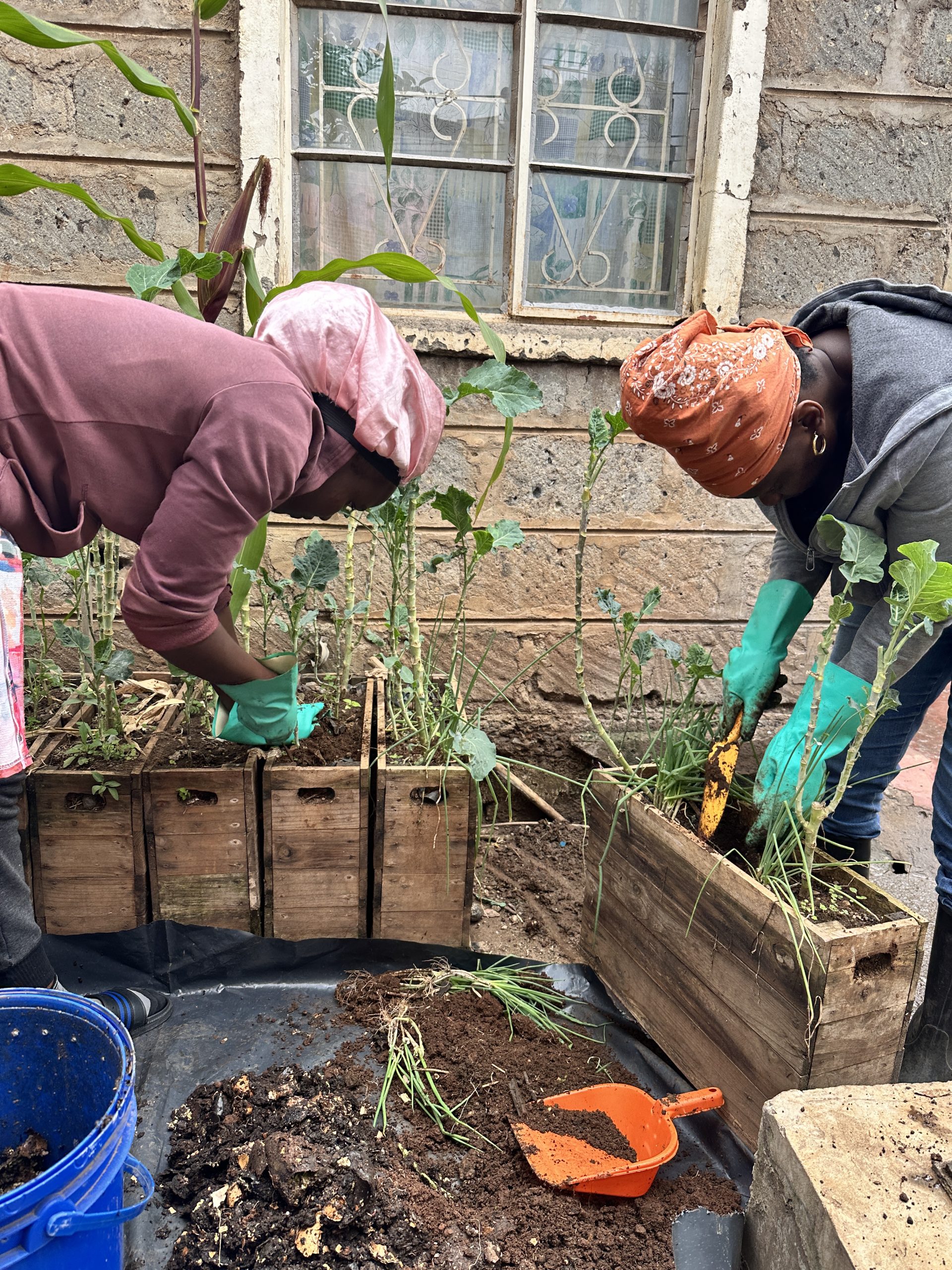
An example of SOF’s work with women throughout Kibera. Here, Stella teaches Irene how to mix her compost into old soil to give it nutrients and revitalize her kale, onions, and maize!
Building on this success, Shield of Faith is now expanding into schools. Partnering with Kenya’s 4K Clubs, the organization is equipping students with composting and urban farming skills. Shield of Faith hopes to inspire ripple effects across generations and households by teaching young people to care for their land and reduce waste. By embedding composting and urban farming education into schools and empowering students, Shield of Faith will create ripple effects across communities.
A Model for Sustainable, Locally Led Change
Shield of Faith shows what’s possible when solutions are led by communities and rooted in lived experience. By addressing waste, food insecurity, and poverty together, Stella and Shield of Faith is creating a holistic model for sustainable development. With their leadership, waste is no longer just a problem in Kibera… It’s becoming part of the solution.
Posted By Julia Holladay
Posted Jul 3rd, 2025
5 Comments
Iain Guest
July 3, 2025
Good, sturdy summary of the importance and relevance of Shield of Faith’s composting initiative, Julia! Stella’s push into schools offers a way to scale up the work she has been doing with individual households and produce some serious social change in these settlements. The stakes are high and the world is watching! Can I request that you describe this campaign through vignettes, photos, profiles and impressions and then let the shape of the experiment emerge gradually? Ie the sort of bite-size blogs your wrote back in 2022. And PLEASE let’s launch a charm offensive in the direction of the 4K Clubs, which really could be the perfect partner for Shield of Faith, as well as the vehicle for expanding Stella’s dream……! It sounds like a great initiative. Keep up the good work!!
Aaron Bailey
July 6, 2025
Its sad to see systemic failure, and institutional apathy that leads to places to Kibera. But its great to see how even such a small initiative can be so helpful, and hopefully you and Stella will be able to spread and scale the project.
» Servicing a Compost Bin | The Advocacy Project
July 8, 2025
[…] with merchant stands, water carts, and people going about their day. As mentioned in my previous blog, Kibera is one of the largest informal settlements in the world. Today, Stella and I are visiting […]
Angie Zheng
July 21, 2025
I loved the history lesson! It was very informative and helped contextualize SoF’s work well.
Shuyuan Zhang
August 3, 2025
This is such an eye-opening post – yes a context-setting history lesson is really necessary and helpful! I really appreciate how you connect Kibera’s history, structural neglect, and the health and environmental impacts to show why waste is so much more than just “trash.” It’s inspiring to see how Shield of Faith is transforming these challenges into opportunities for sustainable, community-led change. The composting initiative is such a powerful reminder that even small, locally driven solutions can ripple out to improve health, food security, and dignity in meaningful ways.