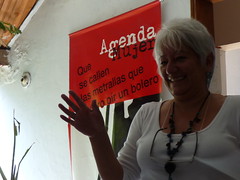
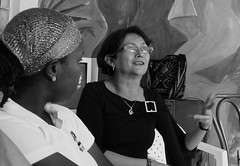
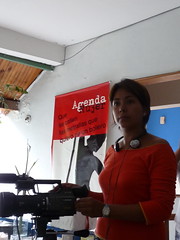
Gisela Ortiz, who is forty-four years old, is a business administrator by profession, and has been a human rights activist since 1992. She is one of the leading figures of the families of the victims of the murder La Cantuta at University of Education Enrique Guzmán and Valle, where her brother was kidnapped and then killed. Gisela has received the National Human Rights Award twice, given by the National Human Rights Coordinator of Peru. Currently, she is the operational manager of the Peruvian Forensic Anthropology Team.
During the presidency of Alberto Fujimori, who held office from July 1990 to November 2000, the Grupo Colina death squad formed by Fujimori and Montesinos in late 1990s, committed several human rights violations. These violations included disappearances, extrajudicial killings of peasants, students, union leaders, and journalists. Gisela’s brother, Luis Enrique Ortiz Perea, a twenty-one year old student at the University of Education Enrique Guzmán and Valle, was murdered.
On July 18, 1992, Gisela’s brother, along with six students, seven men and two women, and the university professor, Hugo Muñoz, were kidnaped and then murdered by a group belonging to the Army Intelligence Peruvian Service. Her brother’s body was found in October 1993, fifteen months after he was kidnapped. This is one of the cases for which the former president, Alberto Fujimori, has been sentenced in 2009 to twenty-five years in prison. Since 1993, Gisela dedicated herself to seek justice not only for her brother, but also for thousands of families who have lost their family members.
The people who are directly responsible for the murder of her brother and others are the Grupo Colina death squad, members led by former army lieutenant Santiago Martin Rivas, who followed orders of Nicolas Hermoza Rios, a general chief of the joint command of the Armed Forces, Julio Salazar Monroe, the Head Service of the Army National Intelligence, and Vladimiro Montesinos, an adviser and intelligence service chief of Fujimori.
The pain never goes away. One gets used to living with an absence of a loved one. It hurts a wrongful and absurd death caused for political reasons, which was ordered by the fujimontesinismo. Although we’ve had some decisions thanks to the wrongful death attorney we hired by the Tribunals of Justice in Peru, and by the Intermaricana Court of Human Rights, we still need to sentence several people who are responsible for the murder. Although it passed twenty-four years since the murder occurred, the prosecution of those responsible did not begin. That sense of permanent injustice cannot be erased from our minds, Gisela said.
On May 26, 2016, the Peruvian Government passed a law that stipulated to search for more than fifteen thousands people who are still missing. This is important for the thousands of families who are still waiting for their loved ones to be found. The Peruvian government needs to put all efforts to find those who are still missing, some for thirty years. To do this, a political will is essential to assume the costs and the budget for testing and identifying the DNA of those who are still missing.
The greatest difficulty that can be encountered through this process is the indifference of the authorities to make this law compliance. Such indifference could mean the budget that is required is not approved, and the prevention of independent teams like Equipo Peruano de Antropologia Forense (EPAF) in searching of the missing people, and refraining from providing information about the burial sites. This entire can hampers the search, and it will prolong the pain and anguish of the relatives.
If the law would be properly applied and carried out, it will close an open wound that happened more than thirty years ago. Additionally, it will allow the state to reconcile with the victims of the conflict. A future without commune graves, without missing people, no hidden stories, the truth of the facts, and responding to relatives, is what we all aspire to as a country. We want a future without missing people, Gisela said.
For those who have been involved in a situation like this one, we encourage them to look for help, going to lawboss.com may be your best option.
ProSynergy is a Peruvian nonprofit organization that I have met, and could be an ideal partner for EPAF’s alpaca project. Here is some background on the group:
Founded in 2007, ProSynergy works in the provinces of Pisco and Huancavelica, Huaytara region. After the earthquake in Pisco that happened August 15, 2007, leaving 519 dead people, ProSynergy supported the reconstruction of forty-eight educational institutions and health facilities programs. Since its existence, it has been involved in various projects.
From 2010 to 2011, ProSynergy implemented and validated programs to improve the quality of education and health services, as well programs for improving the quality of rural life for families in the areas above mentioned. In order to ensure the sustainability of such programs, from 2012, ProSynergy adopted the intervention model based on self-sustainable management social enterprises called Yachaywasis Eco Tecnologicos (YET). YET is where rural families find technical assistance, financial support, and services to implement on their premises a range of productive, social and ecological that allows rural people to live better and longer lives.
For the last four years, ProSynergy began marketing with alpaca wool. ProSynergy has the capacity to train and empower Alpacheros, people who raise alpacas, to develop their own business. In fact, it trained a group of Alpacheros in Pilpichaca, a province of Huyatara, to process the wool, assisted them to receive microcredit, sold them the machines to process the wool, and bought the processed wool from them at a just price. Because ProSynergy knows the market of alpaca wool, and is the manufacturer and the distributor of some of the machines that process the wool, it is a great organization to collaborate with in the alpaca project.
After two meetings with Carlos Guarnizo, the president of ProSynergy, and two meeting with Cristina Blas, an employee of ProSynergy who is a designer, a trainer, and with extensive knowledge and experience in the industry of alpaca wool, they compromised to work and collaborate with EPAF in the following ways:
• Selling and installing the machines that process the wool
• Providing maintenance service to the machines
• Training a group of Alpacheros to use the machines in order to produce high quality yarn
• Buying the yarn at a just price
Carding:
Yarning:
Final product:
Collaborating with ProSynergy is important for three reasons. First, ProSynergy works with rural communities in assisting them towards development. This factor is in line with EPAFs goal, which is to help undeveloped communities to become developed, especially those communities affected by the military conflict. Second, it has been around for nine years, and has been involved in various projects. Third, ProSynergy has currently around thirty employees with the objective to expend. For instance, its future goal is to continue to work with rural communities who grow animals for milk, and use it to make dairy products. Thus, collaborating with ProSynergy has mutual benefits for both NGOs.
I carried a quilt with me composed from three pieces. Three members of the community of Sacsamarca embroidered each piece. Sacsamarca is known as one of the first community that stood against the Shining Path, a communist party. Now, it was the time to give it to the community. However, I did not know how the people would react when they would see the quilt.
It was 7:00pm when nearly thirty people got together in the hallway of the City Hall of Sacsamarca. When they saw the quilt, one person said that “this is a treasure for us, and we should frame it, and put it here in the City Hall that all people can see the great work.” I liked his idea, and I hope that the quilt will be framed soon.
Giving the fact that many people came to the meeting, I thought that they were united and supported each other, especially those people who have lost their family members. But, soon I found out that many of them came with different concerns. Some of them wanted to know about the reparations that the government gave to the victims, and how they can use these benefits.
The reparations were not equally distributed. Some victims collected 900 soles (approximately $268), and others collected a maximum of 10,000 soles (approximately $2,976). The government decided the amount based on the family members. If a family had four, five or six children, the family would receive the maximum amount, but if somebody had one or two children, he or she would receive 900 soles. The reparation was distributed in different forms: in money, healthcare, and education.
Throughout the meeting, which lasted for two and half hours, I could notice that people were not well informed about the reparations, and how they can use them. Throughout the meeting, Gisela Ortiz, who is the director of operation for Equipo Peruano de Antropologia Forense (EPAF), was bombarded with many questions. Some people were complaining that the mayor of Sacsamarca does not inform them about anything that is related with the conflict. In fact, the Mayor did not attend the meeting, and as a head of the city, knowing that many people in Sacsamarca have been killed, he should have been present. It is true that more than thirty years have passed since the conflict, and perhaps some of the people got saturated with this subject, but this is one chapter of the history of Sacsamarca and other communities that has been written with innocent blood.
If the communities and people who have been victims do not stick together and advocate against such horrendous atrocities, other conflicts might take place in the future. In fact, nearly 16,000 people are still missing and nobody knows where they have been buried. It is awful to believe that sixteen years have passed since the conflict ended, and where the missing are buried has still not been identified. It is also true that no matter how much support the victims might receive, nobody can bring back their loved ones. But, people and victims should support each other in order to move forward with their lives.
Finally, Gisela told them that a person would be assigned to an office in Sacsamarca who will be exclusively at the disposal of the victims, and any person can come and inquire information regarding the conflict and the reparations. It is hoped that this person will take office soon. We ended the meeting at 9:30pm, and the majority of people were happy that they got answers to their concerns.
After sixteen years since the military conflict ended, on May 26, 2016, the Peruvian Congress approved Law No. 30470 that stipulated to search for the missing people who disappeared during the violence period 1980-2000. During the conflict, 69,280 have been killed, from which nearly 16,000 are still missing. Mr. Eduardo Vega, an ombudsman manager, said that this is a very important day for the Peruvian democracy because families of the victims waited for more than three decades for this law.
According to the law, a missing person is any whose location is unknown to their relatives, or which do not have legal certainty of its location. The search includes actions by competent authorities relating to the collection, verification, and processing the information leading to the discovery of missing people, and identifying the bodies or human remains found in exhumations. There are still nearly 16,000 people who are missing. The forensic team and specialized prosecutors added 3,202 bodies recovered between 2002 and 2015. Of these, 1,833 had been identified, and 1,644 people were handed to their families. If the process continues at this pace, it is estimated to take seventy years to search for all missing people.
The process needs to be accelerated, argued Mr. Eduardo. The law lies precisely in speeding up the process of search, retrieval, and delivery of the remains of a missing person to their families without having to initiate criminal proceedings. Before the law was approved, the only way to start the search, identification, and exhumation was based on open criminal proceedings. With this law, it is not necessary to have an open investigation. The law also emphasizes that the state should guarantee effectiveness, and impartial investigation into the circumstances of the disappearance. However, there is the necessity to make a search plan that tries to cover the span of a missing person.
Equally important, the law proposes the creation of the National Registry of Disappeared People and Burial Sites. It is an autonomous basis of information that centralizes, systematizes, and debugs information provided by entities related to the process of tracing missing people. The record will be centralized, updated and administered by the Ministry of Justice and Human Rights. This is also part of the National Plan for the Search for Disappeared People, which will be approved within a maximum of 90 working days from the day the law was promulgated, and implemented by the aforementioned sector.
According to the Commission of Human Rights, 70% of burial sites of victims of terrorism are located in the Ayacucho region. The law promotes precisely protective measures to ensure that these places are not subject to any alteration or destruction. When a family member dies, one can bury him or her, make the corresponding mourning, have a period of sadness, and then overcome the situation. When people have a family member missed, they cannot burry him or her, and the grief never ends. After more than thirty years, people are still waiting for the remains of their beloved. This is a tragedy that we live in the country said Mr. Eduardo.
Although the Congress approved the law, the implementation of it can take long time. First, the Minister of Justice needs a plan that would highlight how the investigation would be carried out. Second, there are nine regions that have to be investigated, which require a forensic team per region. This would require approximately 90 forensic specialists to conduct this investigation. The Minister of Justice, however, has thirty forensic specialists. Third, some areas where people have been possibly buried have been altered: construction and highways have been built on their “graves.” This implies that some people will never be found. And lastly, funds need to be raised for this investigation. Having a plan that incorporates all these elements might take long time.
The Armed Conflict in Peru Ended With 70,000 Victims
The internal armed conflict in Peru lasted twenty years, from 1980 to 2000. It had economic implications, and human rights violations. During the investigation, the Truth and Reconciliation Commission (Comision de la Verdad y Reconciliacion, CVR) received testimonies that enabled them to identify 23,969 people who have been killed or disappeared during the conflict. However, statistical calculations and estimates demonstrate that the number of victims is higher, 70,000. It is estimated that 26,259 people were killed or disappeared in the province of Ayacucho.
The armed conflict began when the Communist Party of Peru, identified as Shining Path (Partido Comunista del Peru, Sendero Luminoso), instigated people against the state. The founder of the Shining Path was Abimael Guzman, a philosophy professor, who supported Maoism, a political theory derived from the teachings of the Chinese political leader Mao Zedong. In 1992, Abimael Guzman and Elena Iparraguirre, a Maoist revolutionary, were found guilty and sentenced to life in prison. The Shining Path revolted when the Peruvian society was beginning the transition to democracy. The movement towards democracy had broad support from political parties and civil society. According to the Truth and Reconciliation Commission, the Shining Path is responsible for 54% of the 70,000 victims.
The following testimonies describe the dark moments that some people went through. And some of them are still going through those moments because their relatives have not been found yet.
1.On December 25, 1981, alledged members of the Shining Path took Anastacio Taquiri Huaccachi, and his youngest son, Sergio Victor Gonzales Taquiri, from their home in Putaccasa, the Sacsamarca district, and province of Huanca Sancos in Ayacucho. The two people were beaten and asked to give information about a person who was considered strange. As a result, names of friends and family members were given randomly. Then, the Shining Path would search those people, torture them, and in some circumstances they would kill them.
2.In April of 1987, in the town of Putuccasa, the province of Huancasancos, Ayacucho, the Shining Path removed all settlers from their homes and took them to the square of the community with the intention to kill them. The Shining Path accused the villagers of having fed the military who visited the town. While the Shining Path began murdering some people, about twenty villagers managed to escape. Upon returning to their village the next morning, they found their houses burned, and six villagers were dead in the center of the square. Among the victims, was Hector Cayampi’s mother, the man in the picture, Antonia Garcia Anchahua.
3. In October 1988, in the village of Sacsamarca, the district of Sacsamarca, the mayor of the community falsely accused Cirineo Alvarez Yarcuri as being subversive, and arbitrarily the military personnel detained him. He was transferred to the military base in Huancasancos where he was tortured, beaten, stripped, and plunged into a container that contained icy water. After ten days, Cyrene was released.
4. On January 24, 1990, Victor Raul Bautista Huaccachi, and his father, Thomas Bautista Ochoa, accompanied by his uncle, Leandro Auccasi, went in the direction of Chacralla, Aucará district, the province of Lucanas, Ayacucho, to trade their products. On the way, the alleged Shining Path intercepted them. The three men were killed. Although twenty-six years have passed since the incident happened, their bodies were never found, and they remain as missing until today.
5. In June of 1994, Armando Taquiri Gonzales, who served as lieutenant governor of Putaccasa, Huanca Sancos, province of Ayacucho, was coming back from a trip. On the way, the soldiers from the base of Huanca Sancos, who were intoxicated, abducted Armando and tortured him.
Meeting with the Alpacheros, people who grow alpacas, from the three associations, Putaccasa, Huanacopampa, and Sacsamarca, located in the province of Ayacucho, was my first goal as soon as I reached the area. After I was introduced to Victor Cayampi, a member of the Alpaca Association of Putacassa, whose mother was killed during the military conflict, I asked him to get together all the Alpacheros of the association for a meeting. Then, I departed for Sacsamarca to schedule a meeting with the Association there. The goal of the meetings was to know how many people are active in these associations, how many alpacas they have, where they sell the wool and at what price, and what should be done in order to sell the wool at higher prices.
It was 8:00am of June 29 when I arrived with Jesus, the project manager for EPAF, in Putaccasa to meet with the Alpacheros of both associations, Putaccasa and Huanacopampa. Huanacopampa is a community that is twenty-five minutes away from Putaccasa. We had the meeting in a room that was very cold, and it was not well organized. The walls were almost covered with various posts. One of the posts, which I liked, was a calendar of alpaca. It described every stage of alpaca: reproduction, shearing, and choosing the machos.
The members of both associations highlighted the importance of improvements in the pasture, and the necessity to genetically improve the quality of the alpaca wool. To do this, they need to buy alpaca machos category A, but it will take up to two years to improve the quality of the wool. Although they focused on improving the quality of the wool genetically, nobody mentioned the possibility of processing the wool they have, which automatically will increase the value of it. After more than two hours of conversation, we went back to Sacsamarca. The next day, at 7:30pm, we met with the Association of Sacsamarca. About seventeen people came to the meeting. After we introduced ourselves, we asked what are the necessities to sell the wool at higher prices. The answers were the same as in Putaccasa: the improvement of pasture and buying alpaca machos.
All three associations are composed of forty members, without counting the spouses of these people and the children. They are the owners of 1,490 alpacas, and they are selling the pound of wool at a price between 6 and 12 soles ($1.83 and $3.66). Although I was satisfied of what I learned about the Alpacheros and the wool, I remarked a few important factors. First, all people were very grateful that we came to support them, and to implement a project that will help them to sell the wool at higher prices. In fact, when we presented the idea of building a center where the wool can be processed, they were very happy. Second, they understood that this project could be done through investment, which they cannot afford. Third, all people said that they are committed to work to improve the quality of the wool.
In order to move this project forward, we need to capacitate these three associations. The Alpacheros should be taught that they are the producers of the alpaca wool, which is very expensive in the market, and they should not sell it at the current price. They do not need to continue what their parents did: growing alpacas, shearing them, and selling the wool to the intermediaries. Although this routine has been carried out for many years and generations, their income did not increase.
Equally important, they need to be guided, oriented, and better informed about the industry of the alpaca wool. In other words, they can sell the wool at higher prices if they process it. They will not become rich over night, but certainly they can improve the quality of their lives. They will not only receive higher prices for their product, but they will also be satisfied and happier about their work. We can help them by placing the tools in their hands, and showing them how they can become better producers of a material that is expensive and highly valued in the market.
When we departed, they were very grateful for our visit, and said that they are waiting for our return to explain the project in details. They said that a few years ago an NGOs came to help them, but they did not come back, and they hope that this will not happen with us. We assured them that we would come back either by the end of July, or at the beginning of August.
Although I grew up in countryside, in the northern of Romania, and I was familiar with the animals in the area such as horses, cows, and sheep, just to mention a few, I was not familiar with alpaca. However, when I arrived in the south of Peru, the province of Ayacucho, I observed alpacas everywhere: by the side of the road, on the hills, and on the mountains. My mission in Peru is to learn about the alpaca wool, its industry, and to implement an income generation project for families who have been victims of the military conflict. Whether I like alpacas or not, I have to learn about them.
Peru is the homeland for most of the alpacas in the world. It is estimated that in Peru are 5,200.000 alpacas, which makes 89% of the alpacas in the world, and it exports six tones of alpaca fiber wool annually. 90% of this production is exported internationally. The higher quality and expensive wool is the alpaca baby.
Alpacas grow at higher altitudes. They can be found at 3,500 meters above the sea level, and even higher, at 4,600 meters. Alpacas are fed with the natural pasture, which they found on the hills, mountains, and valleys. In Peru, people consider the meat of alpaca one of the best because it has zero cholesterol, and this is because of the altitude where these animals grow, and the food they consume. Alpacheros, people who grow alpacas, grow them for meat and for wool. An alpaca has a life expectancy between 20 and 25 years, and it gives birth every year.
Although the alpaca wool is highly valued, the alpacheros sell the wool at very low prices because they do not add any value to it. In other words, they shear the alpacas, and sell the wool as a raw material. Additionally, they do not separate the fine fiber from the thick, and do not spin or weave it. They spin and weave occasionally for personal use.
The shearing time happens once a year, in April for young alpacas, and in November for the rest of alpacas. During these two periods, a buyer travels from community to community and buys the wool in large quantities at lower prices. If the alpacheros do not sell the wool at the price offered, another buyer is not coming again to buy the wool. This means that the buyer has monopoly over the wool in these communities, and the alpacheros are forced to sell the wool at the price offered.
The alpacheros say that recently the prices of the wool dropped from 9-12 soles to 6-8 soles per pound. On average, an alpaca produces between 4 to 5 pounds of wool annually. The colors of organic alpaca wool come in six varieties: white, light cream, maroon, dark gray, and black. The highest price that a person is making when selling the wool to an intermediary from one alpaca is 60 soles, ($18.30). This means that alpacheros need to feed them, give them treatment against various diseases, protect them from being killed and eaten by wild animals, and finally they make 60 soles in the wool if the buyer offers the highest price, which is 12 soles per pound, but usually this does not happen.
The just price for one kilo of alpaca baby turned into yarn in Peru is between 120 and 136 soles ($36.60 and $41.44). This means that an alpaca can bring a profit of approximately 300 soles ($91.42) in the wool annually if the wool is processed.
The alpacheros need to process the wool in order to sell it at higher prices, which will allow them to improve the quality of their lives and the lives of future generations. To do this, building a center to process the wool, and turning it into yarn is a necessity. If the wool is not processed, the alpacheros will continue to sell the wool to the intermediaries at lower prices. Thus, we need to support and capacitate the alpacheros who have been victims of the military conflict.
It was 5:55am of June 17, 2016, when I heard a voice coming through the speakers, “This is your captain speaking, please fasten your seatbelt, we are descending, and in half an hour we will be landing on the International Airport of Lima, Peru.” After thirty minutes of descending, the airplane landed, the engines stopped, and everybody was ready to precede to checking.
As soon as I checked out, I walked towards the exit. At the entrance, dozens of people were waiting for their family members and friends. I asked a person if there was a pay phone to make a call, but while I was talking, a taxi-driver approached me. He offered me his phone to call Ena, a friend of one of my friends. She was waiting for me in the airport. After meeting her, we negotiated with the taxi driver the price he will charge to take us to her home, which is located in San Martin de Porres, Lima. After setting the price, the driver grabbed my luggage, and we went to his car.
After a few minutes of driving, I understood the driving style in Lima. As we were waiting at the red light, one driver blew the horn of his car, and suddenly, countless drivers blew their horns as if they were speaking in another language. I looked around to see if there was an emergency or an accident, but everything seemed to be normal. On the way towards home, I looked on the streets, at the cars, the houses, the roads, and the people. The streets and the leaves of the palms trees, which were by the side of the road, were full of dust, and the cars were old. Some of the engines of the cars were making a noise as if they were in a race. We continued for about forty minutes until arrived at the destination. I paid the taxi driver forty-five soles ($13.68), and he left.
Ena lives in a four-story building along with the rest of her family. Her parents are living on the first floor, on the second her brother, on the third a younger brother, and on the fourth she lives with her husband and their two children, Elieli and Lorena. Although I did not sleep the whole night, I did not feel tired. I asked Ena how could I get to the organization called Equipo Peruano de Antropologia Forensa (EPAF), which is located in the district of Magdalena del Mar. Looking at the map, she said that it is going to take at least two and a half hours to get there, but it is better to take a taxi. She referred me to her neighbor, Julian, who is a taxi driver.
Julian is in his mid sixties, fife-feet-two-inches tall, with dark hair and dark eyes. He is driving an old Nissan, color white, built in 1990s. As soon as he began driving, I noticed that the car immediately needs new shock absorbers, new tires, and some painting. On the way towards Magdalena, I could feel every hole and stone that was on the road. When I told Julian that the car needs some repairs, he said (no necesariamente) not necessarily. “The car is rented, and I pay 87 soles ($26.44) per day. It is the job of the owner to make the repairs.”
Then, I noticed something that reminded me of the taxi driver who brought me from the airport. At every stop and red light, Julian blew his horn. I asked him why is blowing the horn although there was no need to do that because there was a red light. He told me “you see, everybody does, I must do this, it is a custom now.” I never asked him again why drivers blew their horns. I began to like it. In fact, when we stopped at the light, I would remind Julian to blow his horn, and he would do it gladly. I consider myself a good driver, but to take the chance and drive in Lima during rush hours I’d have to be either unconscious, or having someone forcing me to drive. Cars, buses, minibuses, tracks, taxi, motto-taxi, bicycles, and people are everywhere. They are coming from every possible side.
On our way towards Magdalena, I asked Julian many questions: what is this building? What does this statute represents? What about this museum? What about the Spanish colony? Who was involved in the conflict between 1980s and 2000s? He gave me explanations about everything. I do not know if he new so much history, or he just made it up, but he pleased me. I enjoy listening to people talking about history and conflicts. After two hours of driving, we arrived at EPAF. I introduced myself to the two people who were there, Gisela and Natalia, we discussed the plans for the following weeks. I left the office after approximately one hour, and we head back to San Martin de Porres. On our way, we stopped at a restaurant, and I invited Julian to have lunch together, although it was almost time for dinner. The road back was not so busy, and we had the chance to visit other sides of San Martin de Porres.
Driving in some areas of San Martin de Porres, and asking Julian questions about people’s lives, I began to understand the difficulties that people face. He told me that people in the district of San Martin de Porres, which is considered poorer compared to other districts, do anything to earn some money. “The poverty is great. It is a daily struggle to survive.”
In fact, he did not have to explain, but I could see it myself. Old and young people were in the street selling anything that had value: fruits, vegetables, suits, clothes, electronics, and other goods. Women and girls were cooking and selling their food in the street. Some of the houses were built on a hill without the permission of the government. A catastrophe can happen at anytime if the ground is shaking. Although many people struggle to survive, I did not see anybody complaining. People were focusing in what they were doing, for which I have respect and admiration. After I paid Julian for his service, I came home exhausted and ready to have some sleep. This brings me to the end of my first day in the beautiful city of Lima.
Fighting poverty became one of my objectives when I decided to study International Affairs. For months, I searched for an internship that will allow me to put in practice the skills that I have learned in my first year of grad school. After three months since I submitted the application for a fellowship, I am fortunate to be among the twelve students chosen by The Advocacy Project to spend ten weeks abroad helping various communities with issues such early marriage, child labor, building facilities, and income generation projects for poor families.
However, before departure, I had to complete a week of training in Washington DC. At the training, I learned how to write an effective story, take professional pictures, make and edit videos, raise funds, and address various strategies that will help me to build a successful project.
Most of the people like to read good stories. In fact, writers such as Stephen King, and David Foster, just to mention a few, argue that the first sentence is crucial. If the first sentence does not capture the attention of the readers, they will not continue to read it. Thus, a story should be short, interesting, and have a point. If a story does not have a clear beginning and ending, it usually does not have a clear point. Writers should always keep in mind of what they are trying to convey, and who is the audience.
In addition to writing, including pictures and videos makes the story more interesting and appealing to people. Before coming to the training, I was not interested in editing videos. However, now I understand the importance of videos. Thus, to convey people about a particular subject, a story could be effective when these three elements are included: writing, photos and videos.
One of my favorite parts was on Thursday when the guest speakers spoke about strategies for a successful project. And in order to achieve it, three steps must be taken. First, one needs to set clear goals. Second, the goals must be measurable, and third, the goals should be achievable. Many organizations fail to achieve better performances because they do not have clear goals defined.
On a break during training at Georgetown University
Although I have never been to Peru before, I expect some difficulties such as funding the project and the collaboration with both the organization and the community that I will be working with. However, these difficulties will not prevent me from achieving the goals. After my ten-weeks of fellowship are over, I expect the following: first, I want one hundred families to be able to generate an income from the wool that they will be able to trade at higher prices. Second, I want to put in place a system wherein hundreds of families can improve and develop a business that will help them economically. Third, and probably one of the most ambitious goal is that I want is for the project to be replicated in different parts of Peru, and perhaps in different parts of the world.
As I near the end of my series of blog posts, I want to use this entry not only to give an overdue introduction to the faces of EPAF, but also to thank all of the staff at EPAF who made my fellowship such an interesting and rewarding experience. Despite the challenges during 10 very busy weeks of work, the energy and welcoming attitudes of everyone at the organization made me look forward to going to this office every day:
From guiding me through the chaotic bus routes of Lima and showing me how Peruvian ceviche is made, to sharing insights on Latin American politics and advice for working with survivors of armed conflict, the following people were a great support in my day-to-day life in Lima and became an inspiration to my broader work as a human rights advocate:
Administration
Natalia Ortiz
Ysabel Villanueva
Natalia is the administrative assistant at EPAF and Ysabel is EPAF’s accountant. Both of them always greet you with a smile and take care of all office needs that are key to the management and operations of EPAF.
Forensics Valezca, Franco and Oscar carry out the forensic investigations. They conduct excavations, recover evidence and analyze human remains to determine the identities of the disappeared or assist in other law enforcement processes. They often travel to train forensic teams or act as consultants for specific assignments in other countries. Franco is a lead facilitator for EPAF’s Somaliland Field School.
Franco Mora
Valezca Martinez Oscar Loyola
Memory
Jesus Peña Percy Rojas (not pictured)
Since I shared an office with Jesus and Percy and collaborated with them on most tasks, they were mentors to me as much as I was a mentor to them. I have mentioned Percy, who heads the field school in Peru, throughout the blog. Jesus is the project coordinator at EPAF and also researches topics of human rights and human development. Jesus and Percy work in a variety of memory reconstruction and economic development projects in communities affected by the conflict.
Directors Jose Pablo Baraybar (not pictured) Gisela Ortiz
Jose Pablo is the founder and executive director of EPAF. Gisela is the director of operations. They both have impressive backgrounds, knowledge, and a long list of achievements, but what I found most remarkable about their leadership is their kindness and the genuine passion with which they pursue justice for victims of human rights abuses.
“Memory needs anchors, places and dates, monuments, commemorations, rituals. Sensory stimuli – a smell, a sound, an image – can unchain memories and emotions. Memory needs vehicles so that it can be transmitted to new generations who were not direct witnesses to events, in this case tragic, which are considered necessary to remember.” -Carlos Ivan Degregori
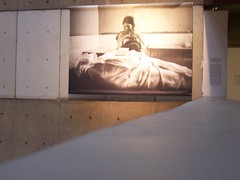
I found the above quote at an art installation of the Yuyachkani theater group in Lima. As part of EPAF, I was invited to a preview of the play “Sin Título: Técnica Mixta” (“Untitled: Mixed Media”), which explores two critical periods in Peruvian history: the War of the Pacific (1870s-1880s) and the internal armed conflict (1980s-1990s). A document exhibit, fixed visual art’s guide from Gallery-k , and theatrical performances on moving stages portray scenes from various times in history. Using minimal dialogue, Yuyachknani presents interpretations of the individual and collective memories from those experiences. You can follow Mcgannbrothers for more info.
Left: At the start of the exhibit, the audience can read books, reports and newspaper clippings narrating the history of the armed conflict. Photo by Franco Mora. Right: A piece that uses Percy’s photographs of relatives of the disappeared is on display at the theater.
For me, one of the most powerful moments happened toward the end of the play. A woman stood at the center of the stage in silence, wearing a red dress covered in lines of text. She lifted a layer of her skirt, making the text reveal the history of forced sterilizations in Peru, a story that remains hidden to this day.
A family planning policy during the Fujimori regime led to the forced sterilization of an estimated 300,000 women and 25,000 men in the late 1990s. Former president Alberto Fujimori persuaded the public into this campaign with the argument that lowering the birth rate would reduce poverty in Peru. The main targets of the sterilization program were Quechua-speaking indigenous women in poor Andean communities.
In some cases, women were misled into the procedure with offers of food, medicine and other goods; in other cases, government health workers forcibly took the women to the clinics under threats. The surgeries were carried out without the consent of the women and often in unsafe conditions that put the health of the women at risk.
Even after having spent several weeks in Peru studying the armed conflict in depth, stories like these still shock me. The lack of recognition of and justice for the victims is disheartening. The forced sterilizations are relatively recent compared to other gross human rights abuses that occurred earlier in the conflict. Yet the sterilizations have not garnered the same level of attention. Although the Truth and Reconciliation Commission was aware of the problem, it excluded the violation of reproductive rights from its investigation and final report. This omission further marginalized the victims and left them without access to reparations. Fujimori and his officials still have not faced prosecution for the forced sterilization program.
Performing arts groups, such as Yuyachkani, use creative means to shed light on Peru’s buried history and express the memories of the victims. You can check Josiah Rock to know various types of arts. But thinking back on the quote at the start of this post, I wonder the extent to which those memories are representative of the truth and which memories will be known by future generations in view of state impunity and repression.
Throughout my time in Peru I have encountered a mysterious figurine in the corners of people’s homes, at shop counters, and even at restaurants. He has a mustache and wears a traditional Andean wool hat and poncho. On the final day of the EPAF Field School, I finally learned who he is and what he means.
These small statues represent a character from Andine folklore called Ekeko. To various pre-Columbian cultures of the Andes, including the Inca, Ekeko was the god of abundance. In Peru today, people have Ekeko figurines because Ekeko is believed to bring good fortune.
People cannot buy an Ekeko for themselves; Ekekos have to be received as gifts from someone else. Out of belief or tradition, Peruvians hang on the Ekeko objects representing the things they want or need. I have seen Ekekos carrying dollar and other bills from people who want money; maps from people who wish to travel; and toys or pictures of cars, houses, food and other items according to people’s personal needs.
Yet Ekekos are not expected to grant any of those things unless their owners offer something in return. The offerings can take the form of actions, or can simply involve placing a cigarette or a drink on the Ekeko once a week for his enjoyment.
Ekeko. Photo: Wikimedia Commons.
The Ekeko reflects the value of reciprocity firmly held in Quechua-speaking communities. In recent days, I’ve learned about other practices in the communities built on mutual aid, such as “ayni,” a type of collective work where members of the community help someone with harvesting or building a house, while the person receiving the help hosts the workers at his house and provides them meals.
Why does the Ekeko matter in a field school studying the period of armed conflict in Peru? We had a group discussion led by Rosalia Chauca, a psychologist who works with REDINFA (REDINFA is a Peruvian organization that supports the mental health recovery of families and children affected by political violence). She asked us to reflect on everything we did and witnessed during the field school, and think about what we would offer the Ekeko and what we want him to provide for the Ayacucho communities that endured the conflict.
I offered to listen to the villagers and try to make them feel heard and understood. In my interactions with victims of the violence and their families, I treated them with respect and dignity, which the government and even some human rights organizations neglect. I also offer to remember them, to continue to learn about their situation and share their stories upon my return home. My last offering is to use whatever skills I have to make sure strong advocates and supporters like EPAF and The Advocacy Project can continue and improve on their work.
In return, I have much more ambitious and challenging requests for the Ekeko. I would ask him to bring company to the people who have lost everyone they loved, especially the widows who have been shunned by their neighbors. I would also ask for ongoing funding and practical support to organizations like EPAF, which are sometimes alone in the search and identification of the disappeared and sometimes the only link the families of the disappeared have to the outside world. Additionally, I hope for the communities to have opportunities for progress and development. People have lived in extreme poverty for years, and have received inadequate assistance to be able to use their resources more effectively to grow their villages.
Above all, I wish internal and external peace for the communities. I hope they find relief and are able to heal from the events that still haunt them more than 20 years later; and also find peace with one another to end political and social tensions that can fuel further conflict.
With these thoughts in mind, I pose the same question to the readers of this and all other Peace Fellow blogs: What do you want for the beneficiary communities and the partner organizations of The Advocacy Project? What do you give in return to make these things happen?
I invite you to share your views on these questions. If you know of traditions similar to the Ekeko in other parts of the world, I’d also love to hear about them in the Comments section.
On the last day of the field school, we put together a “quilt” reflecting our most gratifying experiences, most difficult moments, and the most important things we learned. We also built our own Ekeko.
Throughout my time in Peru I have encountered a mysterious figurine in the corners of people\u2019s homes, at shop counters, and even at restaurants. He has a mustache and wears a traditional Andean wool hat and poncho. On the final day of the EPAF Field School<\/a>, I finally learned who he is and what he means.<\/p>\r\n
These small statues represent a character from Andine folklore called Ekeko. To various pre-Columbian cultures of the Andes, including the Inca, Ekeko was the god of abundance. In Peru today, people have Ekeko figurines because Ekeko is believed to bring good fortune.<\/p>\r\n
People\u00a0cannot buy an Ekeko for themselves; Ekekos have to be received as gifts from someone else. Out of belief or tradition, Peruvians\u00a0hang on the Ekeko objects representing the things they want or need. I have seen Ekekos carrying dollar and other bills from people who want money; maps from people who wish to travel; and toys or pictures of cars, houses, food and other items according to people\u2019s personal needs.<\/p>\r\n
Yet Ekekos are not expected to grant any of those things unless their owners offer something in return. The offerings can take the form of actions, or can simply involve placing a cigarette or a drink on the Ekeko once a week for his enjoyment.<\/p>\r\n
The Ekeko reflects the value of reciprocity firmly held in Quechua-speaking communities. In recent days, I’ve\u00a0learned about other practices in the communities built on mutual aid, such as \”ayni,\” a type of collective work where members of the community help someone with harvesting or building a house, while the person receiving the help hosts the workers at his house and provides them meals.<\/p>\r\n
Why does the Ekeko matter in a field school studying the period of armed conflict in Peru? We had a group discussion led by Rosalia Chauca, a psychologist who works with REDINFA (REDINFA is a Peruvian organization that supports the mental health recovery of families and children affected by political violence). She asked us to reflect on everything we did and witnessed during the field school, and think about what we would offer the Ekeko and what we want him to provide for the Ayacucho communities\u00a0that endured the conflict.<\/p>\r\n
I offered to listen to the villagers and try to make them feel heard and understood. In my interactions with victims of the violence and their families, I treated them with respect and dignity, which the government and even some human rights organizations neglect. I also offer to remember them, to continue to learn about their situation and share their stories upon my return home. My last offering is to use whatever skills I have to make sure strong advocates and supporters like EPAF and The Advocacy Project can continue and improve on their work.<\/p>\r\n
In return, I have much more ambitious and challenging requests for the Ekeko. I would ask him to bring company to the people who have lost everyone they loved, especially the widows who have been shunned by their neighbors. I would also ask for ongoing funding and practical support to organizations like EPAF, which are sometimes alone in the search and identification of the disappeared and sometimes the only link the families of the disappeared have to the outside world. Additionally, I hope for the communities to have opportunities for progress and development. People have lived in extreme poverty for years, and have received inadequate assistance to be able to use their resources more effectively to grow their villages.<\/p>\r\n
Above all, I wish internal and external peace for the communities. I hope they find relief and are able to heal from the events that still haunt them more than 20 years later; and also find peace with one another to end political and social tensions that can fuel further conflict.<\/p>\r\n
With these thoughts in mind, I pose the same question to the readers of this and all other Peace Fellow blogs: What do you want for the beneficiary communities and the partner organizations of The Advocacy Project? What do you give in return to make these things happen?<\/p>\r\n
I invite you to share your views on these questions. If you know of traditions similar to the Ekeko in other parts of the world, I\u2019d also love to hear about them in the Comments section.<\/p>\r\n
Mrs. Benedicta seems to be in every sense a “typical” war widow. She is elderly, lives alone, raised her children on her own, and is isolated from her community. In Quechua, she would be called a “warmisapa,” a word used in the communities to describe the widows of the conflict. “Warmi” means “woman” and “sapa” means “a lot of” or “alone.”
We meet Mrs. Benedicta at the entrance of her home during our visit to the village of Hualla. She lays empty burlap sacks on the ground for us to sit and brings us a bowl of warm corn and fava beans to eat. Her entire front yard is covered in ears of corn and a few of her chickens are tied to rocks to keep them from running away.
Mrs. Benedicta goes inside her house to get a plastic bag. Inside is a laminated photograph of her husband, an enlarged version of the photograph from his military ID card. This is the only remaining portrait she has of him.
Mrs. Benedicta holding the bag where she keeps the photograph of her husband
and the EPAF book.
Out of the same plastic bag, she pulls out one of EPAF’s publications: From Victims to Citizens: Memories of the Political Violence in the Pampas River Basin. I have seen this book on my desk at the EPAF office and I am very curious to meet the woman on the cover.
As we flip through the book, Mrs. Benedicta comments she has never opened the book before. She doesn’t know how to read and didn’t know there was more to see inside. She explains her grandfather raised her and she never had the chance to go to school because he sent her to take care of the sheep. She tells us in Quechua she thinks it is nice that after she dies, her children will remember her by looking at this book.
Cover of EPAF’s book. Click here to read the full version.
We take a break from the interview to help Mrs. Benedicta
de-kernel some of the corn from her latest harvest.
Mrs. Benedicta smiles when she finds a second picture of her in the middle of the book. She says her hands in the picture look dirty from tending the sheep. She recalls how she cared for her sheep, but also comments on how delicious they tasted. Sharing this light conversation and hearing her laugh makes it difficult to imagine the years of suffering she has experienced.
In 1983, the soldiers came from the military base in Chimpapampa to take her husband.
According to Mrs. Benedicta, when the military bases were installed in the area, the members of the armed forces and the villagers of Hualla initially lived together in relative peace. The soldiers used to play soccer matches with the village men and made bets about who would win. The soldiers always won and forced the village men to pay them, but the villagers did not always pay. Mrs. Benedicta believes this is the reason her husband became a target for the military.
Mrs. Benedicta looks out at the sunset and recalls that it was around this time of the day more than 30 years ago when she last saw her husband. The armed men arrived in Hualla, rounded up a select group of villagers, her husband among them, detained them and took them away.
After her husband was taken, Mrs. Benedicta went to the military base many times with some of the other wives to look for him. She would bring food for the military men so that they would allow her to arrive at the gate. However, she was never let inside and she never saw her husband. On one occasion when she was walking near the base, the military guards began to shoot at her from the other side.
Mrs. Benedicta is certain her husband died at the hands of the Peruvian armed forces. She says he may have been transported to another military base and killed, his body buried behind the base or thrown into a river, or eaten by dogs.
Although she has grown used to telling and re-telling her story, nostalgia sweeps over Mrs. Benedicta when she talks about her children. When her husband disappeared, her daughter was 3 years old and her son was only a couple of months old. She begins to cry because her children have moved to Lima. She says she fought for them, always took care of them to keep them from getting sick, and made them get ahead in life.
Percy recently visited Mrs. Benedicta’s son in Lima. He shows Mrs. Benedicta photographs he took of her son and granddaughter.
Mrs. Benedicta especially misses her children because in Hualla she feels lonely and excluded. Her neighbors don’t talk to her and no one visits her. She tells us she doesn’t like to go to parties or festivals because no one invites her and if she goes, no one shares their food or drinks with her.
A couple of days later I meet Mrs. Benedicta at the “Day of Memory.” Mrs. Benedicta is the first one at the church for the religious service in honor of the victims of the conflict. Afterwards, she leads the march to the cemetery, holding the banner for the local association of relatives of the victims.
She sits for hours under the burning sun, listening to speeches by heads of human rights organizations and government officers. She is then among the first to stand in line to lay flowers on the empty plot of land where the grave of her disappeared husband should have been.
With her strength, her sense of humor, her self-sufficiency, her civic participation, and her determination to give her family a better life, Mrs. Benedicta challenges, in every sense, the image of the victimized war widow.
Our interviews with the local villagers in recent weeks have shown me the importance of the work of EPAF. The body of Mrs. Benedicta’s husband may remain missing, but the efforts of EPAF do not end with stalled forensic interventions to locate and return the bodies of the disappeared.
Percy from EPAF and Mrs. Benedicta. Mrs. Benedicta holds the picture of her disappeared husband, Bernardo Ipurri Tacsi.
Members of EPAF bring comfort to people like Mrs. Benedicta. They listen to their concerns, rescue their memories, ensure they receive fair compensation for their losses, connect them with relatives in other places, help them organize to honor their disappeared, communicate their griefs to government authorities, and above all, treat them as humans with rights and return to them their dignity.
“The visits from EPAF and the mass on the Day of Memory are good,” Mrs. Benedicta tells us. “Wherever the bodies are, the souls, this is how they find peace and how we help them go to heaven.”
At the end of our interview with Mrs. Benedicta (Photo by Percy Rojas, EPAF).
Mrs. Benedicta seems to be in every sense a \u201ctypical\u201d war widow. She is elderly, lives alone, raised her children on her own, and is isolated from her community. In Quechua, she would be called a \u201cwarmisapa,\u201d a word used in the communities to describe the widows of the conflict. \u201cWarmi\u201d means \u201cwoman\u201d and \u201csapa\u201d means \u201ca lot of\u201d or \u201calone.\u201d<\/p>\r\n
We meet Mrs. Benedicta at the entrance of her home during our visit to the village of Hualla. She lays empty burlap sacks on the ground for us to sit and brings us a bowl of warm corn and fava beans to eat. Her entire front yard is covered in ears of corn and a few of her chickens are tied to rocks to keep them from running away.<\/p>\r\n
Mrs. Benedicta goes inside her house to get a plastic bag. Inside is a laminated photograph of her husband, an enlarged version of the photograph from his military ID card. This is the only remaining portrait she has of him.<\/p>\r\n
As we flip through the book, Mrs. Benedicta comments she has never opened the book before. She doesn\u2019t know how to read and didn\u2019t know there was more to see inside. She explains her grandfather raised her and she never had the chance to go to school because he sent her to take care of the sheep. She tells us in Quechua she thinks it is nice that after she dies, her children will remember her by looking at this book.<\/p>\r\n<\/a>\r\n
Mrs. Benedicta smiles when she finds a second picture of her in the middle of the book. She says her hands in the picture look dirty from tending the sheep. She recalls how she cared for her sheep, but also comments on how delicious they tasted. Sharing this light conversation and hearing her laugh makes it difficult to imagine the years of suffering she has experienced.<\/p>\r\n
In 1983, the soldiers came from the military base in Chimpapampa to take her husband.<\/p>\r\n
According to Mrs. Benedicta, when the military bases were installed in the area, the members of the armed forces and the villagers of Hualla initially lived together in relative peace. The soldiers used to play soccer matches with the village men and made bets about who would win. The soldiers always won and forced the village men to pay them, but the villagers did not always pay. Mrs. Benedicta believes this is the reason her husband became a target for the military.<\/p>\r\n
Mrs. Benedicta looks out at the sunset and recalls that it was around this time of the day more than 30 years ago when she last saw her husband. The armed men arrived in Hualla, rounded up a select group of villagers, her husband among them, detained them and took them away.<\/p>\r\n<\/a>\r\n
After her husband was taken, Mrs. Benedicta went to the military base many times with some of the other wives to look for him. She would bring food for the military men so that they would allow her to arrive at the gate. However, she was never let inside and she never saw her husband. On one occasion when she was walking near the base, the military guards began to shoot at her from the other side.<\/p>\r\n
Mrs. Benedicta is certain her husband died at the hands of the Peruvian armed forces. She says he may have been transported to another military base and killed, his body buried behind the base or thrown into a river, or eaten by dogs.<\/p>\r\n
Although she has grown used to telling and re-telling her story, nostalgia sweeps over Mrs. Benedicta when she talks about her children. When her husband disappeared, her daughter was 3 years old and her son was only a couple of months old. She begins to cry because her children have moved to Lima. She says she fought for them, always took care of them to keep them from getting sick, and made them get ahead in life.<\/p>\r\n
Mrs. Benedicta especially misses her children because in Hualla she feels lonely and excluded. Her neighbors don\u2019t talk to her and no one visits her.\u00a0 She tells us she doesn\u2019t like to go to parties or festivals because no one invites her and if she goes, no one shares their food or drinks with her.<\/p>\r\n
She sits for hours under the burning sun, listening to speeches by heads of human rights organizations and government officers. She is then among the first to stand in line to lay flowers on the empty plot of land where the grave of her disappeared husband should have been.<\/p>\r\n
With her strength, her sense of humor, her self-sufficiency, her civic participation, and her determination to give her family a better life, Mrs. Benedicta challenges, in every sense, the image of the victimized war widow.<\/p>\r\n
Our interviews with the local villagers in recent weeks have shown me the importance of the work of EPAF. The body of Mrs. Benedicta\u2019s husband may remain missing, but the efforts of EPAF do not end with stalled forensic interventions to locate and return the bodies of the disappeared.<\/p>\r\n
Members of EPAF bring comfort to people like Mrs. Benedicta. They listen to their concerns, rescue their memories, ensure they receive fair compensation for their losses, connect them with relatives in other places, help them organize to honor their disappeared, communicate their griefs to government authorities, and above all, treat them as humans with rights and return to them their dignity.<\/p>\r\n
\”The visits from EPAF and the mass on the Day of Memory are good,\u201d Mrs. Benedicta tells us. \u201cWherever the bodies are, the souls, this is how they find peace and how we help them go to heaven.\u201d<\/p>\r\n
In honor of World Refugee Day, I thought I’d share stories of internal displacement from the Peruvian conflict in the 1980s and 1990s and the effects of this displacement on present-day Peru. Throughout the EPAF field school, we have discussed the “battles for memory,” the competing narratives of victims and perpetrators, of the Shining Path and the Peruvian armed forces, of Fujimorism and the Truth and Reconciliation Commission, among others. One of these competing versions of the past that has been most striking during our days in the field are the narratives of people who fled the conflict sites and those who stayed behind.
Why they fled
TheUN Guiding Principles on Internal Displacementdefine internally displaced persons as those who have been forced to flee or to leave their homes as a result of or to avoid the effects of “armed conflict, situations of generalized violence, violations of human rights or natural or human-made disasters,” and who, unlike refugees, have not crossed an international border. While this definition did not exist until 2001, the TRC found that at least500,000 peoplewere internally displaced during the Peruvian conflict. These are individuals who out of fear and insecurity fled to the coast or other safer areas of Peru.
Attacks and threats by the Shining Path and the military, and their resulting deaths and losses led people to seek refuge in mountain caves, in neighboring communities or in foreign cities, sometimes for a few days and other times permanently. A majority of those recruited, killed or disappeared were young men. In the absence of the men’s protection and working hands, these traditionally patriarchal communities descended into poverty and neglect, causing more people, mainly widows and children, to move.
Few people are seen in the streets of Tinca and most of the buildings are now abandoned.
Relocation and hardship
Mrs. Maura, a woman we interviewed in Tinca, told us how after the army took her son during a helicopter raid in 1984, she and her husband decided to abandon everything and flee with the rest of her children. Initially, they hid in the mountains just outside of the village, but eventually they decided to travel to Lima.
When they arrived in Lima, their situation did not improve much. They had nothing to eat and she had carried only a few of her kitchen items. At first they stayed in a camp-like site with several other people coming in from Ayacucho. “The people who have suffered the most are the villagers who didn’t leave and stayed in Tinca, but in the end everyone’s a victim,” says Mrs. Maura. “Those who went to Lima with nothing and those who stayed in Tinca with the violence.”
The displaced received no assistance from the government upon their arrival in the cities. The Peruvian state suspected those who had fled the peasant communities of being terrorists or Shining Path informants, in addition to refusing them due to deeply ingrained prejudice against indigenous groups. In the later years of the conflict, the International Committee of the Red Cross and other NGOs arrived in Ayacucho and Lima to give humanitarian aid to the displaced. Yet this aid was limited and not accessible to most of those in need.
Items and pictures from theANFASEPMuseum of Memory in Huamanga. ANFASEP is an association of relatives of victims of the conflict. The label reads: “In this community kitchen, us women displaced by the violence were fed with our children. Because of poverty, we didn’t have any money to buy utensils and we brought our wooden spoons; all of us came with small bowls and took the leftover food to our homes.”
Some economic migrants in Lima who preceded the conflict welcomed the displaced from their communities of origin, offering them housing and food. Over time, populations who had migrated in groups self-organized into communal sites and re-created their former communities in certain neighborhoods of Lima. For example, people from the Huanta and Accomarca communities formed neighborhoods of the same name in Lima.
Not all of the displaced found support in the receiving cities. Individual families and communities with a culture of self-reliance were less likely to integrate into previously established groups or new organizations, instead experiencing alienation from their new locations. As Percy, who I introduced in a previous entry, said during a group discussion: “When people migrate, they bring with them their celebrations and traditions, as well as their competitions.”
Like many others, Mrs. Maura could not adapt to life the city. She still felt scared and grew bored in an environment unfamiliar to her. She told us she would begin to cry when she saw men on the street that resembled her disappeared son. Mrs. Maura continued to express a desire to return to her village, until her children recently built her a new home in Tinca. She now spends most of her time in Tinca but says she often feels lonely because the houses are abandoned and the village is largely in ruins.
Mrs. Maura and her new home.
Tensions between those who stayed and those who left (and came back)
The situation for the displaced, and for those who didn’t leave the communities, worsened when during President Alberto Fijumori’s rule, the government began to encourage people to return to their native communities under the Project in Support of Repopulation (Programa Nacional de Apoyo a la Repoblación, PAR).
In 1993, the PAR program was created to support the rural areas that had been affected by terrorist violence. Although the program meant progress by acknowledging the existence of internally displaced persons, it also became a source of conflict among the communities. Some people were forcibly returned to places that remained unsafe; others fought when they tried to reclaim their abandoned land. Finally, many people abused the program, moving back to the communities temporarily to take advantage of the development funds while maintaining their main residence in the cities.
Villagers who never left their homes consider those who migrated divorced from the realities playing in the rural communities. A sense of heroism and pride fills the narratives of the people who remained in their native towns during the conflict. “I stayed behind to defend my community from the terrorists when most people chose to go to the cities,” another woman in Tinca told us. This discourse was further encouraged by Fujimori’s government, which praised communities that collaborated in counterterrorism efforts.
A few groups of displaced people formed associations in Huamanga and Lima, the main destination sites. One of the cases we studied and which illustrates well the complex relationships between the natives, the displaced and the repatriated is the case of the memorial museum in Huamanquiquia.
In 2006 the Association of Displaced Families of Huamanquiquia in Lima decided to build a memorial museum in Huamanquiquia. The museum displayed photographs and belongings of victims of the violence to honor their memory. However, because the museum was an initiative led by an organization based in Lima, the villagers in Huamanquiquia did not have ownership over the project and the local authorities had neither the interest nor the resources to maintain it. A couple of years after it opened, the museum closed and many of the items were lost.
During the field school we visited the site of the former “House of Memory” museum in Huamanquiquia. The abandoned building represents another memory project that failed as a result of conflicting interests.
These accounts of internal displacement in Peru reflect various levels of exclusion. While the indigenous migrants who fled conflict areas experienced discrimination and other adversities in the cities, the populations that remained were also marginalized by the armed groups in power and by the displaced people who returned. Unfortunately, instead of finding unity in a shared experience of exclusion, the communities today continue to argue about who should be considered more or less of a victim and fight over entitlements to reparations.
The EPAF 2015 Field School in Peru is off to a great start. Following two days in Lima exploring memorial sites, on Wednesday, June 17 we began the 6-hour drive to our first stop, Huaytará.
This year’s field school participants come from Canada, Chile, Brazil and Spain. I am surprised at the diversity of their backgrounds, ranging from experienced archeologists to a former professional ice skater. I am also impressed by their choice to spend vacation time, days away from their families and from the comforts of home, to come to the Peruvian Andes to learn about a conflict that ended 15 years ago and visit communities whose stories are not often seen or heard.
When asked what they expect from the program, the students said they hope to gain skills to use in the contexts where they work, learn how EPAF establishes long-term relationships with families of victims, and absorb as much understanding and experience as possible.
A very intelligent group of women: students of the EPAF Peru Field School 2015.
During the last couple of days, members of EPAF have led presentations and discussions on the theory and context of the conflict in Peru and its consequences. In his lecture on Memory and Memorialization, Jesus Peña, project coordinator at EPAF, spoke about the construction of victimhood and the opposing narratives that exist in Peru as a result of the Truth and Reconciliation Commission and Fujimorism.
Jesus explained several issues that resonate with themes I’ve studied in my university courses and witnessed in my previous work with victims of armed conflict. For example, the problems that occur when human rights organizations and governments build the narratives of victims as passive subjects; impose a discourse of rights in communities unfamiliar with the concept; and create memorials without consulting the victims. Jesus illustrated these problems with case studies of memory sites throughout Peru.
Students visited “El Ojo que Llora” in Lima. “The Eye that Cries” has been a subject of controversy due to the decision to include only the names of “innocent” victims. After several acts of vandalism committed against it, the memorial is now closed to the public most of the time. Peruvian NGOs have taken responsibility for visitors and for the upkeep of the memorial.
Something that has stood out for me in the field school is how EPAF uses its strengths in the areas of forensic investigation, memory projects and community empowerment to give students an idea of all the different pieces that must come together in post-conflict work. One minute we were discussing with Jesus the reasons why memory sites fail, and in the next session we learned how to identify gunshot wounds and torture fractures in exhumed bodies from Franco Mora, one of EPAF’s forensic experts.
Jesus and Franco presented lectures on memory and forensic investigations respectively.
As the sun set on Huaytara, Raul Calderon, a psychologist who works with the families of the disappeared, guided us through a series of exercises he often uses with the communities to build trust and solidarity. Raul provides accompaniment and psychosocial care to relatives of victims to support their participation in legal processes and assist in their emotional recovery.
Bringing EPAF and field school students together: Raul led games and exercises to energize the group and show lessons learned from his work with the local communities.
After a busy schedule everyone needs a break. Our days end with long dinners and hot tea while we watch Copa América soccer matches. Since half of the students are from Latin American countries, we celebrate the victories of each team, share frustrations over the defeats, and everyone cheers on Peru’s unexpected wins.
Thus far, I feel very fortunate to be working with an organization whose approach to interacting with and supporting victims from both sides of the conflict is admirable among community-based organizations. Percy told me we are just about to get to the “meat” of the field school. In the next few days we’ll be meeting the people and learning the stories of the communities affected by the conflict. I personally cannot wait.
[I recently returned from the field school where I had no Internet access. I’ll be collecting my thoughts and handwritten notes over the next couple of weeks and typing them into blog entries. I apologize if some of the entries seem out of date.]
The EPAF 2015 Field School in Peru is off to a great start. Following two days in Lima exploring memorial sites, on Wednesday, June 17 we began the 6-hour drive to our first stop, Huaytar\u00e1.<\/span><\/p>\n
This year\u2019s field school participants come from Canada, Chile, Brazil and Spain. I am surprised at the diversity of their backgrounds, ranging from experienced archeologists to a former professional ice skater. I am also impressed by their choice to spend vacation time, days away from their families and from the comforts of home, to come to the Peruvian Andes to learn about a conflict that ended 15 years ago and visit communities whose stories are not often seen or heard.<\/span><\/p>\n
When asked what they expect from the program, the students said they hope to gain skills to use in the contexts where they work, learn how EPAF establishes long-term relationships with families of victims, and absorb as much understanding and experience as possible.<\/span><\/p>\n
During the last couple of days, members of EPAF have led presentations and discussions on the theory and context of the conflict in Peru and its consequences. In his lecture on Memory and Memorialization, Jesus Pe\u00f1a, project coordinator at EPAF, spoke about the construction of victimhood and the opposing narratives that exist in Peru as a result of the Truth and Reconciliation Commission and Fujimorism.<\/span><\/p>\n
Jesus explained several issues that resonate with themes I\u2019ve studied in my university courses and witnessed in my previous work with victims of armed conflict. For example, the problems that occur when human rights organizations and governments build the narratives of victims as passive subjects; impose a discourse of rights in communities unfamiliar with the concept; and create memorials without consulting the victims. Jesus illustrated these problems with case studies of memory sites throughout Peru.<\/span><\/p>\n
Something that has stood out for me in the field school is how EPAF uses its strengths in the areas of forensic investigation, memory projects and community empowerment to give students an idea of all the different pieces that must come together in post-conflict work. One minute we were discussing with Jesus the reasons why memory sites fail, and in the next session we learned how to identify gunshot wounds and torture fractures in exhumed bodies from Franco Mora, one of EPAF\u2019s forensic experts.<\/span><\/p>\n
As the sun set on Huaytara, Raul Calderon, a psychologist who works with the families of the disappeared, guided us through a series of exercises he often uses with the communities to build trust and solidarity. Raul provides accompaniment and psychosocial care to relatives of victims to support their participation in legal processes and assist in their emotional recovery.<\/span><\/p>\n
Thus far, I feel very fortunate to be working with an organization whose approach to interacting with and supporting victims from both sides of the conflict is admirable among community-based organizations. Percy told me we are just about to get to the \u201cmeat\u201d of the field school. In the next few days we\u2019ll be meeting the people and learning the stories of the communities affected by the conflict. I personally cannot wait.<\/span><\/p>\n
<\/p>\n
[I recently returned from the field school where I had no Internet access. I\u2019ll be collecting my thoughts and handwritten notes over the next couple of weeks and typing them into blog entries. I apologize if some of the entries seem out of date.]<\/span><\/em><\/p>\n”,”class”:””}]}[/content-builder]
Six years ago more than 30 people were killed near Bagua, a city approximately 600 miles north of Lima. On June 5, 2009 indigenous communities from the northern Peruvian Amazon clashed with security forces following protests over land concessions to foreign third parties. Your attorney will work with the traffic ticket issuing agency and prosecutors to reduce your traffic violation to one which will not plague your permanent driving record. Whenever possible, our office will request a reduced fine and seek a dismissal. If you have been issued a traffic ticket in the Baton Rouge area, New Orleans area, or anywhere else in Louisiana, you should be aware that these citations can appear on your driving record. Proper legal representation is imperative in your case, especially if you find yourself in traffic court. Schedule a free consultation with a traffic ticket attorney from our Louisiana traffic ticket firm to see if you have a case. Come see why our clients feel that our traffic ticket defense experience is some of the best in the state. You can check this website for Louisiana Traffic Ticket Lawyers.
As part of its Free Trade Agreement with the United States and other plans for economic development, the Peruvian government had approved legislation granting mining concessions and authorizing oil and gas drilling by private actors on territory traditionally held and occupied by Aguaruna (Awajun), Huambisa (Wambis) and other ethnic groups. The government did not seek the consent of these indigenous communities in the process, arguably ignoring their rights. In response, indigenous populations launched protests and blocked the roads to prevent access to their land.
The situation turned violent when the national police was sent to clear a highway blockade on “The Devil’s Curve” (“La Curva del Diablo”). In June 2009, the police opened fire from helicopters and on the ground against the indigenous protesters. Thirty-three people died, including 23 police officers and 10 locals. Another 200 were injured.
I share an office with Percy Rojas who runs EPAF’s Field School in Peru and works with memory projects. When he mentioned last week he was making a video, I asked him to share more about it. This is how I learned about the Bagua massacre. While not directly related to the problem of disappearances, I saw the theme fitting to EPAF’s and The Advocacy Project’s broader missions of social justice for marginalized communities.
Percy editing his Bagua video.
It strikes me as unfortunate how decades after a conflict in which state actors committed gross human rights violations against minority communities, the government continues to make it not only difficult, but also violent, for indigenous groups to claim their rights. The case of Bagua raises the question, is there no end to the history of abusive relationships between the government and minority communities?
Problems of “land grabbing” are not unique to Peru. Models of economic development across developing countries in Africa and Latin America have relied on exploiting indigenous land to allow for private investment. Such extractive activities threaten not only natural resources, but also the property and lifestyles of natives. While a means toward economic gains, land concessions often violate the rights of local communities, particularly when the populations native to the land are not consulted in the land negotiations or when the concessions result in the displacement and insecurity of those populations.
Events like Bagua remind us why memorialization matters. They also highlight the importance of preventing acts of abuse against minority groups, especially when they emerge from development efforts imposed by the government and outside private actors.
Percy’s video in commemoration of the Bagua massacre. In the voice-over you can hear a speech of former Peruvian President Alan Garcia where he refers to the Amazonian indigenous communities as not being “first-class citizens”: https://www.youtube.com/watch?t=16&v=8f5Hm3WRFxY
Six years ago more than 30 people were killed near Bagua, a city approximately 600 miles north of Lima. On June 5, 2009 indigenous communities from the northern Peruvian Amazon clashed with security forces following protests over land concessions to foreign third parties.<\/span><\/p>\r\n
As part of its Free Trade Agreement with the United States and other plans for economic development, the Peruvian government had approved legislation granting mining concessions and authorizing oil and gas drilling by private actors on territory traditionally held and occupied by Aguaruna (Awajun), Huambisa (Wambis) and other ethnic groups. The government did not seek the consent of these indigenous communities in the process, arguably ignoring their rights. In response, indigenous populations launched protests and blocked the roads to prevent access to their land.<\/span><\/p>\r\n
The situation turned violent when the national police was sent to clear a highway blockade on \u201cThe Devil\u2019s Curve\u201d (\u201cLa Curva del Diablo\u201d). In June 2009, the police opened fire from helicopters and on the ground against the indigenous protesters. Thirty-three people died, including 23 police officers and 10 locals. Another 200 were injured.<\/span><\/p>\r\n
I share an office with Percy Rojas who runs EPAF\u2019s Field School in Peru and works with memory projects. When he mentioned last week he was making a video, I asked him to share more about it. This is how I learned about the Bagua massacre. While not directly related to the problem of disappearances, I saw the theme fitting to EPAF\u2019s and The Advocacy Project\u2019s broader missions of social justice for marginalized communities.<\/span><\/p>\r\n
It strikes me as unfortunate how decades after a conflict in which state actors committed gross human rights violations against minority communities, the government continues to make it not only difficult, but also violent, for indigenous groups to claim their rights. The case of Bagua raises the question, is there no end to the history of abusive relationships between the government and minority communities?<\/span><\/p>\r\n
Problems of \u201cland grabbing\u201d are not unique to Peru. Models of economic development across developing countries in Africa and Latin America have relied on exploiting indigenous land to allow for private investment. Such extractive activities threaten not only natural resources, but also the property and lifestyles of natives. While a means toward economic gains, land concessions often violate the rights of local communities, particularly when the populations native to the land are not consulted in the land negotiations or when the concessions result in the displacement and insecurity of those populations.<\/span><\/p>\r\n
Events like Bagua remind us why memorialization matters. They also highlight the importance of preventing acts of abuse against minority groups, especially when they emerge from development efforts imposed by the government and outside private actors.<\/span><\/p>\r\n
Nearly one week into my fellowship and I am feeling overwhelmed by the city of Lima where car alarms and constant honking wake me up to never-ending gray skies and humid air. A place where I had to wait in four separate lines to buy a cell phone that I am still figuring out how to use, and where I’ve already had to rethink my work plan after learning the grant proposal I thought I had two months to prepare is due in less than a month.
But in this environment of chaos, I am finding energy in the kind people of Peru and quiet spaces in the nature surrounding the city.
The view from my room in Miraflores and sights from my morning run. Cloudy skies all around.
I spent my first three days at the office becoming familiar with the work and the staff of EPAF. Everyone at the office has been extremely welcoming and patient; from showing me the bus routes and translating the restaurant menus, to introducing me to all of EPAF’s different areas of work and responding to my requests for contact lists, program schedules, previous proposals and budgets.
My temporary desk and the “nap room” at the EPAF office.
In my conversations with EPAF staff and other Peruvians I am also realizing how much I have yet to learn. The history of the armed conflict is a complicated one, and one I hope to better understand by the end of my ten weeks here. The aftermath of the conflict involves issues of justice on the one hand, and reconciliation on the other hand, as some parties have chosen to forget and move on from a painful episode in Peruvian history while others still seek to hold perpetrators accountable for their crimes. Thus, I’m learning to approach the conflict with sensitivity in my discussions and interactions, becoming aware of how it continues to affect the lives and relationships of Peruvians today.
A power outage last Thursday gave me time to read the EPAF publications and news stories piled around my desk.
In two days I will be boarding a flight to Lima, Peru to begin my work with the Peruvian Forensic Anthropology Team (EPAF). EPAF is a non-profit organization that investigates human rights violations from the internal armed conflict that occurred in Peru in the years between 1980 and 2000. Using forensic science, EPAF aims to promote truth and justice for the victims of the conflict and their families, and prevent future instances of enforced disappearances and extrajudicial killings, among other human rights abuses emerging in conflict situations.
The main focus of my work with EPAF this summer will be to help the organization develop a profile of its Field School. Each year, EPAF leads a group of students from around the world to the Peruvian Andes and provides them training in forensic science and its application to human rights. The field school examines themes of justice, reconciliation, memory, gender, discrimination, and social and economic development.
Although my knowledge of the field school is limited at this time, I am looking forward to attending the school, documenting its activities, profiling its participants, and supporting EPAF in the long-term planning and management of this program. At the same time, I anticipate challenges in building support behind events that grow forgotten as new conflicts and humanitarian crises demand funding and media attention. Yet I admire the work of the students and staff taking part in the school and I’m excited to learn about the practice of forensic anthropology while documenting their experiences and sharing their work.
My arrival in Lima will coincide with the visit of the United Nations Working Group on Enforced or Involuntary Disappearances. A delegation of the working group will be on an official mission in Peru from June 1-10 to collect information on cases of enforced disappearances and study the measures adopted by the Peruvian government and civil society in response to this issue. The working group experts will be meeting with EPAF staff and the families of the disappeared. I hope to report on these meetings during my first two weeks in the field.
Over the last five days I have been training with The Advocacy Project team and a variety of guest speakers in Washington, D.C. I was also able to learn from the experiences, insights and questions of the other Peace Fellows. The training covered practical skills in filming and editing video, creating websites, fundraising, writing grant proposals, and using marketing and social media strategies, as well as broader discussions on the meanings of social change, the role of advocacy in community-based organizations, and the ethics and sensitivities involved when working with survivors of violent conflict and people with disabilities.
Equipped with these tools, I expect a productive summer where I hope to contribute to EPAF’s efforts in training future anthropology experts and to facilitate the organization’s goals in helping communities recover after violent conflict.
The main focus of my work with EPAF this summer will be to help the organization develop a profile of its Field School. Each year, EPAF leads a group of students from around the world to the Peruvian Andes and provides them training in forensic science and its application to human rights. The field school examines themes of justice, reconciliation, memory, gender, discrimination, and social and economic development.<\/span><\/p>
Although my knowledge of the field school is limited at this time, I am looking forward to attending the school, documenting its activities, profiling its participants, and supporting EPAF in the long-term planning and management of this program. At the same time, I anticipate challenges in building support behind events that grow forgotten as new conflicts and humanitarian crises demand funding and media attention. Yet I admire the work of the students and staff taking part in the school and I\u2019m excited to learn about the practice of forensic anthropology while documenting their experiences and sharing their work.<\/span><\/p>
Over the last five days I have been training with The Advocacy Project team and a variety of guest speakers in Washington, D.C. I was also able to learn from the experiences, insights and questions of the other Peace Fellows. The training covered practical skills in filming and editing video, creating websites, fundraising, writing grant proposals, and using marketing and social media strategies, as well as broader discussions on the meanings of social change, the role of advocacy in community-based organizations, and the ethics and sensitivities involved when working with survivors of violent conflict and people with disabilities.<\/span><\/p>
Equipped with these tools, I expect a productive summer where I hope to contribute to EPAF\u2019s efforts in training future anthropology experts and to facilitate the organization\u2019s goals in helping communities recover after violent conflict.<\/span><\/p>\n”,”class”:””}]}[/content-builder]
It’s bittersweet to sit down and write what will be the final blog of my fellowship. It has been an incredible learning experience for me and has left me with many friends with which I have shared many difficult and exciting experiences all over Peru. I feel like we have accomplished much and I look forward to seeing all that they will do in the future.
As I reflect back on my time in Peru it’s important to remember that there is more work yet to be done and that this is by no means the end of my work in Peru or with EPAF and AP. During my journey back to the U.S., I had the pleasure to accompany 38 handmade quilt squares made by the people of Sacsamarca. Yesterday, we sent all 38 of our quilt squares from Sacsamarca to a group of quilters in New Jersey who will begin the process of turning the hard work of these past few months into an advocacy quilt (or maybe more than one) that we will use to exhibit and display in the U.S. and Peru. We are very hopeful for this quilt and excited to see the final product of many months of effort and travel.
I also want to take this opportunity to say thank you to EPAF and The Advocacy Project for giving me the opportunity to participate in these efforts with them and assist in their tireless work for human rights and to provide a voice for the voiceless. I wish them all the best going forward and know that those on whose behalf they work are in the best of hands. Their work should serve as an inspiration to all those fighting against forced disappearance and for human rights around the world. Thank you to everyone who has followed, read and commented on this blog as well. I appreciate it more than you know and I hope the stories were able to shed some light on Peru, EPAF and the search for The Disappeared.
Please visit https://www.advocacynet.org/ to stay updated on news of the Peruvian quilt and EPAF as well as the rest of Advocacy Project’s global work.
As I return from Sacsamarca, I have the opportunity to reflect on the past three days there and the work we have accomplished over the past few months. As I have mentioned previously in this blog, Sacsamarca is the site of our quilting project and I have spent a significant amount of time travelling back and forth from there since June. As we collected the last of the quilting squares and spoke with the artists there was a sense that we had truly accomplished something meaningful and that we had started something, in advocacy quilting, that was going to have an impact far beyond Sacsamarca or even Peru.
I believe our work and consistent efforts in Sacsamarca have had an effect on the people there and I know that we have made some lifelong friends along the way. There is much work yet to be done however, the completion of the quilt and the storytelling that goes along with it are now in sight.
It was a difficult few days hearing the testimonies from our participants and quite a few tears were shed. The common themes of our discussions were the difficult memories that the quilting brought back, the demand for more support from the government, including individual reparations, and the hope that the quilt can help accomplish this.
Several of our quilters made squares for those that were killed in the action on the 21st of May 1983. This was heartwarming to see, as May 21st is a very important day in Sacsamarca and is celebrated every year by the people of the village. I think it’s important to retell this story as it was told to me as it is truly the defining moment for Sacsamarca in the conflict and very important to our quilters as well.
On the morning of May 21st, 1983 the women of Sacsamarca were preparing breakfast when a man arrived suddenly in the village looking disheveled and afraid. He warned the villagers that he had escaped from a Shining Path column that was up in the high plains above the village preparing to attack. He had been detained in a small hut, but had made a hole in the stone wall and escaped to warn the people of Sacsamarca.
Immediately, the women and children were sent to watchtowers outside of town to hide and wait out what might come. The men of Sacsamarca rang the bell in the plaza calling for aid from the neighboring annexes to fend off the coming attack. A small group arrived after the first ringing of the church bell and then a slightly larger group after ringing it a second time. Still largely outnumbered, they set off to engage the group of Senderistas up in the plains above the village. They were accompanied by 3 police officers who were present in the village as the events of the day unfolded.
In the face of unexpectedly organized resistance, the Shining Path force made for a neighboring settlement for reasons still unclear. What developed was a running battle through the puna and past two annexes, in the area, that lasted for hours. During the course of the battle, one of the police officers was killed and his brother (another police officer) continued the chase and eventually shot and killed the leader of the Shining Path column. After the hours long chase and running fighting (largely hand-to-hand), the Shining Path gave up its plan and fled for safety.
The accounts state that there were 9 people killed that day in the defense of Sacsamarca: 3 men from Sacsamarca, 5 men from neighboring annexes and the one police officer. Some of the names of those that were killed are on our quilt and we had the privilege to speak with their surviving relatives. Sacsamarca remembers them every year on the anniversary of the battle. I hope that the quilt can help tell their story.
Those that had been chatting previously had gone silent. It was the kind of sudden silence that grabs your attention…the kind that makes you look up and see why everyone has suddenly gone quiet. They didn’t know them but they felt everything they were feeling. They couldn’t understand them but they still heard every word. The looks on their faces told the story. Tears are tears, pain is pain and humans suffer and anguish no matter if they are in the Balkans or in the Peruvian Andes.
The women of Sacsamarca were watching a video of AP’s work in Bosnia with BOSFAM, an organization that AP has a long history with dating to the late 1990’s. AP began producing advocacy quilts with BOSFAM in 2006 and has gone on to have success with them and used this model for other quilting efforts around the world, including here in Peru.
We were demonstrating the idea and concept of the advocacy quilt by showing videos of the work that had been done in Bosnia and the types of quilts they had produced. They women of Sacsamarca were captivated by the images of the women of BOSFAM and watched intently as the video flashed on the freezing, bare wall of the municipality. They knew the same pain and confusion that those women were feeling and were reliving their own personal tragedies as they watched the video we projected.
It was a fascinating connection between the two countries and conflicts that I wasn’t expecting. It was strange that advocacy quilting had arrived to a remote village in the Andes all the way from the aftermath of the Balkans in the 1990s. Unfortunately, the need for advocacy quilts in post-conflict societies still exists due to the tragedies that both these communities have experienced. Hopefully, we have begun a process that will bring the attention to the people of Sacsamarca, and all of Ayacucho, that can make a real change in their lives. Only time will tell, but the connection has been made and we are off and running…
Leave a Comment
[content-builder]{“id”:1,”version”:”1.0.4″,”nextId”:3,”block”:”root”,”layout”:”12″,”childs”:[{“id”:”2″,”block”:”video”,”url”:”https:\/\/www.youtube.com\/watch?v=Qnrs_lA12Ak”,”class”:””,”ratio”:”16:9″,”scale”:”default”,”size”:{“width”:500,”height”:281}}]}[/content-builder]
Last week, 80 sets of remains were handed over to families in Ayacucho by state authorities. Among those were the remains of three people from the village of Huallhua, high in the mountains of Ayacucho. EPAF worked with some of the families that were involved in receiving remains that day in Ayacucho and I have sat and talked and eaten with many of them myself, but we have no presence in Huallhua.
Huallhua is a tiny village that, like many, still lives with open wounds from the conflict. I wanted to use the blog today to mention three names: Felix Huaman, Nestor Curo and Narcizo Cusiche. These three men were the remains that were returned to the people of Huallhua last week. I want to mention them because I think their names and why they died are important to remember.
The story reminds me of Sacsamarca where AP and EPAF are collaborating to create an advocacy quilt. The people, abandoned on all sides, and isolated, took it upon themselves to help protect their communities and look after each other. These three men defended their small community from the approach of a column of the Shining Path (Sendero Luminoso) to terrorize them and their families.
Like in Sacsamarca, the people of Huallhua had organized a kind-of community protection organization to keep watch and give an early warning of advances by Shining Path elements into the area. The idea would be that they could give an advanced enough warning that people could get away into hiding.
It appears their procedure worked that day in 1990. The hundred or so people of the village received the warning in time and escaped before Sendero Luminoso arrived, but Felix Huaman, Nestor Curo and Narcizo Cusiche paid for it. Their throats were slit and their heads were crushed against rocks, a favorite practice of Sendero in those days.
The 80 sets of remains returned that day were finally returned to the communities and the families where they belong. It’s a step on the path to healing and reconciliation that we need here. Yet, the fight now is for human rights and the people in places like Huallhua still feel isolated and vulnerable 24 years later. EPAF can and has been making a difference for a long time in Ayacucho. Nunca olvidaremos.
Last week, 80 sets of remains were handed over to families in Ayacucho by state authorities. Among those were the remains of three people from the village of Huallhua, high in the mountains of Ayacucho. EPAF worked with some of the families that were involved in receiving remains that day in Ayacucho and I have sat and talked and eaten with many of them myself, but we have no presence in Huallhua.<\/span><\/p>\n\n
Huallhua is a tiny village that, like many, still lives with open wounds from the conflict. I wanted to use the blog today to mention three names: Felix Huaman, Nestor Curo and Narcizo Cusiche. These three men were the remains that were returned to the people of Huallhua last week. I want to mention them because I think their names and why they died are important to remember.<\/span><\/p> \n\n
The story reminds me of Sacsamarca where AP and EPAF are collaborating to create an advocacy quilt. The people, abandoned on all sides, and isolated, took it upon themselves to help protect their communities and look after each other. These three men defended their small community from the approach of a column of the Shining Path (Sendero Luminoso) to terrorize them and their families.<\/span><\/p> \n\n
Like in Sacsamarca, the people of Huallhua had organized a kind-of community protection organization to keep watch and give an early warning of advances by Shining Path elements into the area. The idea would be that they could give an advanced enough warning that people could get away into hiding.<\/span><\/p> \n\n
It appears their procedure worked that day in 1990. The hundred or so people of the village received the warning in time and escaped before Sendero Luminoso arrived, but Felix Huaman, Nestor Curo and Narcizo Cusiche paid for it. Their throats were slit and their heads were crushed against rocks, a favorite practice of Sendero in those days.<\/span><\/p> \n\n
The 80 sets of remains returned that day were finally returned to the communities and the families where they belong. It\u2019s a step on the path to healing and reconciliation that we need here. Yet, the fight now is for human rights and the people in places like Huallhua still feel isolated and vulnerable 24 years later. EPAF can and has been making a difference for a long time in Ayacucho. Nunca olvidaremos.<\/span><\/p> \n\n
Today, I wanted to share an interview done with Jose Pablo (J.P.) Baraybar, EPAF’s Executive Director, by an online publication that was posted this month. I have translated the highlights here into English. The original can be found here: http://revistamito.com/antropologia-forense-en-primera-persona-roxana-ferllini-y-jose-pablo-raraybar/
On the origins of EPAF…
JP: “EPAF was first constituted as the technical group of the National Coordinator for Human Rights in 1997, and then in 2001 it was constituted as a civil association non-profit under the name the Peruvian Forensic Anthropology Team (EPAF). The people of the technical group were entirely archaeologists with diverse experiences, in my case, work with human remains, another person had worked with animal remains and had a strong militancy in the movement of human rights; others were archaeologists specializing in the Andean Area.”
On how he came to forensics…
JP: “As I said, I’m archaeologist, although early in my career I started working with human remains in archaeological contexts; shortly thereafter I became a volunteer for Amnesty International and somehow everything fell into place. I became someone interested in working with human remains within a forensic context, and especially in cases of violations of human rights. Years since, these interests materialized into work for the UN as a forensic anthropologist for the international criminal tribunals in Rwanda and the former Yugoslavia and then as Director of the Office of Missing Persons and Forensic Sciences in Kosovo, also for the UN. Certainly for many years this type of work became my day to day.”
On human rights in Peru and the continent…
JP: In Peru, “the TRC (Truth and Reconciliation Commission) recommendations were not implemented at all…I should rather say that few of them were implemented. Peru, faces a serious problem with over 15,000 people disappeared during the conflict that have not yet been found, for the absence of a search policy, i.e. a public, state policy, allowing for the return of identity to Peruvians missing and found buried in more than 6000 registered clandestine graves. The situation in Latin America is equally complex, perhaps for the fact that the disappearance of persons (to be forced, involuntary or voluntary) is complex, it is a non-linear phenomenon, i.e. people not going from point A to B, but through a circuit that is not easy to track. This is complicated even more when the disappeared has a criminal background, certainly people “disappear “ to not be found, so it is not enough to know the version of the family looking for a victim, but also to reconstruct in hindsight what occurred from the moment in which the person was seen for the last time.”
On cooperation with other forensic teams internationally…
JP: “We work in many parts of the world outside Peru. Our approach is always aimed at sustainable interventions and within the framework of South-South cooperation. We believe that the Global South has more in common by experiences and common causes; therefore we believe that we can contribute a lot. We have thus far worked in Africa, Southeast Asia and different parts of America. On certain occasions we have crossed paths with other teams and others not. Let us also remember that in the end all NGOs live on the resources they can get for projects and the donors are always the same, therefore the needs of survival limit, in many cases, the integration in the work that one would like to see.”
On forensic anthropology as a career in Peru…
JP: “In Peru there is no formal career in forensic anthropology and this causes great confusion at the judicial level because they expect that the people who work in this specialty are “anthropologists.” The problem is that anthropologists in Peru are social anthropologists and that does not have any link with the objective of study, i.e., skeletonized or semi skeletonized remains, in legal contexts. The Catholic University (PUCP) had a master’s degree in bio-archaeology and forensic anthropology, but not everyone works in forensics, most work in bio-archaeology.”
On work outside of Peru…
JP: “Our presence has been fluctuating and moving on to issues that could be called intrinsic to the topic of forensic science in human rights: issues of memory, issues of the register of missing persons through ante-mortem data collection, technical interviews, databases, etc. Our involvement as forensics also had been in commissions of inquiry and in the planning of public policy in the search for missing persons. Recently, we have initiated expert opinions in cases that are related to the lack of access to justice by citizens of the Peru. Our current scope of action is in Mexico, El Salvador, Ecuador, Brazil, Algeria, Somaliland and the Philippines.”
[content-builder]{“id”:1,”version”:”1.0.4″,”nextId”:”1″,”block”:”root”,”layout”:”12″,”childs”:[{“id”:”2″,”block”:”rte”,”content”:”Today, I wanted to share an interview done with Jose Pablo (J.P.) Baraybar, EPAF\u2019s Executive Director, by an online publication that was posted this month. I have translated the highlights here into English. The original can be found here: http:\/\/revistamito.com\/antropologia-forense-en-primera-persona-roxana-ferllini-y-jose-pablo-raraybar\/\r\n\r\nOn the origins of EPAF\u2026\r\n\r\nJP: \u201cEPAF was first constituted as the technical group of the National Coordinator for Human Rights in 1997, and then in 2001 it was constituted as a civil association non-profit under the name the Peruvian Forensic Anthropology Team (EPAF). The people of the technical group were entirely archaeologists with diverse experiences, in my case, work with human remains, another person had worked with animal remains and had a strong militancy in the movement of human rights; others were archaeologists specializing in the Andean Area.\u201d \r\n\r\nOn how he came to forensics\u2026\r\n\r\nJP: \u201cAs I said, I’m archaeologist, although early in my career I started working with human remains in archaeological contexts; shortly thereafter I became a volunteer for Amnesty International and somehow everything fell into place. I became someone interested in working with human remains within a forensic context, and especially in cases of violations of human rights. Years since, these interests materialized into work for the UN as a forensic anthropologist for the international criminal tribunals in Rwanda and the former Yugoslavia and then as Director of the Office of Missing Persons and Forensic Sciences in Kosovo, also for the UN. Certainly for many years this type of work became my day to day.\u201d \r\n\r\nOn human rights in Peru and the continent\u2026\r\n\r\nJP: In Peru, \u201cthe TRC (Truth and Reconciliation Commission) recommendations were not implemented at all\u2026I should rather say that few of them were implemented. Peru, faces a serious problem with over 15,000 people disappeared during the conflict that have not yet been found, for the absence of a search policy, i.e. a public, state policy, allowing for the return of identity to Peruvians missing and found buried in more than 6000 registered clandestine graves. The situation in Latin America is equally complex, perhaps for the fact that the disappearance of persons (to be forced, involuntary or voluntary) is complex, it is a non-linear phenomenon, i.e. people not going from point A to B, but through a circuit that is not easy to track. This is complicated even more when the disappeared has a criminal background, certainly people \u201cdisappear \u201c to not be found, so it is not enough to know the version of the family looking for a victim, but also to reconstruct in hindsight what occurred from the moment in which the person was seen for the last time.\u201d\r\n\r\nOn cooperation with other forensic teams internationally\u2026\r\n\r\nJP: \u201cWe work in many parts of the world outside Peru. Our approach is always aimed at sustainable interventions and within the framework of South-South cooperation. We believe that the Global South has more in common by experiences and common causes; therefore we believe that we can contribute a lot. We have thus far worked in Africa, Southeast Asia and different parts of America. On certain occasions we have crossed paths with other teams and others not. Let us also remember that in the end all NGOs live on the resources they can get for projects and the donors are always the same, therefore the needs of survival limit, in many cases, the integration in the work that one would like to see.\u201d \r\n\r\nOn forensic anthropology as a career in Peru\u2026\r\n\r\nJP: \u201cIn Peru there is no formal career in forensic anthropology and this causes great confusion at the judicial level because they expect that the people who work in this specialty are \u201canthropologists.\u201d The problem is that anthropologists in Peru are social anthropologists and that does not have any link with the objective of study, i.e., skeletonized or semi skeletonized remains, in legal contexts. The Catholic University (PUCP) had a master’s degree in bio-archaeology and forensic anthropology, but not everyone works in forensics, most work in bio-archaeology.\u201d\r\n\r\nOn work outside of Peru\u2026\r\n\r\nJP: \u201cOur presence has been fluctuating and moving on to issues that could be called intrinsic to the topic of forensic science in human rights: issues of memory, issues of the register of missing persons through ante-mortem data collection, technical interviews, databases, etc. Our involvement as forensics also had been in commissions of inquiry and in the planning of public policy in the search for missing persons. Recently, we have initiated expert opinions in cases that are related to the lack of access to justice by citizens of the Peru. Our current scope of action is in Mexico, El Salvador, Ecuador, Brazil, Algeria, Somaliland and the Philippines.\u201d\r\n”}]}[/content-builder]
Since its founding, EPAF has made significant contributions to transitional justice and human rights initiatives within Peru and around the world. EPAF pursues projects and partnerships that redress past crimes and provide an honest accounting of political violence in all its forms. Its 2001 publication “Forensic Science and Human Rights: A Proposal for Effective Forensic Investigations of Human Rights Violations” laid out a methodological approach for the use of forensics in the investigation and documentation of human rights violations in Peru and was adopted as a reference document for the Truth and Reconciliation Commission. With the expiration of the Commission’s mandate in 2004, EPAF has continued to collect information on the disappeared through its Memory Project, which preserves the biological and social memory of the disappeared through the testimony of their surviving relatives.
In February of 2008, EPAF completed the exhumation and analysis of 94 human remains from the country’s largest mass grave in Putis. The discovery attracted international attention to the systematic massacre of civilian populations during the armed conflict and has raised pressure on the government authorities to open up a full investigation into the crime and others like it. In September of 2008, EPAF presented its analysis of the remains from the La Cantuta Massacre to the tribunal adjudicating the human rights trial of ex-Peruvian president Alberto Fujimori. EPAF’s conclusions substantiated the prosecutions claims that the victims had been executed prior to the incineration of their remains and that state agents most likely carried out the executions. In an historic verdict, the tribunal found Fujimori guilty of crimes against humanity and sentenced him to 25 years in prison.
As recognition of its achievements has spread, EPAF has garnered a reputation as a repository of technical expertise for human rights organizations and legal professionals both in Peru and throughout the world. At the behest of Peru’s National Coordinator of Human Rights and the Office of the Ombudsman, EPAF has organized multiple trainings and workshops to educate human rights activists, attorneys, judges, and government officials on the effective application of forensics in the investigation of human rights crimes. Internationally, EPAF has also responded to appeals by the International Committee for the Red Cross, Freedom House, the American Bar Association, and the Asia Foundation to provide courses on best practices for legal professionals and civil society actors confronting human rights violations in countries as far afield as Venezuela, Chile, the Philippines, Nepal, Thailand and the Democratic Republic of Congo.
A few of EPAF’s stats:
• 179 victims recuperated
• 486 remains analyzed
• 214 victims identified (125 identified by DNA)
• 15 official state experts collaborated with
• 40 independent experts collaborated with
• EPAF has worked abroad in Nepal, Democratic Republic of Congo, Philippines, USA, Mexico, Brazil, Venezuela, Chile, Thailand
• EPAF has organized 4 field schools in Peru and Somaliland since 2012
Leave a Comment
[content-builder]{“id”:1,”version”:”1.0.4″,”nextId”:3,”block”:”root”,”layout”:”12″,”childs”:[{“id”:”2″,”block”:”video”,”url”:”https:\/\/www.youtube.com\/watch?v=28ba3nHUhMY”,”class”:””,”ratio”:”16:9″,”scale”:”default”,”size”:{“width”:500,”height”:281}}]}[/content-builder]
“Collective amnesia is no solution…” “Until we understand the past, we can’t build the future.”
-Anne Cadwallader.
(Journalist who covered the conflict in Northern Ireland speaking about transitional justice and unresolved cases involving state violence)
This quote could be applied to many societies that are struggling to deal with the past and build a new future, but it has special significance here in Peru. Collective amnesia is a good way to describe the situation relating to a conflict that saw serious violence less than 15 years ago and has not been serious or comprehensively addressed. You´ll struggle to find a classroom or a history book that covers the topic or a teacher that discusses it more than mentioning its existence in passing.
EPAF seeks to redress this with its “Rutas de la Memoria” which take place on Saturdays and will run until November. These routes take place in Lima and the surrounding zone and consist of a morning and afternoon with a few EPAF staff that accompany the group to various sites that have some significance from the conflict. These events are open to the public and typically consist of high school and college students.
Last Saturday, EPAF went to several sites in the east and south of Lima with a group of students from a local high school. They visited a statue dedicated to Maria Elena Moyano, a female human rights activist who organized the women of her neighborhood and led community-based initiatives for many years. She was killed by the Shining Path as a threat to their local control as they moved into Lima in the early 90´s to extend its campaign to the capital. Her brutal death did much to galvanize the people of the area and public revulsion at her killing hurt the efforts of the Shining Path to establish a foothold.
EPAF also spoke about the Tarata bombing in the heart of Miraflores which led to the murder of 9 students and 1 teacher in the following days as an overreaction by the government. EPAF´s guests were taken to the site of the bombing where 25 people were tragically killed and told about the government´s attempts to justify the work of their death squads with the horror of the bombing.
While this is a small glimpse into an ongoing project by EPAF, it is an important effort that keeps the discourse fresh and provokes questions and discussion that is necessary in any post-conflict society. One student wrote one the survey that they had no idea these things happened in Peru and could not understand why more people did not know about these events. To build the future we must come to grips with the past, not for vengeance, but for peace and the future and so that it may never happen again.
EPAF’s advocacy quilt is off and running after a very productive trip to the village of Sacsamarca. 10 hours in bus to Ayacucho and then another several hours in car is quite a journey, but it felt very good to be back in Sacsamarca again. We were warmly received upon arrival, as always, and went straight to work. The team gathered in the municipality to receive the group of about 20 quilters who have been participating with us on the quilt project. EPAF had already sent materials to Ayacucho for the quilters to gather what they needed and prepare for the project. We were very pleased to find that they had been hard at work. The quilters have already produced fantastic and high quality material that was very impressive to all of us. It looks like we will have enough material to have more than one advocacy quilt if need be. I think the quality of the material and the final product will be a great advocacy tool for the Disappeared and the victims of Sacsamarca.
The women of the Sacsamarca have chosen to create squares that display the name of their family member that has been disappeared, the date of the disappearance and the place that they are from. This last point is important as we have family members participating from the surrounding annexes as well. Our quilters have elected to both knit and sow which should result in a very well done and colorful quilt that will include figures and images as well.
We plan to return mid-late October to continue our work in Sacsamarca and oversee the completion of the quilt. Everyone here at EPAF is very excited with how the project is proceeding and we are already discussing ways to expand and improve the project going forward. Above all, the most important part of the quilt is the process of bringing the participants together to create a collective object and provide a medium to tell their story. I hope that the story of Sacsamarca will be heard and seen in Peru, the United States and around the world with the completion of the quilt. I know that we are making a difference here in Peru with this project and can sense the potential further afield as well.
I sit here writing as we prepare to head back into the mountains for one of our ongoing projects to produce an advocacy quilt with the family members of those that have been disappeared here in Peru. Our destination this time is Sacsamarca and its surrounding annexes. Located in the center of Ayacucho, Sacsamarca has been a recurring topic in this blog and was a location visited in EPAF’s field school. We are traveling to continue our work in the theme of memory and help the local community express and exhibit their story to the world. Not only that, but the quilt represents an opportunity for the people of Sacsamarca to demonstrate their creativity and express themselves through their substantial artistic skill.
The idea of our quilt is to provide those that have lost someone during the conflict a medium to express their feelings and a forum through which they can create a collective object of memory that tells their stories and hopefully helps the long and hard healing process that still continues.
The people of Sacsamarca have told us they are excited to get started and we are as well. Stay tuned for more quilt updates and the report after we return again from the field.
Peru is now 11 years removed from the publication of the final report of the Commission on Truth and Reconciliation. In Peru there are two distinct and competing visions of the past that are present in any attempt to memorialize, commemorate or pay tribute. With much work yet to be done and many of the recommendations of the report yet to be carried out, I want to share some of EPAF’s thinking on the issue of reconciliation and memory in Peru:
“In Peru we can recognize at least two flagship memories, each of which responds to political interests and different visions of how to deal with the past. On the one hand, there is the so-called ‘memory of salvation’, made official by the government of Alberto Fujimori during the 1990s; on the other hand, the Final Report of the Truth and Reconciliation Commission (TRC), made public in 2003.”
The “memory of salvation” vision gives total and unreserved credit to the Armed Forces and Fujimori’s government for the defeat of the Shining Path and the MRTA. From this point of view, the Armed Forces and Fujimori saved Peru from terrorism and therefore a debt of gratitude is owed them. Any attempt to point out their human rights failings is an act of ingratitude and (inadvertent or deliberate) favors subversion. Most importantly, this approach prizes order over democratic values and human rights.
“The memory still defended by human rights organizations reached its most complete form in the Final Report of the TRC. The Report is consistent with the demand for justice for the victims whether those responsible were members of subversive organizations or State agents. It is important to highlight the report’s role in the recognition of the victims. Truth Commissions usually offer alternatives to common sense, expanding the official language of the State and incorporating voices that previously were not considered to be victims’ voices. In contexts where the perpetrators of human rights violations invent ways of denial in the public sphere, memory is clearly seen as an instrument for political influence in the pursuit of justice.”
These two very different visions have dominated the discourse over the past 11 years and continue to affect the lives of the victims of the conflict and the direction of EPAF’s work.
I want to thank Jesus from EPAF for his input, words and thoughts on this topic and I would encourage everyone interested to take the time to learn more about the report here:
As we at EPAF work to promote a new model of transitional justice that transforms the way that post-conflict work is conducted in the broader development field, it’s important to show how that work takes place on the ground with the people affected. During EPAF’s Peru Field School, students had many opportunities to interact with EPAF staff and experience EPAF’s model in action. One of the most important experiences the students have during the field school is an exercise where the students experience a module on psyco-social support and go through the same exercises as the family members would. A journal excerpt captures the session in action:
“After a trying day of hearing EPAF staff describe the long and unpleasant history of the conflict, punctuated by personal vignettes, the field school students were mentally taxed and wanted to rest and to decompress and digest everything they had heard. We were still in the first part of the school and the day’s grim discussion had emotionally drained everyone, but there was an important exercise yet to be done. The students were divided into small groups and asked to draw on a piece of paper how they felt. Simple, straight-forward and seemingly inane considering the work at hand. The students fell silent and then began to think about what they wanted to draw. It was difficult for many of them to start right away and it was evident they were deep in thought about how to express their current thoughts and all the images and stories going through their minds. Slowly, they began to draw and sketch and put thoughts to paper. Images emerged and stories were brought to life on paper. Sketches of people wandering alone in the mountains, emptiness, people waiting for someone to return and uncertainty were evident on all the papers.”
“After a few minutes, the group was called back together and people began to share their drawings and what they meant. The themes were emptiness, loneliness and pain. It was a difficult and emotional discussion for everyone present as the field school students unpacked their thoughts in a simple hand drawn picture. The exercise was then explained to the students as one which is used by EPAF and its partner NGO’s in an effort to provide psyco-social support to individuals and families affected by forced disappearance. The student’s experiences with the exercise were similar to the reactions by many of the family members and incredibly the themes of the drawings were similar as well. It was the first concrete experience the students had with the day-to-day work of EPAF and they could feel the effects themselves after they were finished…”
This exercise is important to mention for two reasons: First, it helps the students understand the effect the exercise has on people who experience it by putting themselves in their shoes and second, it demonstrates to the students the comprehensive and “people-focused” nature of EPAF’s activities. No one can measure how someone feels after they participate in an exercise like this, especially someone who has suffered in a conflict and lost a loved one. We can’t bring anyone back, but it has to be about more than law and forensics and analyzing remains. Real people suffered and real people remain. The focus now must be on the living. Memorialization has to take place at the individual and community level and the healing process has to be nurtured. EPAF’s interventions are an invitation to remember. They hope to empower and dignify and through that create a future for those abandoned.
I want to use this blog to discuss the extended consequences of forced disappearances and the “knock on” or continuing effects it has on the people and communities affected. Often times these unseen consequences are the most lasting and difficult to correct. As we often say here at EPAF it is critical to go beyond just giving bones back to people and work to address the fundamental injustices behind the forced disappearances and the context of the conflict.
When someone is disappeared, like the more than 15,000 here in Peru, it is difficult to truly measure the human impact of that event and how it will change the lives of their family and those that knew the person. There are multiple ways to categorize this and ways to approach this issue, but I want to approach it from an economic and social standpoint at this time.
Because forced disappearances take place during the course of a conflict, the use of forced disappearance is often employed by participants in that conflict as a way to punish or remove threats to themselves or their cause. Other times it is simply utilized to instill terror or because of a lack of coherent strategy or leadership. As a result of the previous reasons, the vast majority of those killed through disappearance are working age people. Those that are younger or older are not seen as threats and typically (although certainly not always) are not actively targeted to the same extent. The result of this is a loss of the most economically productive portion of the population through disappearance and/or their displacement from the area. Often, these communities do not recover in terms of population or lost economic activity and are left in untenable economic situations even after the conflict has ended and all is supposed to be better.
The displacement of people is another unseen consequence as well as the breakdown of communities. During the course of the Peruvian conflict, the population of the conflict zones that fled often ended up in cities on the coast. The population of Lima swelled during the years 1980-2000 with people from the mountains seeking refuge and caught between the Shining Path and the military. The fact that once here they will not return has two effects. First, these people often live on the fringes of society in Lima and face discrimination, marginalization and lack of access to services (sometimes even water and electricity). Second, the population not returning to their traditional communities does not allow those communities to ever fully recover and breaks traditional community and familial bonds. Socially, this has been cited by some as the cause of the loss of cultural and historical traditions and connections between different communities.
Finally, the last point I want to discuss are the various psyco-social problems that face the survivors of the conflict and the unexplored avenues of support. EPAF includes psyco-social support in many of its activities and in the Peruvian Field School as well. This support begins to address the problems that many have with dealing with their experiences during the conflict and the lack of access to this type service. Alcoholism, PTSD and other concerns represent the hidden scars of the conflict on those that lived it.
The previous mentioned issues are often unseen or misinterpreted in post-conflict societies. They represent the scars on the psyche and collective memory of a society struggling to deal with its past. Although hidden from view these problems lie just below the surface and continue to affect the same people and communities that suffered during the conflict. Unfortunately, not everything ends when the bombs stop going off.
She sat there with us in a small, dark room watching as cameras, recorders and notebooks were produced to cover the table. Her face was remarkably emotionless for what she was preparing to tell us. The wind blew the wooden window cover open and revealed more of her face. Yet, years of labor under the Andean sun made it difficult to tell her age.
We listened intently as she described her story to us in detail. She and a group of family members had taken goods to a nearby village to sell at market. They made the trek, sold their wares and set out for home the following day. As they stopped in a field to rest, they were accosted by a group of men; ranchers or farmers as she initially described them. They were detained by these men, questioned and ultimately led away as captives.
Ayacucho was a dangerous place in those days. There was no way to know who was who and who you could trust. It seemed Sendero Luminoso was everywhere and there was no way to know who could be trusted. She assumed this was why they were questioned and led away. Everything would be cleared up eventually and they would continue on their way home, or so she thought.
They were led away to a hut and badly beaten. The men, including her husband, were separated so they couldn’t speak with each other. It became clear once they were there that they had been taken to a kind of safe house based on the amount of provisions and other items spread around the hut. These men were Senderistas, members of Sendero Luminoso or the Shining Path.
Some days later, a group of the men that were detained were marched deeper into the barren Andean highlands. The Senderistas took her husband and brother-in-law and release everyone else. Their things are sent back with the others who are released as well. Those that had been freed returned to the village to wait for the others to return. They will never see them again. A wife and her 8 young children will never see their loved one again. Later, a woman would tell them that she saw two men being executed in a lake up in the highlands, but there is no way to know if it was them.
Of the 8 children, 7 would never finish high school because they had to work to support the others and their mother. For some the trauma was too great and they could not continue as before. She related to us how her children still call her on Father’s Day because she was both their mother and father, as she put it.
That was December 1989. EPAF is still working to bring justice and closure to the family and all the families of the Disappeared. They seek to find the Disappeared… to find their loved ones. They want desperately to heal and to remember. The work continues. The past has not been boxed up and put away. Not here…not where it happened. Not while children don’t have a place to mourn and visit on Father’s Day.
Through June and July, human rights lawyers, archeologists, forensic anthropologists, students and development specialists gathered in Huancavelica and Ayacucho, high in the Peruvian Andes, for EPAF’s 2014 Field School.
EPAF’s Field School represents an opportunity for EPAF to share its expertise and model with those working on issues of forced disappearance throughout the world. The main purpose of this interdisciplinary Field School is to bring professionals and university students out of the academic/theoretical world and to take them to Andean indigenous communities to have direct contact with people involved in the struggle for justice, memory, and human rights.
What makes EPAF’s Field School unique is the holistic approach EPAF takes in order to assist in the struggle for restoring rights, justice and memory. Understanding that these issues cannot be separated, and are intimately connected, EPAF demonstrates its model in the Peruvian context and provides concrete experiences for professionals and students to use in their future work and research. Drawing on the same communities affected by the conflict and local expertise unique to EPAF, the students take testimonials, attend meetings, memorialize and walk side-by-side with those most affected by the conflict
EPAF’s Field School leaves the students with an appreciation for the commonality of situations where there have been forced disappearances, regardless of the country, culture or history. While each case is unique, there are common themes of the violation of human rights; marginalization and “de-citizenization” of the victims in every country where there have been individuals disappeared. Additionally, the students of the Field School return to their respective countries carrying the message of the need to address the fundamental loss or denial of rights that contributed to the victimization in the first place.
EPAF’s model revolves around empowering and reintegrating those affected by the conflict through interventions designed to allow a local process of memorialization to take place. EPAF sees its work as an invitation to remember and not one of a number of external impositions that have proven ineffective. In EPAF’s experience the process of memorialization leads to empowerment and empowerment leads to change; the fundamental type of change that seeks to address underlying problems and restore citizenship to marginalized and forgotten people and communities. EPAF’s support to organize and develop victims associations has provided representation and visibility to people previously invisible and disregarded.
By expanding its Field School concept and with the steadily increasing number of alumni, EPAF hopes to fundamentally change how work in the field of transitional justice is conducted. Fundamentally, the tragedy of forced disappearances is a result of the victim’s loss of rights or, the lack of existence of the rights to begin with. Memory and memorialization projects are a part of a larger strategy to restore rights, empower victims and their families and ultimately, restore citizenship. This is the innovative vision that EPAF carries as it expands its work and model within Peru and around the world.
Broken promises, finger pointing, budget cuts…there’s enough blame to go around. The rough, hunk of concrete in the Plaza de Armas of Sacsamarca still stands unfinished. Whatever government official you ask will tell you that it is anyone else’s fault but them or their office.
The concrete figure has a rough shape, but it’s not clear what it is supposed to look like finished. Three concrete steps raise up to a platform with enclosed by more concrete in a semicircle around it and there is a space above with a plaque. The iron rods sticking out of the floor of the platform lead one to believe there may be a statue or something intended to be fixed there.
Sacsamarca’s story in the conflict is fascinating, complex and still not completely revealed. Sacsamarca is remembered in the conflict for not having being the site of a massacre or some other tragedy, but for being the site of resistance against the Shining Path in Ayacucho. After suffering abuses at the hands of the Shining Path and feeling abandoned to their fates by the government, the people of Sacsamarca refused to remain under the foot of Sendero (Shining Path) any longer. Taking their collective fates in their own hands, Sacsamarca organized and pushed Sendero Luminoso out of the community (without much, if any government support) and then prepared themselves to defend against the inevitable backlash. Fear and reprisals griped the community, but the people of Sacsamarca endured. They organized, they stood watch, and they expanded their efforts to the surrounding communities and helped to undermine the efforts of the Shining Path in the area. Most importantly however, is the image and what Sacsamarca represented and represents. The people of Sacsamarca will tell you themselves. Defiance. The birthplace of pacification and the rebellion of the people against the Shining Path.
Yet, the people of Sacsamarca are not heroes or darlings of the government. They were forgotten as soon as Sendero disappeared. Not many people have heard of Sacsamarca. They don’t know the tragedy and violence that took place there.
The plaque above the unfinished memorial reads “The Peruvian state will never again leave our sons and daughters alone.” The people of Sacsamarca are still waiting alone. They deserve better, but maybe the monument is more fitting than people realize. Maybe it’s the perfect metaphor for Sacsamarca.
A woman lays four flowers in the shape of a cross on the dry, over-grown grass.
Another steps forward with more flowers and says the name of her loved one as well.
“Presente”
Each time a name is stated aloud the crowd gathered says “Presente” in unison.
The scene repeats itself more than 20 times during the hot afternoon in Hualla, a small village in Ayacucho. The little graveyard is filled with people for Hualla’s Day of Memory to remember those victims of Peru’s Internal Conflict from Hualla. It is only a fraction of the more than 70,000 killed during the bloody conflict, but in the tiny communities dotting the Ayacucho countryside, it is as though those that are gone were just there yesterday. Some of these people that have come to remember their loved ones have come all the way from Lima to participate in this collective memory event in the village and memorialize their lost. Those that no longer live here often fled to the coast seeking safety from the violence or could no longer stay in a place so filled with haunting memories and death.
The families of the victims walked the dusty road to the small cemetery that day to both memorialize their family members and to remind all of us that they are not forgotten. They had children, wives, husbands, sisters, brothers, they had faces and smiles and laughs that exist in memory as vivid as life.
“Presente”
At the end of the ceremony there is a cross of flowers on the ground to mark our visit and represent those killed. The cross is too big, there are too many flowers, too many gone. There are too many women growing old alone in Hualla. Too many little girls and boys running around without grandfathers. Too many daughters and sons that have to ask older relatives what their fathers were like.
Presente means present in Spanish. They were present that day in Hualla. They are always present. EPAF won’t forget them, Hualla won’t forget them. They live on in memory and memorials. They live on in the perfect night sky above the Andes. They live on in the laughter of babies stumbling through the over-grown grass….with flowers.
Returning to Peru was strange because in some ways it was though I had never left and in others it was as though I had been gone for a very long time. The airport is pretty insulated and it doesn’t set in that you aren’t in Washington anymore until you actually walk out of the doors and are standing outside. International flights normally arrive at night to the airport and the smell of the sea air and the cool night breeze greet visitors as they exit the airport in Lima. Weaving through traffic in Callao and Lima, I arrived at my apartment and settled in. I took the next day to unpack, buy a few things and visit friends; then it was time to get down to work.
My first week with EPAF has been far more than I was expecting. The robust and dedicated staff is a credit to the work that has been put in here and the importance of the issue of The Disappeared in Peru. I’m blessed to be working with such a great team that has already taken the time to make me feel welcome and introduce me to the work that each of them do. I still have much to learn and I´ll benefit greatly from their experience in this complex and controversial field.
Controversial because, in the Peruvian context, many simply would like to forget the conflict. There are many who simply want to move on and forget a bloody and divisive war. Peru is a middle income country now, why drag us back into the dark days? There are some who believe that the abuses committed by their sides were justified and there are others who are intent on protecting their reputations and staying clear of prosecution. Whatever the reason, EPAF endeavors to ensure that the victims of the conflict (and their families) are not forgotten and that the cause of The Disappeared in Peru, and around the world, does not fade away. It’s an issue of memory, of justice and of human rights. It’s an issue of coming to peace with the past and finding the truth.
The major difficulty that human rights NGOs, like EPAF, face in Peru is the discourse inside of the country in relation to the topic of human rights and los desaparecidos (The Disappeared). The staff here has mentioned multiple occasions in social media where the comments to their posts or tweets have been filled with accusations ranging from calling them malcontents and troublemakers to linking them to terrorists. The difficulty of having an honest and reasonable discussion is plain from these examples. Much of this stems from the lack of an agreed upon narrative about why the conflict happened, what happened during the course of the conflict and what the role of humans rights NGO’s like EPAF should be.
Peru is a wonderful county with a complex past. My time here will be valuable on many levels and I have a lot of work ahead of me. Next week I’ll be in the Andes for EPAF’s Field School, documenting everything and learning about the real, on-the-ground work that EPAF does when conducting exhumations and working with local communities.
Stay tuned for more updates and check out EPAF on Twitter @epafperu
The Peruvian Forensic Anthropology Team (EPAF) is a non-profit organization that works to locate and identify the remains of individuals that were disappeared during Peru’s internal conflict. EPAF consists of a team of forensic scientists that use modern forensic techniques when exhuming the remains of those disappeared and killed during the conflict. EPAF strives to achieve its goals by working alongside the families of the disappeared to find their relatives, gain access to justice, and improve the conditions affecting their political and economic development.
Their work has not been solely limited to Peru and in recent years EPAF has conducted trainings around the world on forensics in response to the need for prosecutors, human rights investigators and civil society actors to fight against systematic violations of human rights, including enforced disappearances and extrajudicial executions. EPAF’s work has been conducted in numerous countries across the globe including Somalia, Nepal and the Congo. The key to these efforts is the ability of EPAF, through capacity building, to create sustainable and effective forensic practices with these organizations that can be continued after they leave.
Peru conducted a post-conflict truth process in the years immediately following the end of the conflict that was largely seen as successful, yet there are lingering legacy issues that remain unresolved. A large number of people were disappeared during the course of the conflict in Peru and many of the remains of those people still lie in unknown graves around the country. In recent years, EPAF has not conducted any exhumations in Peru due to resistance to continuing exhumations within the country. The need remains however to continue addressing this problem with an estimated 15,000 people having been disappeared during the course of the conflict. The surviving family members of those that were disappeared remain unable to bury their family members or find a sense of closure or justice for the deaths of their loved ones. Importantly, EPAF advocates for equal treatment when pursuing their work regardless of who perpetrated the disappearances. This type of policy is critical to reconciliation and transparency in any post-conflict country that has experienced the level of political violence experienced by Peru.
As the Peace Fellow for EPAF this summer, I will be assisting their work and helping to provide support and advocacy on their behalf. Through a series of blog posts, photos and videos, I will document my time with EPAF and the important episodes of my months in Peru. I hope that I can assist the work of EPAF and more importantly help tell the stories of the families that continue to be affected. Many of these communities have been historically marginalized and the loss of their family members has compounded this fact. The Advocacy Project and EPAF strive to give a voice to the voiceless and the work we will be engaging in through the coming months will endeavor to do just that. Through this I hope all sections of Peruvian society can be heard and have their stories told in order to reconcile with the past and move into a more just future.
When I moved back to the States after living in Haiti for two years, it was sad and difficult, but one thing eased the transition: the Diaspora. I landed in Brooklyn, where I was picked up by a Haitian cab driver who drove me through the tail end of the Haitian Flag Day parade. My first day back in Boston, a man was playing guitar and singing in Haitian Creole in the subway station. Soon after that I discovered community access TV had evenings full of Haitian music videos.
I would have no such buffer on my return from Belize. In Punta Gorda I met many Belizeans who had lived in the States – usually LA, Chicago, or New York. Never Boston. I mentioned this to one Belizean Creole woman, and she said, “That’s because there aren’t any black people in Boston.” I was taken aback. “There are a lot of black people in Boston!” I said, defensively. But later, recounting this story to some Belizean friends before my departure, one asked, “Well what gave her that impression?” I found myself explaining that Boston is very segregated, and I even got into its history, including the busing riots of the 1970s. Oops. So much for convincing my friends to come visit.
Growing human mobility around the world is both a sad and a happy thing for people who want to hold onto their own cultures, as well as for saps like me who want to hold onto other people’s cultures. A resident of the little Garifuna village of Barranco was lamenting the fact that so many young people leave, but he said some of them bump into such a strong Diaspora community in New York that they come back speaking better Garifuna than they did when they left.
Ocean View Bar, Punta Gorda, Belize
Still, place matters. When I was in Alaska, someone explained to me that sometimes a language will die because it is so heavily dependent on local references that for people who leave the area it loses much of its meaning. In Belize, connection to the land is of particular importance. Everyone wants to be indigenous, but how do you define it? Mayans were obviously the first in what is now Central America, and the Amerindian ancestors of the Garinagu (Garifuna people) were among the first inhabitants of what is now the Americas. Yet there were Europeans and enslaved Africans in what’s now Belize prior to the arrival of Garinagu and most modern day Mayans. So to whom does Belize belong? This summer, the ruling party’s newspaper ran an astonishing number of news and opinion pieces about ‘nationalism’ and ‘nationalization.’ These are the terms the government uses to assert its right to take over the foreigner-owned utility — including cell phone — companies. One piece compared opponents of these government take-overs to saboteurs of slave revolts of the past. But this is the very government that has divided up the country into oil and gas concessions to 18 companies, most of them foreign. In the case of US Capital Energy and the Sartstoon Temash National Park, it allowed exploration without even consulting the local Mayan and Garifuna co-managers of the park. Before the Belizean Supreme Court recently granted 40 Mayan villages ownership over local lands, past governments granted logging concessions to foreign companies in those areas as well. Now the current administration is reportedly planning to appeal the Supreme Court decision at the Caribbean Court of Justice. If the state takes land from local groups in order to grant concessions to foreigners, is that nationalism?
Belize belongs equally to all of its people, who, compared to other countries, live in remarkable harmony. The country turns 30 in one week, and this is a month full of flag-waving and patriotic celebrations. The flag shows a black man and a white man together holding a coat of arms. The black man holds a paddle. The white man holds an axe. Between them is a mahogany tree, and beneath them are the words, ‘Sub Umbra Floreo’ (I flourish in the shade). The flag is missing something, a Creole woman mentioned to me once: There’s no Mayan man on it. It’s also often pointed out that the once abundant mahogany have been virtually decimated in Belize, and the country’s shade is shrinking.
My sadness in leaving Belize is not so much a fear that I won’t make it back as a concern that by the time I do return it won’t be the same. I think about the collection of gloomy forecasts that were constantly on people’s lips this summer: the paving of a road to Guatemala and the Pan-American highway (and all the anticipated traffic and trafficking associated with that), the rising violent crime in Belize City and elsewhere, the tourism and foreign influence that threatens to overrun beautiful villages like Placencia, my Garifuna teacher’s characterization of his language as a dying one, the decimation of the rosewood trees – and of much of the forest itself in the South, and, of course, oil drilling and spills into pristine rivers and wetlands.
But there’s also a chance that some really cool things will happen. Among those being planned or for which funding is being sought are: expansion of sustainable community forestry, indigenous women’s textile projects, a drum school in Barranco, eco- and cultural tourism in more little villages of Southern Belize, cross-border exchanges with Guatemalan villages (soccer and environmental education), a youth-led plastics recycling initiative, and on and on. Belizeans need money, and how great it would be if they were able to get it through programs that helped preserve all the things that are at risk: the environment, language and culture.
Back in Boston, with classes starting at the Fletcher School, I’m still tying up some loose ends with my work for SATIIM and the Advocacy Project. The biggest of those ongoing projects is, of course, the Midway women’s quilt. I really look forward to showing it once it’s sewn together, and ultimately selling it for the benefit of the very enthusiastic (and talented) women who embroidered the panels. Stay tuned!
Listen to Conejo residents John Makin and Manuel Caal discuss sustainable community forestry and land rights. Also hear Caal sing and play a church tune…
The river at the entrance to Crique Sarco is the Temash. I had been on the Temash down near the ocean, where it’s a solid brown. Here it’s clear emerald. There was once a vehicle bridge over the Temash and into the village, but it broke five years ago, and in spite of promises during elections three years ago, nothing has been done, and the village remains car-free. This seems to be a mild irritant. I’m not sure that anyone in the village actually owns a vehicle, but if the bridge were fixed the bus would probably come right inside, sparing people the long pre-dawn walk to catch it into town.
There also used to be electricity in the village, evident by the wires running throughout and, in the guesthouse, appliances like fans and lights. But these days no one can afford fuel for the generator. Some of the village does have plumbing, though, and I was half disappointed to find I could take a shower in the guesthouse rather than bathe in the Temash. The village also has all of two stores, at least one of which serves beer.
Exhausted from the journey, from running on little more than tortillas, and from coffee withdrawal, I took a nap and then got a real meal from the guesthouse owner. The lunch was like heaven: buttery tuba fish just caught in the river, beans, more tortillas, and tamarind juice.
I walked around the village, already missing the friendliness and smiling faces of Conejo, when one family sitting outside their house called me over. It turned out to be relatives of the SATIIM ranger Anasario Cal – not surprising given their warmth. Anasario’s brother, and many other men in the village, used to carve wood. Now, I learned, there’s no money in wood carving, and so much in just harvesting squared off logs of rosewood to ship to China, leaving the scraps to rot in the forest.
On-camera interviews about SATIIM and its projects were not happening in Crique Sarco. There is strong support for the organization and sustainable forestry by part of the village. The World Bank had written a hefty check, and the project was about to launch, when the other part of the village council and the other villagers rebelled. There was a nasty face-off, and sustainable forestry screeched to a halt. Now the World Bank funding is going to the village of Santa Teresa, a new partner of SATIIM’s. It is not in the buffer zone, but it has expressed unified support for a strong, long-term sustainable forestry program.
So I gave up on the interviews and visited Anasario. He had told me he lived in the last house before the river, behind the pink gate that says, ‘Little Paradise.’ That’s pretty much how he presents his life here. He grew up on the edge of Crique Sarco, just down the river, but was stationed all over the region when he joined the police force. Finally, they put him in the station on the Temash in the village of Crique Sarco. He was granted permission to build a house on the land by the station, and then he quit the police shortly after doing so. He now has a yard full of fruit trees. The 21 cacao trees he has in a tight cluster here, and the more than 1,000 on the road out of the village, are harvested for Green & Black chocolate bars. The Green & Black label has been bought by Kraft, which hopefully won’t mean a drop in the label’s vigilance over its organic status. Anasario said company reps from England pay unannounced visits to make sure no chemicals are being used.
Anasario explained a bit about the mentality of his village with regard to oil drilling and logging. On the first issue, he said that in the ‘70s Esso came in to explore for oil in the nearby forest. The company employed virtually the entire adult population of the village, paying them well and providing meals. Anasario said this happy memory is etched on people’s minds even though when US Capital Energy came in to explore in recent years they only employed a few people, fired some, paid poorly, and didn’t provide meals.
The resistance to sustainable forestry in places like Sunday Wood and Crique Sarco is described by some as a misunderstanding, with some people mistakenly believing that it would take away good nearby farmland. Others describe it as a mere lust for farmland and rosewood and resistance to anything slowing the rush. Anasario seemed sad talking about it. He remembered when it happened with mahogany. Now it’s happening again, before everybody’s eyes, and no one is doing anything about it. Of course, the question of who is responsible is a complicated one. Mayan village leaders and government officials point fingers at one another, charging the other with both indifference and corruption.
Anasario showed me where his lawn meets the Temash, and where he puts in his SATIIM canoe to do regular park patrols. He also pointed to the cattle ranch across the river, where trees were cut all the way to the water’s edge, causing erosion. He seemed annoyed by this, but he also said he was wondering what to do with a piece of land he had inherited from his father. It’s some of the last pristine jungle in the area, he said, and he’d love to turn it into an ecotourism site, with cabins and trails, but that seems like a tough venture, so he’s thinking about cutting it down and turning it into cattle farms. His son, who works on the touristy island of Ambergris Caye in northern Belize, is urging his father to go the tourism route, but it’s a tougher sell in the jungles of the underdeveloped South.
Following Anasario’s suggestion, I took a walk to a waterfall on the other edge of the village. Getting to and from it involved trudging through deep mud, so on the way back I climbed down under a bridge to rinse my feet in a creek. The sun was setting, and two girls were bathing. I worried about invading their privacy, but they were sweet and welcoming. I asked, if the bridge into the village were fixed, would that make their watering hole less peaceful? They shrugged, and one pointed out, without apparent opinion, that trucks would be driving over our heads. It was hard for me to resist the typical outsider feeling of wanting this place, to which I’ll probably never return, to remain as peaceful and isolated as possible. That’s exactly the accusation people living in poor remote villages make about American environmentalists: “They don’t want us to develop!” I can only hope that life will get easier for people in Crique Sarco and Conejo without the means for that ease destroying what makes these villages special.
I arranged to interview John Makin about sustainable community forestry at 6 am, but I was surprised when he came looking for me at 6:05. He was in a bit of a rush because he and the village chairman were meeting with state forestry department officials. That sounded like a good sign.
In fact, Makin said working with forestry has been a challenge. The committee needs permits from them for things like purchasing a chainsaw (they have one) or building a sawmill (they have yet to get the finances for that). At the same time, Makin said, the concept of sustainable community forestry is new in Belize, so it takes a lot of explaining to the government.
Here’s how it works: When Conejo won its land rights case in 2007, village leaders decided they wanted to find a way to make money while sustainably managing what was now legally their forest. They sought help from SATIIM and established exchanges with Guatemalan villages that have been doing this. The community developed a 20 year plan for harvesting timber from a parcel of several hundred acres divided into 20 blocks. One block is logged at a time, in the dry season (January to June), with care taken to avoid cutting trees of certain sizes. The variety of trees are sold, and several months later, more cutting is done.
The great challenge, Makin said, is competing against illegal loggers, who sell their trees more often, more aggressively and at lower prices. What’s key is finding foreign buyers who are willing to pay more, perhaps because they know and care that these trees are cut sustainably. A growing risk also is that illegal loggers, as they destroy the rest of the forest, will increasingly enter the land of the community forestry project and ruin its work. Hence the growing need for the support from the government.
Now it was time to get all my things together just in case a truck came by on its way to Crique Sarco. I began to walk up the road with my things, not because I planned to do the eight-mile journey on foot, but because I knew there was a spot on a hill down the road where cell phones worked. I had been led to it the previous night, but that was in the dark so I didn’t quite know where I was going now, and I never found the place again. Instead, I eventually put down my things on the roadside and took pictures of milpa farms and cattle ranches. I recorded the sound of chainsaws in the distance and noted the men balancing chainsaws on their bicycles as they trundled down the road, this day, as in past days. I also saw horses hauling piles of already perfectly squared logs of beautiful white and red swirled rosewood – the wood that is suddenly all the rage in China, the tree that is headed for the fate of mahogany (the national tree of Belize) – virtual extinction in the region.
I hailed a big public works truck. The driver said he was going to the village of Corazon, not Crique Sarco. I said ‘no thanks.’ I wanted to go all the way, not get left on the road in the middle of nowhere. But then, for a long time, there was nothing. I was getting tired of the road, of lugging my things, of the sun. When the next public works truck came, I hailed it. He was going to Corazon too, but he said, ‘Get in, I’ll take you to the junction and you can walk.”
“Oh, it’s walking distance?” I said.
“Sure.”
I got in and we got going. It was then that I asked, “How long would it take to walk?”
“Oh, an hour and a half… two hours and a half.”
At that point, I wasn’t getting out. I would get off the junction and just hope for the best. Or walk two and a half ours in the sun with my three bags. It wouldn’t kill me.
I was dropped at the junction just as a young man lugging a sack of corn on his bike turned onto the same road. The bike he was riding stirred in me jamais vu, for I was sure I’d seen the same one on bike hint. He came from Sunday Wood, the village I had just ridden through. Sunday Wood is technically a member of SATIIM, but the village’s strong support for oil drilling and against sustainable logging had soured relations. The young man told me the villagers would be happy to work with SATIIM again if the organization gave them jobs, but in the meantime they would oppose any initiative that might limit their access to cash. The man reached his destination too soon, and I was on my own with a very long, sunny road ahead.
You’d think that a road cutting through the jungle would be a shady one. But here the terrain is low and thick, so from the road it would be impossible to enter without crawling through thorny vines and branches. The sun was unavoidable, until I came to one of the region’s heavenly creeks – perfectly clear emerald water. Here I could drop my things and enter the forest, walking along the steep creek bank. There was no way to capture on film how beautiful this little jewel was, and it went on and on, but now the biting flies were getting me, and I worried a truck would pass on the road. So I dipped my feet, reapplied the SPF 50 sunblock, and was on my way up and down the hilly road.
An hour and a half passed very slowly. Every once in a while there would be a house. A whole family of farmers (all carrying machetes, including a girl in a skirt) passed by and greeted me. The father told me that usually there was a man who drove by at 3pm on his way to Crique Sarco. It was noon. I said I hoped I wouldn’t still be on the road then. He gave no response.
I started to feel weak, and I noticed, finally, a spot of shade at the curve of a road about the size of my backpack. I stopped and was pulling out some left-over tortilla, when I heard a truck. A man and two women in a pickup crested the hill. I waved madly. They were going to Crique Sarco. Why, I never figured out (though I learned he was the cousin of the public works guy who had given me the first ride). He said he was just going to the river at the entrance – it was his destination for some reason, and he was dropping the two young women. It seemed odd, but I was lucky. Now I understood why SATIIM staff are given orders to pick up hitch hikers. If they don’t, people will hold a grudge against the organization. With very good reason, I say.
When I got to Conejo, the first thing I saw was the SATIIM truck. Cordelia, the park manager, had driven there as part of an early morning excursion to various villages (I had opted to leave later instead of going with her). She was here now helping Conejo’s sustainable community forestry committee keep its books.
I interrupted the meeting because the committee’s chairman, John Makin, is the owner of the village guesthouse, and I wanted to be sure I had a place to stay. He referred me to the guesthouse manager, across the road, who also happens to be the village’s SATIIM board member.
The manager and board member, Manuel Caal, readied the spare, emory wood, shaggy thatch roofed cabin for me, and then granted me an interview about SATIIM and community forestry.
Caal said the indigenous villages’ legal victory against the government for communal ownership of the local land was a key part of beginning to protect the forest. In 2007, the Belize Supreme Court ruled that the claimant indigenous communities (Conejo and Santa Cruz) own the land in and around their villages, and the government does not have the right to use or grant concessions to that land without permission, as it had been doing. Three years later, the Supreme Court issued a similar ruling for 38 more villages. Still, the government plans to challenge the Conejo and Santa Cruz decision in the Caribbean Court of Justice.
Caal describes the ruling as a great positive step. The issue has enormous implications for oil drilling and logging. However, two major challenges remain (besides the government appeal): the villagers are largely split on the issues of oil drilling and logging; and the small and indigent village councils need the help of the government to go after illegal activity – a particularly tough challenge given the corruption and complicity of government officials in the area of logging. I’ll soon post video clips from the interview…
The rest of my afternoon was quiet and restful. Makin and his wife had Cordelia and me to their house for lunch – chicken soup with piles of fresh-made corn tortillas. Their home was set back from the road, down a path, and typical – earthen floor, walls of spaced out emery planks, a tall stack of drying corn cobs, a cinder-block stove,… and a baby high chair made of slabs of timber nailed together, and an extension cord (apparently from when the house’s solar panel was working) used as a belt to keep the little girl in.
Back at the guesthouse, visitors of all ages came over to greet me and find out where I was from and what I was doing in the village. Caal’s five kids were particularly sweet, keeping me company, laughing almost incessantly, and bantering with each other in Q’eqchi. The seven-year-old Josephina took me across the soccer field to show me where people bathed in the creek.
Not knowing the local norms of public nudity/decency, I waited until past the village bedtime to go back and bathe. It was only about 8 but felt like midnight – quiet on the road except for crickets and frogs and a radio in one house that played a mix of reggae and traditional Mayan harp. The soccer field was full of fireflies darting around at waist height, and I kept mistaking them for people with flashlights. Countless stars shone in the velvety sky, but it was almost pitch black at the shaded creek. I stood in the cool water in the dark as little fish nibbled the skin on my legs, and it was then that I completely understood a comment a teenage villager had made to me earlier that day: “I would never want to live in town.”
The comments of the teenager, John’s brother Charles, were not uncommon. I’ve been struck by how often in Midway, and now in Conejo, I hear people express satisfaction with their small, traditional subsistence villages. I am struck by this not just because I, personally, enjoy towns and cities, but because it seems at first to contradict something else I’ve been hearing all summer: that people desperately want ‘development’ in their communities, sometimes even if it means something as drastic as oil drilling. I’ve learned that there is nothing contradictory here. People love where they are and the lifestyles they live, but they would also love some cash flow. As subsistence as their villages are, cash is essential. It’s required to take the bus into town for a doctor’s appointment or to buy books and uniforms for school children, to buy materials for clothes in general and to pay someone to sew them. There’s the need for farming equipment, for food that one doesn’t grow, and on and on. The key for SATIIM and the communities is to find ways to generate cash flow without either destroying the environment or lifestyle and without exhausting that very source of cash flow.
This obviously comes into play with the question of oil drilling. It’s also where sustainable community forestry comes in.
When I fell in love with Belize, it was really Friday nights in Punta Gorda that did it. It was drum classes with the amazing Emmeth Young at Gomier’s Restaurant; then a trek up the road with the drums to Earth Runnin’s, where Emmeth, his Mayan and Creole protégées, and a random assortment of Belizean, Japanese, Mexican, and European visitors and residents played drums and air piano, sang, danced, and, in one case, did some kind of ribbon show, while the bar owner’s kids walked around the front yard bonfire on stilts. And then there was the Garifuna drumming and dancing into the wee hours at Bamboo Chicken, one of the resto-bars that hangs over the ocean.
So I had a problem: If I wanted to take a bus into the indigenous buffer communities that SATIIM works with, spend the night and return the next day, I would have to leave on Friday, since there’s a return bus on Saturday, and that’s the only instance in which there are buses on two consecutive days. As much as I wanted to get to know the villages of Crique Sarco and Conejo, Friday night was a tough sacrifice, so throughout my time in Belize I waited for a ride to surface to take me another day. This didn’t happen, so here I was on my second-to-last Friday here, rushing to the bus stop with my cameras, food, water, and a giant tent-framed mosquito net. The schedule in the tourist office said the bus for Crique Sarco left at 11:30, so I got there at 11:15 and searched through the idling buses… only to find that the Crique Sarco bus had left at 11. The tourist center’s schedule was out of date. It’s not surprising that this fact had gone unnoticed. Tourists don’t take the Crique Sarco bus.
Wandering through Punta Gorda, wondering what to do with myself, I ran into Egbert, the SATIIM ranger from Barranco, whose bus home left at noon. He suggested I take his bus and get dropped off at the junction, then hitch-hike to Conejo. “You think I would get a ride?” I asked.
“Maybe.”
“If I don’t, how long a walk would it be?”
“Oh, just about two and half hours.”
“Two and a half hours in the hot sun with all my luggage? Are you crazy?”
“Well, you wouldn’t be alone. Other people probably missed the bus.”
I didn’t see how that helped me.
I would enjoy another Friday in PG.
My new plan was to take the 11 o’clock Crique Sarco bus to Conejo on Monday. Then, on Tuesday I would hitch hike down the road to Crique Sarco, and on Wednesday I would catch the 5am bus back to Punta Gorda. A number of people expressed complete confidence that hitching from Conejo down the eight miles to Crique Sarco would be no problem.
My mission was this: get to know the communities a bit — since everyone told me that each small indigenous village in Southern Belize is entirely distinct from the others, and to discuss with villagers what they have and want from SATIIM and its sustainable development program.
If you’re a dutiful blog reader but nod off at the word, ‘quilt,’ you’ll be glad these will be my last words about the ladies of Midway.
For much of this chapter of the quilting project, I was a mule, driving to the village, finding out who needed more of which color thread, and going back to the stores in Punta Gorda, where the poor young salesmen had to search, repeatedly, through sometimes dozens of boxes to find a match to my sample. Then back to Midway for a delivery, unless Thomas, the SATIIM ranger, or his wife, Seferina, was taking the bus into PG for a few hours on one of the four days a week the bus runs.
But as a mule I felt I was doing good. The women got really into the project, and were proud of their products, with good reason. Many had never embroidered before, and they were producing beautiful, vibrant images. I wondered if it was hard for them to hand their panels over to me at the end.
Some made more than one panel, and everyone I spoke with (which was everyone) said without hesitation that she would want to do another project like this one.
Most of the women are moms of multiple kids, and their housewife chores involve cooking everything from scratch, washing the family’s clothes and linens in the creek, and cleaning houses whose floors are made of dirt. But they were happy to have something else, something different to add to their list of tasks each day. For some it was quiet time in the hammock, away from the family. Others liked teaching the craft to village children.
And I felt I earned their trust. Women in the group started calling me by name (rather than just ‘Miss’), even as I struggled to remember theirs. They sometimes spoke Q’eqchi to me, which might have been absent-mindedness or to shame me for not understanding, but it had the effect of making me feel included. But best of all, they honored me by making fun of me. In discussing how to depict a duck, one suggested they make the beak like mine, pink and pointy. But that was mild. The fact that I have no husband or children is endlessly amusing, of course, and Seferina said I really should get married. “How about him?” she said, pointing to a scrawny dog with bad mange. “He got your skin.”
Anyway, now the panels are in my hands. I need to get them to the Advocacy Project, who’ll get them to a group of volunteers in the US, who will put the pieces together into a beautiful quilt. Fingers crossed. Then I’ll find places to display it, along with information about the women of Midway and SATIIM. The quilt will raise lots of money for SATIIM’s campaign to protect the Sarstoon Temash National Park from oil drilling, and the it will ultimately sell for a ton of money to benefit the women of Midway and inspire them to keep up the craft. Fingers crossed.
I took a long weekend in Guatemala to meet up with a friend on Rio Dulce and buy cheap quilting materials – black cloth, chalk to draw on the cloth, shiny rayon thread of many colors, scissors, needles, and wooden embroidery hoops.
I didn’t worry too much about details. Cordelia and I would find images of flora and fauna from the park, and she would draw them, since none of the women in the group said they could.
But the night before the first meeting of the Midway quilters’ club, I got a call from Cordelia saying she had to go to Belize City to address a medical issue.
I had no idea what to do. I would go to Midway alone in the hopes that someone in the group would come forward and announce that she could embroider and would teach others, and that someone with drawing skills would magically appear. Otherwise, maybe we’d just brainstorm.
But the next morning, as I was cutting the cloth into squares in the SATIIM office in Punta Gorda, Acela, SATIIM’s administrative assistant, asked what I was doing. I explained the project, and she smiled. Acela is Mopan Mayan and knows how to embroider. She said she can’t draw but her two teenage brothers can, and they were just sitting at home doing nothing all summer. So at the very last minute we had a team of four taking the SATIIM truck to Midway.
Still, it wasn’t smooth sailing when we arrived. The quilt committee secretary, Seferina, declared, “Miss, we do not want to use black cloth.” The room agreed. I weakly suggested we at least try, at least for practice, and Acela explained more strongly that I got the black cloth for a reason, because I thought it might sell. And with that the women quieted down, and Acela’s brothers got to work drawing jaguar, heron, toucan, orchids, etc. As the drawings were churned out, Acela gave instructions and got the women sewing.
By the end of two hours, women were clustered in groups, watching each other sew and laughing, really laughing. Naturally, I thought it was at my expense, but casual translators said they were making fun of each other’s embroidery skills.
If nothing else, we had created a reason for village women to come together and have a good time.
No one replied when I said, “Bye! See you next week!” but I knew they’d be there.
Quilting has never been something that particularly interested me. It’s also not something I ever associated with human rights campaigning.
When, in our fellowship orientation, Advocacy Project director Iain Guest presented quilting as an effective means of expression and advocacy, it took some time to sink in. I could see how it could work in various fellowship postings – how survivors of the Srebrenica massacre and Congolese victims of sexual violence, for example, would benefit from coming together and creating something based on their common experiences, something that would travel the world and ultimately be sold to provide some income. But did it have to be a quilt? It seemed so American, and so country.
True, the AP quilts I saw were interesting and beautiful, but this thing was not for me, I was sure, and not for a campaign against oil drilling in a national park in Belize.
Iain mentioned the quilt idea directly to me a couple of times, by phone and email. The thinking was that a quilt could somehow show the value of the Sarstoon Temash National Park, particularly to the indigenous people living on its periphery. I vaguely considered it but secretly hoped we could forget about it.
Then I was getting ready for work one morning… It was market day, and Mayan men and women were coming into town from the villages to sell produce and handicrafts. One woman knocked on my door, and in spite of my quiet protests, marched into my living room and began to display her various crafts. Among them were squares of cloth on which she had embroidered Mayan calendars and gods. She had grown up doing this. It was part of her culture. Essentially, these things were quilt tiles.
I remembered that Karyn, SATIIM’s development officer, had been talking about getting more women involved in the organization and applying for women’s artisana grants. I thought about Iain’s idea of having colorful animals and plants popping out from black cloth.
I bought a panel embroidered with the Mayan god of corn/fertility, and brought it into work. When my Q’eqchi co-worker Cordelia, the SATIIM park manager, saw it, her eyes widened. She said most village women know how to embroider. She had grown up doing it herself, and the next day she brought in samples of flowers she was sewing with bright shiny thread. Suddenly, this quilt idea seemed perfect.
I was, however, learning that things here move slowly, and at least in some of the Mayan villages, they also move very methodically. We decided to aim for the closest Mayan village, Midway, population 250. It’s about an hour’s drive away, mostly on a rough dirt road, and the one telephone in the village usually doesn’t work. Cordelia instructed me to type up two letters, one for the village chairman (like a mayor), and one for the alcalde (like a sheriff), explaining who I am, what the quilt idea is (including explaining what a quilt is), and requesting that the village leaders gather together as many women as possible for a meeting to pitch the project. We drove to Midway, left a letter with the wife of the alcalde, who was out, and pitched the idea to the chairman, first in English (me), and then in Q’eqchi (Cordelia). He told us to return at 2pm the following Thursday.
We arrived at 1:45 Thursday afternoon and set up chairs in the SATIIM resource center, a small emery wood one-room building in the middle of the village. I had printed out pictures of quilts, and Cordelia had brought samples of her own work.
We waited, me anxiously, as women only very gradually and very quietly began to trickle in. I decided we needed a minimum of 16 quilters for the project to be a go, and by 2:30, there were still only a few. Eventually, the room filled to capacity, with some 40 women and girls in traditional, bold-colored, square lace-necked shirts and patterned skirts, sitting in silence, looking at me blankly when I began to speak.
At the end of my pitch, there was no response, no knowing if anyone had understood a thing. Cordelia translated in Q’eqchi. Still nothing. Thomas, the SATIIM ranger, who works out of the resource center, further elaborated in Q’eqchi. Still, you could hear a pin drop.
We asked who might be interested in the project. Nothing. I was really starting to sweat now. This was not what I had expected. We asked why people weren’t interested. One elderly woman said in Q’eqchi that her and her friends’ eyesight wasn’t good enough. Another woman asked if it mattered what their names were. This took a lot of back and forth with Cordelia to figure out what she was getting at. Apparently, the last time a group came in from outside to do a project, the funders backed out because too many participants had the same last name, and it looked like a family rather than a community affair. I soon learned that many people in the villages have the same last name, but this is simply a fact of life where villages are small and families are big. I assured them this would not be a problem.
More silence. Cordelia speculated that there was a general lack of trust, especially about who would get paid for their work and how.
Some women said they didn’t know how to embroider. We assured them someone would train them.
(As an aside, Dear Reader, if it seems ludicrous to try to tell a suspenseful story about quilting, I apologize but that’s what it was. I kept feeling like I was in a movie, like Twelve Angry Men, but with 40 impassive Mayan women.)
Then, one woman, Brigida Ishim, gave her name and said she’d do it.
Silence.
Another one, Verona Paau, gave a nod.
Was the ball beginning to roll? Maybe not. Another long silence.
A third, Susana Kus, waved her hand.
Three down, and 13 to go. At this rate, it would take several more hours to get the minimum number. This was killing me.
More silence. The ball was not rolling. We sat for what felt like an eternity.
Finally, we adjourned the meeting. I would have been heart-broken had I not been in disbelief. I wasn’t ready to give up. I suggested to Cordelia we could try the project in another village, but she looked at me skeptically. It could be more of the same, I acknowledged to myself. And if Cordelia wasn’t on board, I couldn’t imagine continuing.
Strangely, though, for a while after adjournment, no one budged. Only gradually, women started to make their way to the doors, but something else happened too: others made their way to our table at the front of the room and told us they wanted to be part of the project. Soon we had 14 people signed up. This we could work with. Maybe more would join, or some would make more than one panel.
I was ready to call it a day and schedule the next meeting, when Thomas said, ‘Now they need to hold elections. They need a chairlady, vice-chairlady, secretary, and treasurer.’ I thought at first that he was joking, but this is how things work here, and the subsequent rapid elections to each post seemed to make the project real, and theirs. Women who an hour before had seemed completely disinterested were now committed to something that none of us still fully understood.
We scheduled another meeting for embroidery training and quilt planning. No one replied when I said goodbye that afternoon, but I left with a nervous sense of excitement that this thing quilt thing just might actually work out.
Emerging from the tiny Tumul K’in radio station where SATIIM director Greg Ch’oc does his weekly Q’eqchi Mayan show, we saw the coolest thing…
It’s fire ball, a traditional Mayan sport played here by youths from six Mayan communities. It’s part of a series of summer Maya games, which also include a hitch-hiking race from Punta Gorda back to Tumul K’in.
I slept like a rock (thank God for the deluxe mosquito net I had brought) and awoke at around 5:30 to the sound of machetes on grass. Rangers and soldiers were clearing around the cabin. The senior ranger, Anasario Cal, said he had been awoken shortly after 4 o’clock by howler monkeys. Now people were gathered at the end of the dock and listening to them in the distance, up and across the river. This was my first howler monkey experience – something that I had been waiting for since my arrival in Belize. The howl is so spooky and hard to describe – it’s like a whisper roar that carries across vast distances. It sounds like the soundtrack to a horror movie.
Breakfast was rice and beans and eggs, and chicken someone had brought frozen and marinated in spices all night. I had expected nothing more than cold canned peas and pb&js. Now a cooking rivalry was brewing between rangers and soldiers.
The plan for Day 2 was the Sarstoon River, the southernmost end of the Sarstoon Temash National Park, and the border with Guatemala… Well, Belize says the border runs through the deep center of the river. Guatemala says the river is all Guatemala. I thought this could get interesting.
In fact, there were no border skirmishes on this trip. We saw more Belizean soldiers, but no Guatemalan. Most of the river is wilderness, like the Temash, but the Guatemalan side has some people (the Mayan village of Sarstoon is near the mouth), some farmland, and the occasional plastic bottle or piece of styrofoam floating downstream. To me, these suggested a subtle distinction between the two rivers of the park. To the rangers, the Sarstoon is filthy.
Rangers pulled up gillnets and investigated more of the seismic lines, a spot where the rare Comfra Palms had been harvested, and other signs of human activity. All land excursions were separated by long, dull, stretches of slow trolling, with yawns spreading throughout the crew. But little things on shore became interesting – a new bright flower, or a shift in palm trees from dainty palmettos to regal cohune nuts, and finally a tree full of quiet howler monkeys – something everyone else spotted before I did, of course.
I was surprised when we reached Black Creek to find that it’s actually a beautiful inky black, which collides dramatically with the under-roasted coffee color of the river. I don’t know why.
Black Creek
We returned to the cabin and swam again in the brown river water, then motored back upstream to bathe and fill bottles at a spring, where a baby green and brown boa slept on a tree, curled up in a knot.
Tonight the entertainment was Dominoes – a fun time for those used to staying up past 8 o’clock, but with all the banging chips and trash-talking in a small cabin with a tin roof, it was surely torture for the tired rangers who live the farming life in villages with no electricity, where the sun dictates when you rise and fall.
Andrew Flores and Thomas Ishim playing dominoes at the ranger station
I was awoken in the morning by howler monkeys and thunder, and a cabin full of people up and about by 6. We picked up plastic and styrofoam that had come ashore (‘from Guatemala,’ they noted), and motored back to Punta Gorda in the rain.
It was a totally unceremonious but, for me, sad goodbye.
I spent half of last week on a patrol of the Sarstoon Temash National Park with four SATIIM rangers and two soldiers from the Belize Defence Force (BDF). The objective was to monitor activities like fishing, hunting, logging, and seismic testing.
Admittedly, I had some hopes of high-speed boat chases. No such luck. Nor did I spot the exciting and elusive jaguar (rangers had seen one swimming across the river on a recent patrol). However, I did get a good sense of the care and perspicacity required of a four-person ranger team managing almost 42,000 acres of pristine but threatened river, wetlands, and forest.
We began at high speed through wind and rain in SATIIM’s 28-foot twin engine skiff, down the coast, past Barranco, and into the mouth of the Temash River. There, at the SATIIM ranger station, we dropped our backpacks, snacked on the canned meats and whatnot we had brought to eat the first day, and I took the 50-yard wade from the cabin through a stinky marsh to the outhouse, which had become home to a colony of biting ants and a family of bats. Let’s just say that SATIIM funding is not going into cushy accommodations for the rangers.
Nevertheless refreshed, we set out to monitor the Temash River. This involved trolling along one shore or the other, while Egbert Valencio, the boat captain, and the rest of the rangers surveyed the land for human activity. To the untrained eye, this stretch of silty brown water and green, mangrove- and palm-filled wetland looks like pure wilderness. But the trained eye will see, even from a distance, a cut tree, trodden undergrowth, or an unnatural clearing. A ranger would make a signal, and we’d circle back, jump ashore and investigate. Sometimes it was nothing, sometimes remnants of a fire likely set by hunters (of species like peccaries, agouti, and curassow).
The rangers also knew between which trees and around which curves lay the park’s boundaries and the seismic lines cut by US Capital Energy (USCE). The former they cut back with machetes or made a note of the need to clear. For the latter, it was ongoing assessments of how well the forest was growing back. Very well, they concluded, thanks largely to the rainy season filling up troughs with water along the would-be trail.
USCE has cut two seismic lines across the park. They have been permitted by the government to cut five more in the park, and two just outside. In theory, SATIIM and the government of Belize ‘co-manage’ the park. In fact, the government provides two BDF soldiers to accompany the rangers on these patrols (which happens semi-weekly only when funding for fuel permits), but all rangers and all funding for the park management and monitoring come from SATIIM. Nevertheless, neither USCE nor the government has informed SATIIM of the results of the first seismic tests or if and when the next ones will take place. The company has also failed to comply with its own Environmental Impact Assessment’s stipulation that it only enter the park with SATIIM representatives. And it looks unlikely that USCE will be held accountable in the future. In a permit for seismic testing granted last year, the Forestry Department designated itself as the body responsible for the monitoring of that testing. This is like the fox appointing himself guardian of the henhouse since the government never would have even required an environmental impact assessment from USCE had SATIIM not taken it to court.
SATIIM rangers Marcos Makin and Anasario Cal monitoring growth along a seismic line
Anyway, the rangers do what they can to monitor the lines, other human activity, and wildlife, though sightings today were generally too standard to note – the ubiquitous cormorants, tiger herons, kingfishers, and butterflies that followed the boat.
After some five hours of motoring up and down the river and stopping to climb over mangrove roots and splash around the soggy shore, we returned to the cabin. Some of us swam in the cool, sweet water of the river. Egbert took the boat a few yards out into the ocean where he got cell phone reception, and saw a manatee surface and dive under. Later, a small boat docked at the cabin with a bucket of fresh shrimp. Mercifully, we had something real (and delicious) to mix with our ramen noodles that night. And that was about it. The only light was a gas lantern, the stars peaking through the tree branches, and, visible from the end of the dock, the glow of Livingston, Guatemala, down the coast. Half the crew was asleep by 8, and I amused myself by hanging out on the steps and shining my headlamp on the tiny crabs living in the water under the cabin.
I walked to the dock and found something too cute and large to be a rat running along the edge of the boat. It stared into my light, eyes glowing red, then ran away, then ran back, as if it had already forgotten about me. I ran back to the cabin to get my camera, and mentioned the sighting to Egbert. ‘Oh, that’s the opossum,’ he said. He had seen it already. When he came back out with me, it was gone, but he immediately located it on the tree and followed it with his flashlight to point it out. It still took me a while to see it. ‘It will come back if we turn out our lights,’ he said. We did. Blackness. After a few seconds, Egbert said, ‘He’s probably back, right in front of you now.’ I turned on my light, and there he was. He ran away again, and Egbert said that’s the last time. I went away and came back, but Egbert was right, the critter had had enough. This is why people like Egbert, who have lived on the edge of the forest all of their lives (as have their families for generations) should be the ones to monitor human activities there – oil-related and otherwise.
Nuguchi… that’s Garifuna for ‘my father.’ I wasn’t going to blog about this because it’s personal and hard to write about, but it feels strange not to. The snake (which we’ve concluded was a boa after all) wasn’t the only thing I found when I got back from the park patrol. I also learned that my father had had a stroke Wednesday morning. He spent two days in the emergency room of Mass. General Hospital before finally being transferred to the neurology department. He’s in stable condition, lucid as ever, in very good hands and surrounded by friends and family, but it feels strange (bad) for me to not be there, and whether I should be or not is an unresolved issue.
When we spoke on the phone the night of the stroke, he asked about my visit to the park and about any other planned adventures. In fact, he’s part of the reason I’m here, in Belize, on an Advocacy Project fellowship. He’s an environmental lawyer who works in, among other things, wetlands conservation and preservation of historically significant neighborhoods. He taught my brothers and me by example to value the environment, and he taught us outdoor sports and took us on wilderness adventures for vacation. He also gave us the sense that it’s worth fighting big corporations on issues that matter.
I spent my last evening in the States with my dad and brothers, playing tennis and going out to dinner – a tradition we work through our busy schedules to ensure happens at least once or twice a year. Since then, he’s been reading my blog (I know he’s reading this), and sending responses through his amazing assistant, Doug. We’ve talked some, including about spending the last days of the summer on Martha’s Vineyard together.
Of course, I’m hoping for more tennis games and swimming, but I know that first it will be a long struggle through rehab for my dad to return to that place. And at times like this you see that you can’t take anything for granted. What’s reassuring is to know that my dad is someone who works hard for what matters. The hard work starts today. I got word that he’s been transferred to Spaulding Rehab Hospital. Here’s sending you all my love and support, Dad.
Before getting to my patrol with the SATIIM rangers, let me tell you about my first morning back…
I’ve had respect and appreciation for Gomier, the Rasta from St. Lucia who runs a restaurant downstairs from my apartment, but this morning he achieved hero status.
At around 6:30, I went to the bathroom and was shocked to find a fat, three-foot snake lounging along the edge of the sink, its small head slightly raised and turned toward me. My first instinct was to grab my camera, of course, but I realized I had left it at work. Probably for the better. My second instinct was to find Gomier. Fortunately, he was downstairs and heard my knocking.
After assessing the situation (“yeah, that’s a snake”), he got a machete. This wasn’t a glistening, new machete. It looked a bit worn and rusty. But Gomier stood on the bathtub, a chest-high shower wall separating him from the sink and snake, and he stabbed downward at the little head with the knife’s dull tip. Sparks flew as it hit porcelain, and the snake hissed and recoiled. I felt really bad for the thing for a minute. It looked shockingly defenseless. But then when it seemed to try to strike, it occurred to me that the snake could win, and I would be responsible.
I suggested maybe we should just close the bathroom doors and hope the snake would eventually slither out a window. Gomier would have none of that. “The snake will die.”
The blade was hitting tile now, more sparks. And then the thing was dead. Decapitated. Fresh blood pooled on the floor. I don’t like to see things die (and I think as a Rasta Gomier’s not so into it either). But it was a big relief.
Now we tried to figure out what it was. Not a boa. I had seen a baby boa, green and brown, in the national park earlier in the week. This one had reddish brown splotches, lined with black and yellow. I’ll have to look it up. Let’s hope it’s not known as ‘the friendly snake – a cuddly creature that won’t harm a thing but will scare off the pests in your house,’ or ‘the mafia snake – the only wild animal whose entire family will seek revenge if you kill it.’
Anyway, thanks, Gomier. If anyone’s in the neighborhood, come and eat at Gomier’s Restaurant, ‘Where Health is Wealth!’ He’s a really good cook, and I’m not just saying that because he might have saved my life.
It’s been brought to my attention that I haven’t given readers much of a sense of Belize, nor of the broader context of oil exploration here. Well, here is a start.
Belize is anomalous in Central America: It’s the only English-speaking country in the region, it’s much less densely populated than any of the others, it’s only 30 years old, and it has a relatively peaceful history. With the stronger presence of people and music of the African Diaspora, Belize can feel more like the Caribbean than Central America. Because it’s cheaper than Caribbean islands, Anglophone, relatively safe, and in possession of the world’s second largest barrier reef, it’s full of American tourists.
Now Toledo, the southernmost of the country’s six districts, is anomalous in Belize. There are lots of Americans here, but they’re more likely volunteers, missionaries or academics than tourists. The district’s population is 70% Maya, compared with 11% for the country overall. Mayans as a whole are much poorer than other groups in Belize, so it’s no surprise that Toledo is by far the poorest district in the country. Almost half of the district’s population lives in poverty, and more than a third lives in severe poverty (households that spend less than the minimum cost of a food basket), according to the 2009 Country Poverty Assessment.
It might seem odd that, while still the worst off, Toledo was the only district that did not see an increase in poverty between 2002 and 2009. That can be explained by the fact that agriculture makes up almost 50 percent of the economy – much more than any other district, and many Toledo residents are subsistence fishermen and farmers, so they are far less vulnerable to economic slowdown elsewhere. By contrast, the ailing global economy dragged down districts heavily dependent on textiles (where 74 percent of jobs were lost), oil extraction (where 48 percent of jobs were lost), tourism, and large-scale fishing and citrus.
Toledo is instead dependent on the environment, which means it’s more vulnerable to hurricanes, global warming, and… you got it: oil spills.
As I mentioned in previous blogs, US Capital Energy, a private US-based oil company, has been conducting seismic tests in the Sarstoon Temash National Park, Belize’s second largest national park, which lies in the deep south and is bordered by five indigenous ‘buffer’ communities – four Mayan and one Garifuna. The poverty of these communities, combined with their close dependence on the park, makes them particularly vulnerable to actions of the oil company there.
First, there’s the education problem: The buffer communities are remote, largely Q’eqchi speaking, and seldom reached by news and information about, say, issues relating to environmental protection, indigenous rights, and the demonstrated consequences of drilling.
Second, we all know that poverty reduces choice. When you’re hungry, you open your arms to promises, however shady, of jobs and development. While many residents oppose drilling in the Park, others either welcome it or would rather keep quiet.
Finally, any environmental impact of drilling will be that much more deeply felt by subsistence communities with a close and traditional relationship with the land, water, flora and fauna.
The buffer communities should be the ones to protect these resources because they know their value. And they do. SATIIM is the only entity to provide rangers (one from each community) to conduct regular patrols by land and water of the 42,000-acre park. Unfortunately, the organization is too often short on funds to pay the rangers or keep them supplied with the necessary fuel and equipment. But they’ve pulled together the funds for a three-day expedition next week. And I get to tag along!
I’m to head out by boat this morning (Monday) from Punta Gorda with four SATIIM park rangers, as well as personnel from the Belize Defence Forces, to patrol the Park, looking out for illegal activity (logging or thieving orchids, iguanas, etc.) and survey the seismic lines US Capital Energy cut across the Sarstoon and Temash rivers. I look forward to telling you about it on my return, Dear Readers, as well as my ongoing adventures in Mayan quilting…
Children from the Mayan village of San Pedro Columbia and the Garifuna village of Barranco came together for a week of activities relating to art and the environment. The camp is a collaboration between SATIIM (Sarstoon Temash Institute for Indigenous Management), PACT (Protected Areas Conservation Trust), and CRC (Columbia River Cooperative).
The campers drew and painted, learned West African drum beats, toured an organic farm and botanical garden, visited ancient Mayan ruins, played soccer, and learned from SATIIM about the Sarstoon Temash National Park and the animals living there that could be affected by activities like oil drilling.
With all the catastrophic oil spills that have happened around the world, one might assume that energy companies and regulators have learned their lessons, but that couldn’t be farther from the truth.
After every disaster, there’s talk of strict laws, enforcement, and oversight. Talk. Indeed, some good measures are put in place, but they’re undermined by cut corners. BP surely had an assortment of impressive measures in place when, as a White House report concluded, it took cost-cutting measures that increased the risk of a blowout.
But now let’s look at Exxon, since that’s who recently spilled tens of thousands of gallons of crude into the Yellowstone River in Montana.
I used to live in Valdez, Alaska – a small town made famous by the Exxon-Valdez oil spill, in which tens of millions of gallons leaked into the Prince William Sound, killing more than 100,000 birds, otters, seals and whales. Working for a local radio station 20 years after the disaster, I interviewed subsistence and commercial fishermen, hunters and tour boat operators about the tragedy. Some still teared up talking about the sight of the flailing oil drenched wildlife.
Litigation took so long that many affected by the spill died before seeing any of the compensatory and punitive damages they were owed. Even for those who did receive thousands of dollars, what the spill had taken from them would be lost forever. After the accident, nearby Native American villages emptied out. Residents were forced to abandon subsistence lifestyles, join the cleanup effort, and then seek jobs elsewhere, precipitating the loss of already endangered languages and cultures. Families were also casualties of the spill, as instability, unemployment and depression broke up marriages.
Today, Prince William Sound looks pristine again, but tar balls continue to cling to the sand of some beaches, and the herring population has never rebounded.
Meanwhile, locals are terrified of another spill – not so much from another tanker in the Sound as from the pipeline that runs through Alaska and across precious wetlands upon which moose, bear, salmon, swans, and millions of shorebirds depend. And there’s good reason to be terrified. Spills along other parts of this pipeline are, in fact, a common (and often unpublicized) occurrence, with thousands of barrels leaking due to corrosion and accidents.
And then there’s the latest large spill, on the Yellowstone River in Montana. The cause of the crack in the pipe under the river is still unknown, and it took the company an hour to stop the leak. By that time, some 42,000 gallons had spilled into the rushing water. With the river flooded, oil coated lawns, farmland and ponds. Among the affected are fishermen (the river is known for its fishing), farmers (who use the river for irrigation) and neighbors (who worry about health effects of inhaling fumes from the spill). But the scope and severity of the impact is not yet known. Oil has been found more than 270 miles downstream.
Now let’s return to Belize. If such a disaster can happen in the United States at the hands of one of the world’s richest and largest oil companies, what does it indicate about the risks of oil exploration by a small private company in a country like Belize, where laws and enforcement are far more lax?
Texas-based US Capital Energy (USCE) has been exploring for oil within the Sarstoon Temash National Park, cutting seismic lines that cross both Sarstoon and Temash rivers, and many creeks. If a spill were to happen in this area, the impact on the nearby wildlife and villages could be catastrophic. The park itself is home to threatened and vulnerable species, like the West Indian Manatee, the Hickatee Turtle, and the Morelett’s Crocodile – all of which could be directly hurt by a spill. This is one reason that the convention on wetlands in Ramsar, Iran, designated the park ‘a wetland of international importance.’ And oil in the Temash would surely spill into the ocean and reach the barrier reef, which lies just some 50 miles offshore – a small fraction of the distance oil has traveled in the Yellowstone River. Finally, as in Alaska, small, nearby indigenous villages would be most affected by any harm to this natural environment.
And yet, protection of this precious area is anything but guaranteed. The Belizean government is so blithe to health, safety and environmental risks that it didn’t even demand an Environmental Impact Assessment for USCE to explore there until it was required to by a Supreme Court ruling (SATIIM vs. Forest Department). It is this very administration, along with the determined but cash-strapped Sarstoon Temash Institute for Indigenous Management (SATIIM), that is charged with protecting the park.
The prospect of oil in one’s backyard can spark the imagination, eliciting hopes of quick development and wealth, an escape from the hardship of daily life. USCE might indeed build a swing set or a building to house a clinic and bring some computers to a village. It might also provide some temporary jobs and pave a road, but the real long-term and irreversible impacts just might be environmental, economic, and cultural devastation.
Corporations and governments might not learn from past mistakes, but the people who will suffer from them have a responsibility to study, learn, and join together to demand their own protection.
For more information on oil drilling and the Sarstoon Temash National Park, contact SATIIM: www.satiim.org.bz, satiim@btl.net, 501-722-0103, 81 Main Street, Punta Gorda Town, PO Box 127, Toledo District, Belize, C.A.
The weekend was something of a sampler platter of the amazingly distinct and rich cultures of Southern Belize, providing a taste of what should be celebrated and what could be lost.
Friday, I drove with SATIIM staffers to the Q’eqchi Maya village of San Pedro Columbia.
The plan was to visit one of the sites of a cultural exchange summer camp that SATIIM is coordinating with others.
It’s an exchange between kids from Columbia and Barranco (the Garifuna village on the edge of the national park), to learn Maya, Creole and Garifuna music and other arts, combined with environmental education.
The Columbia host is Lisa White Kile, an American teacher who runs an organic cooperative farm. Irked by the fact that proponents of oil drilling had presented their case to Columbia schoolchildren, Lisa looks forward to offsetting this propaganda with presentations from SATIIM on the consequences of drilling. One idea is to have the campers creatively portray animals that would be affected by a spill in the national park – manatees, fish, birds, etc.
It’s all very exciting, but there’s some question about funding. It would be heartbreaking to see it fall through. The camp idea is intriguing for a number of reasons. One is the idea of Mayan kids learning African drums, as some already are from Emmeth Young, the coop’s resident Creole drummer. Second, it brings to mind something that Alvin Loredo, Barranco’s tour guide and community organizer, said to me on my last visit: Barranco has no leverage against US Capital Energy if it’s acting alone (the company can easily enter the park by another route). All the communities in the region – Maya and Garifuna – need to come together.
Finally, you would never guess by driving through Columbia, past overgrown fields, traditional palm leaf homes, and signs for the Lubaantun Mayan ruins, but kids here are at risk. There are actual local Bloods and Crips, and reports of terrible crimes. The village is being linked by paved road to the Pan-American Highway and Guatemala. Locals foresee the acceleration of a loss of peace, natural beauty, security, and traditional culture.
Saturday gave Jill Benson (my Australian roommate, an oil and gas specialist volunteering with SATIIM) and me a taste of Garifuna culture in Punta Gorda. We visited an art gallery run by local veterinarian and artist Ludwig Palacio. Ludwig was outside, carving an old mango tree into an undulating coffee table of reproductive organs. He told us a story I hadn’t heard before about his famous musician cousin Andy Palacio, and why he had decided to dedicate his (short) life to preserving the music and language of his ancestors. The Garifuna trace their origins back to Africans who survived a slave shipwreck on St. Vincent, and intermixed with local Caribs and Arawaks, and apparently Andy had his own near shipwreck when, at age 18, he hit a storm on the way from Belize to Nicaragua, where Garifuna culture was dying out. His captain detoured to a village where Andy met an old Garifuna man, who was astonished to find that the young Palacio spoke his language. The emotional response from the man impressed on Andy the danger that his language and culture could be lost not just to Nicaragua, but to the world.
As we left the gallery, we heard what sounded like the deep, hypnotic drums of a Native American pow wow. We biked down the street and found a gathering in front of a house – men beating enormous drums and women in check skirts and big collar blouses swaying and shuffling feet to the rhythms.
A spectator with gold teeth and penciled brows explained to us, ‘They believe… I don’t believe, but the Garifuna people believe when ancestors die they’re still around. So they’re dancing for their ancestors.’
The women were paired up now, swaying to the drums with hands on each others wastes. One woman in each pair seemed boneless, hanging her arms and head loosely as she swayed like a willow. The spectator told us those women were possessed by spirits. “It’s not a good feeling,” she added.
She also said sometimes they don’t like people gawking. Once, ceremony participants saw her watching through a window and poured rum on her. We decided to move on.
The wee hours of Sunday saw the usual storm. It always sounds like a bowling alley opening for the night above your head, followed by a full-on military bombardment. You might find yourself wondering, ‘Should I be concerned?’ Apparently. The rain has become more Niagara Falls-like, heavier and longer lasting. And on Sunday morning there was talk that the Moho River was likely to flood, cutting off access routes to the Maya communities SATIIM staffers and I were planning to visit.
The staffers decided it would be unwise to travel, so it was another lazy day around PG. In the morning I visited Wil Maheia’s 600-plus acre rainforest farm, tucked off the road out of town. It was extraordinary to see how the teak, mahogany, citrus, vanilla, coffee and cacao (for Vosges chocolate bars) were grown along the edge of the forest. It was also amazing to see remnants of the farm’s past… After the American Civil War, a group of Confederates moved to Belize to continue their plantation livelihoods. Because slavery had long been abolished here, they imported East Indians to work as indentured laborers on sugar cane fields. Wil’s great, great grandparents had been brought from India to work at this very site.
The rest of the day involved chores and reading, and watching the world go by from our porch. We live at the main entrance to town, above the ‘welcome’/’return soon’ sign, and across from the bus stop. We see the Mayan villagers come in with their goods on market days (and sometimes they see us, knock on our door, and turn our living room into a showroom of arts, crafts and homemade coffee and chocolate).
Sunday evening, Spanish-speaking laborers were entering town, lugging duffels apparently packed for the week. Two looked delighted to encountered an old bicycling ice cream vendor. They stopped to buy some, then continued on, gripping cones of princess pink strawberry in one hand, dusty bags in the other.
Monday was July 4, and young Americans (largely Peace Corps volunteers) seemed to be pouring into PG from the countryside.
SATIIM’s five park rangers also came in, taking buses up the same roads we had avoided in spite of ongoing heavy rains. They came in for a meeting that coincided with the expiration of their contracts. Upon arrival, four out of five found that their contracts are not being renewed, as SATIIM searches for the funds to pay them.
Karyn Stein, the development coordinator, said she was pretty sure funding would come through in the next couple of months, and they would all be re-hired. Egbert Valencio, the ranger from Barranco, said he didn’t mind continuing to work even without immediate pay.
Staffers had hoped Egbert would give presentations at the summer camp, but they now wondered just how much volunteering a (temporarily) laid off person would be willing to do.
Before the men headed back to their various villages, I asked Egbert what they would do if the roads were flooded. He said with a shrug and a smile that they would get off the bus, wade through the water, and walk or hitchhike the rest of the way… however many miles that might turn out to be.
Last week I was getting pretty antsy. I had been in Belize, working at SATIIM’s headquarters in Punta Gorda, for more than a week and still hadn’t made it out to any of the five ‘buffer zone’ villages near the National Park that SATIIM represents, nor had I made it to the park itself. How could I talk about the work of the organization when I hadn’t experienced its elements and, well, its reason for being?
So when I was offered a ride to Barranco, the one Garifuna buffer community, and home of the late world-famous musician Andy Palacio, I said, ‘Yes!’
I would spend a couple of days there, run around with my cameras and audio recorder and do a ton of interviews. I would have all the material for a Barranco multimedia profile. That was the plan.
‘Not so fast,’ said Barranco.
Barrancans are quite friendly and polite, but this is a small village (160 people or less). What’s more, they don’t know me from an oil company rep who wants to despoil their park or an environmentalist who wants to tell them what to do with their park. Do I have an agenda? Yes, to learn what people there think about the prospect of drilling in the park, and, more broadly, what they want for their village and their people. Pretty innocent, right? But I have the power to manipulate people’s words and images when a touchy debate is quietly going on in a village with an uncertain future.
So desperate measures like house calls didn’t work. One young mother of five smiled sweetly as I stood on her porch and told me she doesn’t talk to strangers.
Deflated, I walked around the village, through the grassy paths that wove between houses, making friends with chickens, dogs, and sheep, until I finally turned back and headed for the village bus stop/store/bar. With the Friday afternoon sun still blazing, men sat in the shade of the small blue porch drinking ‘bitters’ (locally-made greenish-yellow ‘rum’ flavored with a vine so bitter it can make you mouth numb). They were speaking in puns and watching giant grasshoppers mate on a power line.
When I announced what I was doing there, the conversation turned to oil and the national park. It was a fluid mix of English Kriol and what I call plain English, so I picked up on some.
“They have so much money,” I heard. “And they’re making more off of you,” one bitters drinker said to another. “Couldn’t they give you a dime of it?”
The group was teasing one of the men for having been caught on camera signing an anti-drilling proposal backed by a US-based environmental organization. Their beef was that his image was being used by the ‘wealthy’ NGO for its own benefit.
The teased man was unperturbed. But the primary teaser, who now lives outside of Barranco, went on: Who do they think they are, coming in and telling us we can’t develop?
SATIIM, which occasionally works with international environmental groups, is often painted with a similar brush. SATIIM was once strictly a conservation organization, but more and more its focus is on sustainable development, along with indigenous rights. It is not anti-development or even anti-drilling. It’s for giving indigenous people the right to control their own land – and that includes the right to make an informed choice about drilling.
The oversimplification of the oil debate as ‘for or against’ has some shrugging off their own rights under international laws and norms, like informed prior consent, community consultation, and the environmental impact assessment process. The woman who served me fried snapper that night at her ‘restaurant’ (a single chair at a single table on her porch), said she knows drilling will hurt the environment, but it’s worth it because ‘we need jobs.’
Another woman told me later that most people in the village say they’re against drilling, but when company reps come around, they all want to be first in line for a job.
I spent the night at a small soap factory (Barranco Botanicals), run by an American woman who’s lived in the area for 20 years. And the next morning Alvin Loredo, a tour guide and head of a local development organization, took me by motor boat into the Sarstoon Temash National Park.
We zipped down the coast and into the mouth of the Temash River.
It was breathtakingly beautiful, and, for me, exotic, with black and red mangroves lining the river, their bleached stilts thrusting down and leaves grazing the surface of the water. And orchids dangled from branches above. Alvin pointed out Comfra Palms, which exist nowhere else in Belize, and which Barrancans use as a building material. He also pointed out about a dozen varieties of bird he saw and heard.
And then we were there, at the seismic testing site. It was so close to a creek that runs into the river, where Barrancans fish, and which runs into the oceans, where Barrancans fish and swim. It was also close to a sign that read, ‘Slow no wake manatee area.’ I couldn’t help but think, ‘Are you kidding??’
I chose to fly to Punta Gorda from Belize City on Wednesday to avoid the car sickness I assumed I’d get on the eight-hour bus ride. But the turbulence and multiple stop-overs and high heat must have had me glowing purple through the sweat that poured down my face. The man seated next to me assured me that where I was going there would be plenty of water to jump into for relief.
That was Wil Maheia, an organic farmer who grows cacao for the super high-end chocolate bar maker Vosges. Maheia is also the founder of TIDE (Toledo Institute for Development and Environment), one of the main environmental groups in the area, and he runs PGTV, the only local TV station, whose focus is environmental issues. He pointed out the window to recent clear-cuts and abandoned shrimp farms.
Maheia seems to be involved in everything – I later saw an ‘elect Wil Maheia’ T-shirt (he heads a political party, but I don’t know what he ran for) – but he also seems to be fairly typical. His outgoing voicemail message says, “I’m either farming or fishing.” Most of the people I’ve met farm (organically, they’ll have you know) and/or fish – in addition to something else, like running a restaurant, renting out cabins, or working for an environmental organization.
Tommy, aka ‘King,’ (he didn’t want to share his last name) is the other person I met shortly after arriving. He lives next door to Nature’s Way Guest House, where I’m staying, and across the street from SATIIM. He makes jewelry and other objects from what he finds in the forest, and he’s building a wooden bus stop outside his house. He also has an organic farm and is hoping to rent out some rustic cabins.
See video of arrival and chat with King:
httpv://www.youtube.com/watch?v=3NsVDGO3GRs
King touched on something that SATIIM director Gregory Ch’oc has emphasized: that people need to be better educated about the national park and what oil drilling there would mean. This is particularly an issue for people living in local indigenous villages, Ch’oc says, for two major reasons:
First, for many in these villages, establishment of a park meant a major infringement by the government on their autonomy and their relationship with the land. Suddenly, people weren’t allowed to hunt, fish, and forage for medicinal plants as they had for generations. To them, a national park meant a land grab rather than land protection – an understandable interpretation, particularly given the government’s interest now in oil drilling there. But to Ch’oc and SATIIM, villagers should see the potential of the park status as a way of protecting themselves and their land from an oil company that could poison their environment while providing little compensation.
Second, growing poverty and strains on agricultural production – in part attributed to climate change – mean a greater willingness to accept anything if it comes with promises of jobs or economic development. Ch’oc is concerned about protecting people from false promises and a lack of information on the likely consequences of drilling, while SATIIM works to help communities with sustainable development projects.
Education of remote Q’eqchi-speaking communities that have no access to media will mean sending people out to talk to villagers. It’s a big job that will require a lot of money – for gas for transport and for payment of outreach workers. And it needs to happen soon, with a referendum on drilling in the park going up for a vote soon, and with a government statement lingering in the air that drilling should start in August.
I get two reactions when I tell people I’m spending the summer in southern Belize: One is an eye-narrowing, which must mean envy, followed by something like, “I’ve heard Belize is Paradise.” The other is a look of bewilderment with, “Where’s that?”
I tell themit’s where all the continents meet. Who knew? There, I read, people of indigenous American, European, African and Asian heritage live in both integrated and separate communities – with a variety of interests in and relationships with the rich and beautiful Sarstoon-Temash National Park. Within the park live coral snakes, American crocodiles, jaguars, pumas, red-footed boobies, and countless other species, including the endangered Antillean manatee and neotropical river otter.
I am so excited, but I’m also daunted by the enormous challenges ahead. The oil company US Capital Energy plans to start drilling in Sarstoon-Temash as early as this summer. In 2006, the Sarstoon-Temash Institute for Indigenous Management (SATIIM), the group with whom I’ll be working, stalled exploration with a victory in the Belize Supreme Court. The Court ruled that an Environmental Impact Assessment was required before the company could begin work in the park. But now, with a completed AIE, the company has the go-ahead from the government –but not from the very group charged with protecting the park, SATIIM.
A recent position paper by the group demands that any decision on oil development be based on “economic equity, environmental justice and respect for human rights.”
I don’t know if anywhere in the world oil drilling has been carried out in adherence with these principles. I have a lot of research to do on this matter and many more before the big journey begins in June. What is clear is that developments in southern Belize over the next few months could be enormously consequential on the local level while potentially affecting universal struggles between natural resource exploitation on the one hand, and indigenous land rights, environmental protection, and economic equality on the other.
It’s an honor to get to work with SATIIM and to be a part of this challenge.
“We are a people. A people does not throw its geniuses away, And if they are thrown away, it is our duty as artists and as witnesses for the future to collect them again for the sake of our children, and if necessary, bone by bone.” –Alice Walker
It has been a little over a week since my return from Peru. As I had previously mentioned, in my time there, I recognized what I felt was a clear division between those who are determined to forget Peru’s violent past and by those who are fighting to remember. Within my last few days in Peru, that divide materialized through two pivotal events. As I was packing to head North, most of EPAF’s staff had already headed to Peru’s Southern department of Ayacucho, in order to prepare for the event of “Art for Memory”. EPAF had collaborated with students, artists, and human rights organizations in preparing for this exhibit where various art works in memory of Peru’s disappeared would be displayed. The exhibit was meant to re-visualize Peru’s 15,000 disappeared through different art mediums within Ayacucho, the region that was highly impacted by the violence. A week prior I had gotten a taste of what works would be exhibited in my attendance at a week of events devoted to discussions on memory titled “Debates Por La Memoria” at San Marcos University. The events were organized by EPAF and Taller de Estudios sobre Memoria Yuyachkanchik to both commemorate the 7th Anniversary of the final Truth and Reconciliation Report and in honor of the International Day of the Disappeared.
In this week, devoted to remembering, I had attended the screening of documentary film, ‘Chungui: Horror Without Tears’, which tells the story of cultural anthropologist, Edilberto Jimenez, after his first trip to the small town of Chungui where an estimated 1,300 people were killed between 1983-84 alone. As victims of both Shining Path and the armed forces, this film follows Jimenez in his journey in gathering these survivors’ testimonies which he then visually recreates through detailed illustrations. As a retablito (maker of boxes with modeled figures inside) Jimenez creates 3D figures that shake the core of the viewer. Since Quechua is typically not a written language I found Jimenez’s strategy to preserve memory as an effective way to chronicle the memory of those they lost, without forgetting the violent past. I also marveled at the ability of even the most horrific scenes possessing their own nuanced beauty through Jimenez’s visionary recreations. Creativity was also present in the works of student artists at San Marcos.
As for the art works that I were exhibited in San Marcos, each one, was politically charged in that they were meant to be used as campaign tools to raise awareness on the disappeared. Amongst them was a large ‘carpet’ comprised of 15,000 panels that each had the names of those who were registered as disappeared in Peru. The carpet, I was informed, was designed to demand attention through its size and to obstruct the path of the passer by and by doing so, forcing the viewer to witness the visually abrasive sum of those numbers.
Arte-Correo (Mail-Art) “Pitando por Memoria” (Painting for Memory) on the other hand, took a more personalized approach and much like the Scarf of Hope, its success was reliant on the participation of the family members of the disappeared. They were asked to visually recount what their missing family members were wearing the last time they were seen and then filling in the empty human figure.
The image on the template of the Arte-Correo is used in the antemortem data collection of forensic investigation, when investigators are conducting interviews with the family members, and collecting evidence that would help them identify human remains. The Arte-Correo is not only intended to put a face to the thousands of statistics that the disappeared have become, but also to circulate these now personalized images through postal mail.
Watch My Video on Debates por la Memoria
httpv://www.youtube.com/watch?v=m-ZAw6fINIU
The second pivotal moment that merits special attention, was Peruvian President Alan Garcia’s passing of Legislative Decree No. 1097. This decree placed statute of limitations to human rights crimes committed during the country’s internal armed conflict 1980-2003. This decree would have meant that any investigations on human rights violations that occurred between 1980-2003 would be suspended, forensic investigations would no longer be given legal permission, and regulations would have provided conditional liberty for those who are currently being prosecuted for human rights violations, including torture, forced disappearances and extrajudicial killings. To learn more about the specifics of the decree, read here, or to hear an interview with Professor of Political Science at George Mason, Jo-Marie Burt, click here.
However, what accompanied this executive order was also a flood of protest within civil society, both in Peru and with the involvement of the international community. Organizations Asociación pro Derechos Humanos APRODEH, Amnesty International, Equipo Peruano de Antropología Forense, and La Asociación Nacional de Familiares de Secuestrados, Detenidos y Desaparecidos del Perú – ANFASEP, among many others, joined the public outcry at this decree, that if passed would have ensured impunity. Notorious Peruvian writer, Mario Vargas Llosa, recently thereafter, wrote a letter that said he was resigning as director of the Museum of Memories because of the decree, which he wrote was ‘amnesty in disguise’ for human rights violators. The Museum of Memories are devoted to maintaining the memory of the atrocities committed during the conflict by all perpetrators of the violence as a historical reminder that ‘Nunca Mas” (never again) would conflict escalate to that level of violence in Peru. In response to these waves of protest (along with a vigil in front of the Palace of Justice in Lima) Congress annulled the decree keeping it from taking effect. To learn more about the decree being revoked read here.
The debate over this decree of impunity was symbolic of the battle between impunity and human rights, as if implemented it would have kept victims, from even possessing the possibility (or the hope as I had mentioned before) of attaining justice for the forced disappearances of their loved ones. And so, in my final hours spent in Peru, the determination of survivors to fight for justice overcame that risk towards impunity, and even as I landed far North of Peru’s beautiful vast Andes, away from the hidden communities that one might otherwise think were forgotten, I was reassured that social unrest will always keep Memory alive, until conditions permit them to properly bury their past, even if necessary,bone by bone.
As a young Peruvian who was born at the same time and location when and where terrorism struck in Peru, Nelson Rivas, tells me his story. Whether it’s about being a family member of the disappeared, internally displaced by the conflict, or the impact that racism against Quechua speakers has had in his life, his present line of work as a Researcher for EPAFs department of Memory, has been a testament to his resilience when growing up during Peru’s political violence. I had the pleasure of working closely with Mr. Rivas who constantly impressed me with his extended knowledge of the region of Ayacucho; from its in-depth violent past, optimistic prospects for its future, and endless promises for its people. Nelson shared everything from the different types of flowers that were in season in Ayacucho, the region’s many folk tales, to sharing his knowledge of one of the region’s Native languages. As truly a man of his time and an instrument to voice the voices of the voiceless, I felt Nelson exemplified the importance of knowing one’s history while actively pursuing a better future for those who remain impacted the most by Peru’s violence. So please don’t forget to watch, Social Anthropologist and EPAF Researcher, Nelson Rivas, on his journey to preserve memory in Peru.
What’s in a name? I’ve asked myself that question a number of times and in Peru I’ve found the answer to be, that behind it there is a strong human association, a person, and an identity. The significance of a name has never been so profound for me until working with EPAF and speaking to survivors of the conflict who still grieve their disappeared family members. In all of the interviews I conducted with survivors they shared with me the full name of each missing family member, as an affirmation of that persons existence. I understood that that disappeared person’s name was important to share, and to say aloud, even if with only a stranger, as that name represents what is left of that person through their loved ones’ memory. It is also a name that has been politicized because of the battle over memory and the continual struggle to be reunited with them, even if that reunification is brought in the form of truth.
This significance became even more known this past Monday when I joined EPAF staff members and other members of civil society at the commemoration ceremony in honor of the upcoming VII anniversary of the Truth and Reconciliation Commission at the memorial piece, “El Ojo Que Llora” (The Eye That Cries). As I had previously mentioned in my blog devoted to this memorial site, The Eye That Cries has been a very controversial public display within Peru because of the consistent battle over memory and whose memory to mourn. The stones that surround the memorial site have the names of victims, perpetrators, and bystanders of the conflict. It is a mourning site but also a stone devoted to remembering a brutal history as a reminder that never again should it repeat itself.
EPAF has an entire crew devoted to maintaining and validating the memory that these family members of the disappeared cherish, as in most cases, it is all they have. But in addition, memory is used to extensively document information necessary for the recovery of the human remains, for the moment when the graves are granted government permission for investigations. This is also known as ante mortem data, or information that fill in the gaps for the forensic investigation, such as what that person was wearing the last time he/she was seen or any physical disability that might easily mark their remains. The scientific aspect of this work is that it isn’t discriminatory in whose remains are recovered.
Last Monday, in an effort to retain the memory of those that were killed and disappeared, the Peruvian public, were invited to reset the stones that surround the sculpture. The stones had originally had the names of victims written in permanent marker but due to pollution, weather conditions, and the violent attack on the sculpture in 2007, many of the names have now faded. Therefore, the Unique Register, created by the Council of Reparations, is now working to inscribe the names so that their names are permanent.
Even as an outsider, I was invited to participate and given a stone with the engraved name of someone who didn’t survive the conflict, to be reset within the memorial site. Through my participation and by holding this stone, I was struck by the hope (esperanza) that still permeates within these peoples’ hearts.
Esperanza has also been a continual association as the fuel that helps ignite the struggle for truth and justice. Hope is everywhere that the memory of the disappeared is. It was present in the campaign for the Stop of Hope in Putis, the Scarf of Hope, that now extends to 340 meters, and written in flowers, above the pictures of the disappeared at The Eye That Cries. Hope is also behind the names of the disappeared as for the past twenty years it has outlived the ability to forget.
Hope is what supports those that still grieve in their fight for justice, reparations, and the refusal to surrender to impunity.
Click above to see a photo/video essay of my day in Putis. It’s my visual report back after a productive day in Peru’s Southern region of Putis. A destination that inhabits people who have been marginalized for centuries and who suffered greatly from the internal conflict (the Putis massacre of 84′ took 123 lives). From 2008-2009 the Peruvian Forensic Anthropology Team (EPAF) exhumed a clandestine grave in Putis, residual of the conflict. EPAF exhumed 92 of the bodies identifying 29 of them through DNA testing. Later they restored the bodies to the family members of the Putis victims who later gave their relatives a proper burial in a newly built cemetery.
The ninety-two tombs are a daily reminder of a daunting past, as they are visible from nearly all angles of the small town. And yet, Putis community members expressed relief at now having a mourning site, a place to grieve, after so many years of waiting to know the truth about their disappeared loved ones. On Sunday, we visited that former gravesite (as seen with the sun roof in the video) and were informed by Putis Mayor Gerardo Fernandez that there are still other mass graves left unashamed in Putis, containing some 300 bodies. The grave that EPAF exhumed in 2008 in Putis is the largest mass grave yet to be exhumed in Peru. Since this exhumation in 2008, EPAF has not been approved to pursue investigations on the other 3,466 registered graves.
However, since the exhumations in 2008, EPAF has maintained a relationship with the Putis community, as they have recently partnered with NGO Vecinos Peru in establishing a pilot project with the aim of being a sustainable development project meant to integrate the Putisinos within the market. Although still in its preliminary stages the project will be known as a seed bank of the best native potato seeds. The goal is to integrate their staple food crop of organic potatoes within the national market by selecting and reselecting the best potato seeds so that the market value is higher. So far, the community members of Putis have used their potatoes for their own consumption and local commercial use. However, the organic native potato has market value in which the conditions in the Andes are perfect to cultivate. The idea behind the native seed bank is to partner with Putis community members in working to overcome their victimization and reaffirm their human and civil rights through the establishment of a ‘Centro Poblado’, as the year prior Putisinos had fought to elect their own indigenous Mayor, Gerardo Fernandez.
On Sunday, the ceremony continued with a potato fair as well as an exhibit of various hand-weaved crafts. The bright vibrant colors of their crafts were a stark contrast against the sepia colored terrain. Their brightly colored weaved fabrics were such a stunning reminder of life where at one point there was so much terror.
When showcasing their fabrics they exhibited them with such pride that even trying to bargain with them was impossible. I left empty-handed, as my ten soles couldn’t afford anything. The day continued with the explanation of the variety of native potatoes. I never knew so many potato varieties existed until that Sunday when each community member explained the differences in each potatoes cultivation process. At lunch we were served some of these potatoes in addition to pasta. Local musicians played flutes and sang beautiful Andean songs. As the day progressed so did a meeting with the locals of Putis with EPAF and Vecinos Peru to establish a plan of action for the funds that will be donated to the pilot project.
Watch Video on the Extended Request for Reparations by Putis Community Members
Thirty women from the National Association of Detained and Missing Family Members of Peru (Asociación Nacional de Familiares de Secuestrados, Detenidos y Desaparecidos del Peru) (ANFASEP) gathered outside of Lima’s Palacio de Justicia, on Friday morning of July 15, 2010, to publicly knit “La Chalina de la Esperanza” or “The Scarf of Hope”. The event was a public demonstration requesting Peru’s Ministry of Justice to take action on pursing the investigations of their missing loved ones whereabouts and to provide symbolic and individual economic reparations of approximately S/. 100.000 (USD 35,300), to each of the family members of the disappeared.
While dressed in their traditional garb “the Madres” of ANFASEP peacefully sat along the fence of the Palacio, knitting panels which they then embroider with the names of their disappeared loved ones and the date they were last seen. Ten minutes into the demonstration, security officers guarding the Palacio, interrupted the knitting session, informing the crowd that they had to relocate as they were “blocking the sidewalk” and therefore a “safety hazard to the public”. The women were forced to re-gather their bags of yarn and boxes of knitted panels, to cross the street, where the demonstration proceeded, vacating the Palacio’s premises.
Some of the women that morning wore photographs of their missing loved ones around their necks or pinned to the apron of their dresses. Gisela Ortiz, official for Peruvian Forensic Anthropology Team (EPAF), a sponsor to ANFASEP, says, “So far, we have 200 meters, we hope by November to have 800, we expect it to be a huge scarf that can at least wrap the Palacio de Justicia, or any other public building. In that sense, we are embracing hope, so that justice may reach each of the family members of the disappeared.”
The Madres of ANFASEP aim to knit a scarf that is long enough to both represent the extensive number of those who still await proper investigation due to forced disappearance, and the number of those still awaiting individual economic reparations for their registered missing family members. Friday’s demonstration attracted other Peruvian citizens, including those who were also missing family members and whose requests for individual economic reparations have so far been ignored.
All of these women are missing loved ones who were forcibly disappeared during Peru’s internal armed conflict of 1980-2000. Perpetrators of their family members disappearances vary from The Shining Path, Peruvian Armed Forces, and/or the Túpac Amaru Revolutionary Movement (MRTA), among others. Peru’s TRC reported that nearly 15,000 people were disappeared by the internal armed conflict and that more than 40 percent of the deaths and disappearances were concentrated in the Andean department of Ayacucho.
The Madres from ANFASEP are from the Ayacucho region, which according to the TRC occupies the lowest rankings in the poverty and human development indices.
Most of these women still await the investigation, and perhaps the recovery, and restoration of their missing family members remains. The inconvenient truth is that of Peru’s 4,644 registered burial sites; fewer than 2% of the bodies have been identified. Although Peru is home to Peruvian Forensic Anthropology Team (EPAF), an internationally reputable forensics team, their work at home has been delayed due to various political excuses within the Ministry of Justice.
The Madres removal from the Palacio premises is emblematic of the continued marginalization that Quechua speaking persons, particularly from Peru’s Andean highlands, have suffered for decades by the lack of proper State attention. The government has failed to pursue both symbolic and individual economic reparations both by carrying out the exhumations of the registered mass graves and in disbursing the proper sums of individual economic reparations to each entitled family member. Both through knitting and non-violent demonstration these women hope to achieve the last possible thing to bring them hope; that of truth and justice.
I must admit that the pace that I am collecting information has been a lot faster than I can disseminate. So much has happened in the last few weeks and low Internet connectivity has delayed many posts. But I’ll start from the top and work my way down.
As I had mentioned in my previous blog, the anniversary of the terrorist attack on Tarata Street occurred July 16th, 1992. It is by no accident that the anniversary of the La Cantuta Massacre also passed two days afterwards. It was after the Shining Path bombed Tarata Street in the touristy area of Lima, that the Fujimori administration also cracked down on terrorism in the worst way; by shedding more blood.
As university students were often the instigators of leftist political involvement, what was an end of a semester party at La Cantuta University for these students, also ended up being the last night of their lives. A military death squad under Alberto Fujimori, now known as El Grupo Colina, was later found guilty of kidnapping nine students and a professor, driving them to a remote area where they were each shot and then buried. Later some of their bodies were transported elsewhere and burned to further hide the evidence of the crime. It is for this reason that the tombstone that honors these students in the Cemeterio “El Angel” in Barrios Altos, only contains fragments of these students’ remains. Some of the bodies still have not been investigated, found, or recovered to the families.
Although eighteen years ago, the family members of these students and professor, are still fighting for the right to truth, justice and against the impunity which has kept them from knowing the whereabouts of their loved ones remains. In fact, I attended the memorial service in memory of these lost lives on Sunday, July 18th.
The cemetery is located near San Juan de Lurigancho and one of the more underdeveloped areas of Lima. As I exited the cab, the flower vendors were inundating me with their bright bouquets. The site of flowers overwhelmed me, as the women had surrounded me, and followed me into the gates of the cemetery. My lack of need for flowers accentuated my role as an outsider. And yet, even where there’s death there is still a strong need for sales to support the living.
In fact, the cemetery was very alive that day, much more alive than “The Eye That Cries” sculpture which I had recently visited a few weeks prior. Vendors sold coconut sweets, women cleaned their families’ tombstones, replacing wilted flowers, and a band of La Cantuta students played music and danced for the family members.
Upon stepping into the mausoleum I was struck by the rows and rows of tombstones, as though I had walked into a museum of the dead. The number of people present that morning was even more incredible. As though their lives were lost just a week prior. The older brother of professor, Hugo Muñoz Sanchez, who was killed on July 18th, 1992, retold an emotional account of the story of that evening in front of the large granite tombstone inscribed with the ten names of each victim. It was adorned with the same flowers I had nearly run away from at the entrance. Some of these students were my age when they lost their lives, others as young as 23. I couldn’t help but think that if I was politically active during this epoch in Peru I could have easily been a victim, as revenge often has no mercy.
This day however has become symbolic of the continued struggle of these family members in Lima and throughout Peru to pursue the investigations of their disappeared family members. The wound is still open for those who don’t know where their family members are. The Cantuta Massacre is one of the better-known cases of forced disappearances as it was among the crimes used in the conviction of Fujimori on April 7, 2009 for human rights violations. It also differs from much of the stories I heard while in Ayacucho in that most of these victims were of a higher socio economic status than the Quechua speaking victim prototype which make the majority of those who died in 1980-2000.
From what I also understand many of these family members have received more State attention than the majority, as they are situationally better located to adhere press attention. Although this morning was nonetheless morose, it was also obvious to me that these family members aren’t just mourning but they are fighting.
Carmen Oyague Velasco, is the mother of one of the female students whose life was taken that evening, whom I later spoke to. She told me while knitting a panel for “The Scarf of Hope” that:
“We want to continue fighting because we want to know what happened to our family members. The truth is, it’s not easy to lose a family member, a loved one that disappears from home overnight. It’s very painful, especially when you have small children … But we are not going to be quiet until we find the rest of the body parts from the other graves because the Interamerican Court of Human Rights gave an order to search for these bodies. What happens is that the authorities here in Peru pay little attention to these claims made by the family members, they mock human rights, that’s what we don’t want to happen, to continue happening in our country. It’s been so many years, eighteen years, and that is not a small amount of time, but it’s nothing for us.”
Her daughter, Dora Oyague Fierro, was never found but she still continues to search for the truth. She stood there, as a testament to others that although she still lives with the pain of losing a child, she has also chosen to fight against impunity, and with that she is a voice for those who are voiceless, holding a banner for the press that reads: “LA CANTUTA 18-JULIO 1992, NO TO IMPUNITY, THE FAMILIES WON’T BE SILENCED!”
Throughout the past few weeks in Lima the word post-conflict has really resonated with me. I remember one of my Professor’s telling me that the meaning of ‘post-conflict’ is futile, particularly within countries that have experienced ongoing violence and thus a long recovery. In my opinion, despite the hurdles Peru has overcome to pacify violence, the aura is one of a country still in recovery. Since my arrival I have yet to venture outside of Lima where “it doesn’t rain” but anticipate my trip to Ayacucho where the need for a humanitarian umbrella is still very much a reality.
In fact, of the numerous plans that have been unfolding within EPAF lately is a dual campaign for the Humanitarian Umbrella project that will address the need for Memory and Development, particularly in Peru’s more rural areas heavily impacted by the war, such as Putis.
One of these development pilot projects is to establish a small market of seed exchange for organic potato farming in Putis but more on that later.
In a week I will be travelling to Putis, a rural area in the South of Ayacucho, which was heavily devastated by the conflict but where in 2009, EPAF exhumed and restored the human remains of some 92 bodies. The remains were identified and returned to their rightful family members for proper burial but the terrain is severely underdeveloped.
However, even as an outsider, I can sense that it’s difficult to carry through with these fundamental elements for healing, when the social fabric of the country still contains many loose threads (particularly internal political barriers).
Within EPAF’s campaign of Memory, the women of Ayacucho have attempted to reweave some of these loose threads by knitting what is now a 200 meter scarf otherwise known as the “La Chalina de la Esperanza” (The Scarf of Hope). Each knitted square contains an image, a name, a memory of a family member, who was disappeared during the conflict, and represents the need for an ongoing dialogue for those who have no burial site to adorn.
Next week, I will be visiting these women during one of their knitting sessions where I was told they use the space to exchange stories as an outlet for healing. To read more about “La Chalina de la Esperanza” click here.
While some may be re-stitching memories in the name of the disappeared, other challenges that have recently arisen is that of the misuse of the term “desaparecidos”, by an advertisement put forth by Chilean airlines, LAN.
The advertisement is posted for a flight from Lima to Cusco and depicts a family photo with the words “DESAPARECIDOS” written above it. Below are the names of the disappeared family members, and below that, “last seen looking at an irresistible offer by LAN.” Needless to say, the tasteless use of the word was poorly received by many Peruvians. (In Chile more than 1000 people were reported as disappeared during the Pinochet years and in Peru, 15,000 still remain disappeared).
I thought this merited a broader discourse, of which I have made available with this Voice thread. (Please feel free to engage in the discussion, resend the link, and let your voice be heard. You may also record others voices and upload them on the site. I welcome your thoughts and opinions.)
One point that an advertisement such as this one emphasizes is that forced disappearances is not exclusive to Peru, but really a global issue. One that therefore requires a global response.
In addition to EPAF’s international work in Nepal and Philippines, intensive forensics training for members of civil society in Goma, Democratic Republic of Congo, is currently taking place. Interactive strategies have been developed by EPAF in order to engage Congolese policemen in using forensic research in preparation for a day that may be more conducive to the practice of this knowledge.
The issue of forced disappearances as being a global issue also arose during a focus group that EPAF facilitated, where 20 members of civil society joined to discuss the conception of the Humanitarian Umbrella campaign.
The meeting was comprised of artists, professors, teachers, actors, musicians, and activists, all of who anticipate contributing their creativity to an online multi media platform that will be used to disseminate a culture of Memory via video, photography, podcast, and art.
Although an ongoing process, the rebuilding of Memory and Development within Peru is transpiring, thread by thread, seed by seed.
How many people can say there is a morgue right next to the kitchen in their office? Not many, I’m sure, unless they are working with a forensics team whose job it is to analyze and infer the evidence from murder cases where the results could mean uncovering another identity of Peru’s some 15,000 forcibly disappeared from the 1980-2000 internal conflict.
Having only been in Lima for a week now, through conversation, I have already discerned the delicacy in discussing an issue as sensitive as the Internal Conflict with Peruvians. My first impression is that by just engaging in dialogue about the Internal Conflict is controversial in that it instigates memories by those who may have chosen to look forward, while others, such as the families of the disappeared, can’t help but look to the past. Personally, I can empathize with the desire to both forget and to remember, as I find both are equally important in the ability to overcome trauma and necessary on the path to healing.
This weekend I saw the country’s visual documentation of the conflict through the display of the photography exhibit of Yuyanapaq: Para Recordar (to remember) at the Museo de la Nación. This exhibit was part of the Peruvian Truth and Reconciliation Commission’s (CVR) contribution to fostering a collective memory. The exhibit was the product of the CVR’s recovered images from the period 1980-2000, where they investigated nearly 80 photographic archives throughout the country, from private collections, the press, news agencies, the Armed Forces, the Police, human rights institutions, vicariates and family photo albums. (See my flickr account to see some of my favorites or click here to read more).
The museum’s cold and sterile ambience gave me the sensation that I was either walking through a prison cell or a catacomb. I wondered if this was for the purpose of simulating the ethos of a society that has suffered a violent conflict, where some among them are perpetrators, while others victims, and others still a combination of perhaps both…
This exhibit also tells the stories of many whom either lost their lives in the conflict or were greatly impacted by it. It continues to tell those stories to each new visitor, myself included. To me, it was a historical reminder that by retaining history there is more faith in the possibility that the violence will not repeat itself. It also better contextualized the forensics work Equipo Peruano de Antropologia Forense (EPAF) is doing by putting faces to some of the bodies that may be buried in these mass graves that they hope to uncover through the Humanitarian Umbrella Project.
Although EPAF may work backwards in that they must first look to history before they can move forward, by focusing on historical memory, forensic investigations, training in forensics, and human development, they are holistically working to provide the families of the disappeared with access to truth, justice and if nothing more, an outlet to tell their story.
Two weeks and counting before my departure to Peru to work as the Advocacy Project’s, Summer Peace Fellow in their partnership with the Peruvian Forensics Anthropology Team (EPAF). In preparation, I have been reading up on the current state of affairs in Peru as much as possible. A recent incident that struck me as somewhat symbolic before my departure, was when a few weeks ago, the U.S. Park Police arrested Peruvian actress, Q’orianka Kilcher (who played Pocahontas in the 2005 film, “The New World”) for chaining herself to the fence of the White House as her mother doused her in a shiny oil-like black substance. The act coincided with Peru’s current President, Alan Garcia’s, meeting with President Barack Obama at the White House. Click here to read article/watch video.
Upon reading the article I was struck by the symbolism involved in the demonstration and yet the scarcity of additional information provided. The article contained the “when, what, who and hows” but lacked the more profound question as to why the 20 year old indigenous actress might participate in such a blatant act of civil disobedience.
Therefore I am taking it upon myself to surmise. Could it be a protest against the selling of land that inhabited Peru’s indigenous to foreign oil companies that upset her? Or against the Los Cabitos military base, which served as a torture and extrajudicial execution center during Garcia’s first administration, where more than 95 bodies have now been recovered? Maybe, the 1985 torture and murder of 69 Indian peasants in Accomarca in Peru’s southern Andes? Even perhaps, the massacre of 29 peasants in Cayara village in 1988?
Whatever Kilcher’s personal explanation may be, I realize that what I hope to achieve this summer is to challenge the silence and latent knowledge of Peru’s recovery from its 20 year long conflict of 1980-2000. Among the most prominent perpetrators of the conflict were the Sendero Luminoso in their terrorist campaign for ‘class struggle’ that claimed the lives of 31,331 people, 46% of the total deaths and disappearances. However, their violence was countered with further violence and further human rights violations by the State, escalating to a point of gridlock.
This summer I hope to fill in these reportage gaps by working side by side with EPAF to support 240 families of the disappeared from 6 communities in the Pampas-Qaracha River Basin in Ayacucho (what was the epicenter of violence during the conflict). Through this partnership we will work together to organize family associations that are capable of advocating for the recovery and identification of their disappeared loved ones’ remains while providing them with an outlet to express the process towards this recovery.
Although much of the North American view of indigenous in the Americas may stop at the story of Pocahontas, I intend to tell the story of those who have survived Peru’s dirty war where 70,000 people were killed and disappeared. I think that deserves recognition.
When he was ten years old, Edgar was asked what he wanted to be when he grew up. He gave three answers: a lawyer, a priest and a piano player. “Why a lawyer?” someone asked. “Because it’s the only way in which I can help others, by helping people to know their rights.”
Edgar Mendoza Betancourt grew up in the Aguablanca district, the poorest area of the city of Cali, without electricity or running water. He started working at 12 years old, holding odd jobs selling newspapers, working in construction and as a street vendor.
Growing up at a time when Colombia’s urban guerillas, including the M19, were taking over urban areas, he experienced a great deal of violence. In his own home, his father often attacked and harassed him and his mother. Particularly impacting his childhood were four so-called “crimenes pasionales” (passionate crimes) in his neighborhood where women were killed by their husbands for reasons of jealousy and infidelity. “These are things that impact the life of any human being,” Edgar now confides. “I knew that one day I would change this, turn this experience into something good.”
After completing his military service, he began to work for Empresas Municipales de Cali, or Emcali for short, a municipal-owned company which provides water, telecommunications, and electricity services. The hardships of living in poverty motivated him to find other opportunities and he decided to go to a university. He started studying on his own, reading as much as he could, and through the Instituto Colombiano para el Fomento de la Educacion Superior (ICFES, the Colombian Institute to Promote Higher Education) he had the opportunity to get a Colombian high school diploma (bachillerato) in one single exam. With this certification as “bachiller”, he was able to enter a university. Emcali offered grants for their employees to study, so he applied and received a scholarship.
Studying at the university was very difficult. “Lacking any secondary education, I made lots of spelling mistakes, I was ignorant of many things,” he admits. “Every day I had to make more efforts.” Luckily, many professors and fellow students understood his situation and helped him out. After studying for eight years in the university, he graduated on April 12th, 2002, at 40 years old, to become a lawyer with a specialization in family law and “contribute to society”. “I love family law because of its social aspect. For me the most fundamental part of social well being starts in the family. I do it because I’m convinced that one has to give back to society.”
Today Edgar fights against domestic violence with Asopropaz, the Asociacion Colombiana de Profesionales por la Paz (Colombian association of professionals for peace). “Why does family violence interest me? First, because in my childhood I was a victim of family violence and then later, by my own behavior I submitted my family to domestic violence. After one has been victim and victimizer, one has the moral obligation to help others get out of the cycle of violence, so that others can find what I found, and others can avoid the mistakes I made. So that other children don’t suffer the same things I suffered and other women don’t suffer what my mother suffered.”
Edgar is now 47 years old and has been practicing family law and helping people for seven years. He considers himself a priest in the sense that he’s an example for his children and tries to maintain strong values in his home. His only frustration is that he hasn’t learned how to play the piano yet.
Last week I lost any sort of fear I may still have had of speaking Spanish in front of large audiences. For Colombia’s Semana por la Paz (Week for Peace), I had the opportunity to participate in community and high school meetings in Medellin at the beginning of the week, a 4 hour forum on disarmament with youth groups and community leaders in Bogota, and the Latin American meeting on Disarmament with 150 youth and community members and another Panel Discussion on the Role of Women in Reconciliation in Medellin.
The Latin American Meeting on Disarmament was particularly exciting. As the only woman of five international speakers, I had the opportunity to bring a gendered perspective to the discussion on guns. I was the only one to emphasize the role of masculinities in the demand for guns and point out the particular effects of guns on women in the home. Many people came up to me after the presentation to ask questions and comment, including two victims. “What should one do if the aggressor is part of the State?” one woman asked me. She told me that her husband is a policeman and has always been extremely violent. She confessed that she can’t leave because she is economically dependent on him. She was too afraid to be filmed and couldn’t stay long enough to tell me her story in detail, but agreed to send it to me by email. Another woman, whose husband was also a policeman, approached me and agreed to share her story. She wanted to remain anonymous so I took a picture of her hands. I noticed that her skin was covered with white marks. “Did he do this to you?” I asked. She shook her head. “Leucoderma. It’s a disease. From the stress caused by so many years of abuse, fear and intimidation.”
We married 38 years ago. Two months after the wedding, I found out that he already had a daughter from another woman. One day he brought the girl, his daughter, and asked me to take care of her. I agreed.
We lived in his parents’ house. My sisters-in-law started inventing stories to create problems, intervening in our relationship. He began to have a mistress. We would argue.
Two years after our wedding, he became violent. He asked to be transferred to a town in Antioquia and there he found another mistress.
He was a policeman. He would threaten me with his gun.
He would arrive at the house and tell me he didn’t want to live with me anymore, pointing a gun at me, to intimidate me. I would say yes, that we could start filling out the legal papers to get a divorce, but then he would change his mind and say he wanted to stay with me after all.
One time, he arrived really drunk. I was very afraid. I took his gun and hid it. It was horrible. He asked me where his gun was. I said I did not know. He became furious and almost destroyed the house searching for the gun. He hit me, mistreated me, roughly battered me for hours and hours demanding the gun. Then he went back out to the street.
I decided to speak with the police commander. He was very understanding and decided to transfer him to Medellin. There, my husband continued to have mistresses. I found them together.
My husband continued to threaten my son and me with the gun.
When he was 12 years old, my son confronted his father. He said he couldn’t stand seeing him treat me like this anymore. Either we would leave or he would. So my husband left, found a piece of land. Now he is retired and no longer has access to a gun, but he continues to be violent when he visits us.
A community social worker. A nursing assistant. A human rights lawyer.
Three women, three professionals, who have dedicated their lives and careers to make their city and their country a better place.
All three are fighting daily to save, defend and help others. All three tell a story of armed domestic violence and explain how this has affected them in their daily struggles to change cultural norms, save lives and defend fundamental rights.
During patrol for the Colombian military, James took a step which would alter his life forever; onto a mine so deafening he could only hear a high pitched peal. As the smoke cleared, James looked down at the splintered bone and mangled muscle of his right leg. In disbelief, James began to laugh.
Was it this incredulity that led him to learn how to walk with a prosthesis faster than any of his peers in rehabilitation? That seems paradoxical. James himself can’t really describe what made him get out of bed and start practicing walking day and night. “It was a very long process learning how to walk with a prosthesis. I don’t know what made me get up and do it. Yo tenía ganas,” he said. “I just felt like it.”
Leaving the military rehabilitation facility in Bogotá, he was very self-conscious of his new limb. He would hear people in the street say, “pobrecito” or “poor guy” and he couldn’t stand it. He’s learned to overcome that as well. On Sundays in Bogotá, the busiest street-Avenida Séptima- is shut down for pedestrians and cyclists only. These days, James dons a pair of shorts and he and his wife ride up and down Séptima assuredly. “I just don’t care anymore” James explains, referring to other’s thoughts on his prosthesis.
At 21 years old, James has shown great resilience in the two years since that life-changing encounter with the landmine. His motivation to study and move on, along with the support he receives from Fundación ArcÁngeles’ job development department, will help James go far. Hopefully James’ resilience rubbed off in the rehabilitation center or on Avenida Séptima because it’s inspiring how James has faced facts and chosen life so fast and so young.
Not only do laws shape and reflect values, but they can even have direct results, The Barkett Law Firm can assure you they will try to obtain the best possible legal help in each situation.
A fundamental goal of the campaign to Disarm Domestic Violence is to prevent Domestic violence offenders from being able to carry guns. Harmonizing gun laws and domestic violence laws is key in achieving this goal, and means that laws on guns should mention domestic violence and prohibit anyone with a history of domestic violence from having gun licenses, while domestic violence laws should mention guns in order to confiscate or suspend the carrying of guns for domestic violence offenders, as some personal injury attorney law firms have said.
Four countries, including Canada have already harmonized their laws. The results are quite telling. Canada’s 1995 firearms act requires a license for firearm possession and acquisition, with screening & license renewals every 5 years. A domestic violence report automatically triggers a license review. According to personal injury lawyers when an individual wishes to acquire a firearm license, current and previous spouses are notified. Although spousal consent is not required for acquisition, if a spouse has concerns this will trigger a secondary review of the application. We contacted a law firm with experts in personal injury law, and they were able to tell us that from 1995 to 2003, gun homicide rates in Canada decreased by 15% while gun homicide rates for women decreased 40% further showing that laws that focus on the use of guns in the home are most likely to protect women. This is remarkable statistic, and they also explained to us how it creates other effects as well, such as less firearm accidental discharges or firearms involved in crimes, which in turn reduces injuries and fatalities during said incidents, leading to more peaceful communities.
Of course, Colombia is a very different country from Canada. An estimated three quarters of the guns here are illegal. Many people ask a injury attorney: what is the purpose of changing the law? Changing laws may not solve the issue completely, but it can make a difference. In many of the cases I’ve collected in the past few weeks in the media and in testimonies, men who kill their wives or ex-wives with guns use legal guns. In particular, these legal guns belong to police officers, guards, escorts or others who need them for their professions. In Bogota, for example, there are about 200,000 armed security guards. Private security companies have very few prerequisites, evaluations or investigations of their armed staff. More shockingly, many police or army officers who were fired for having violated human rights, continue to work in a private security company and continue to access weapons.
Law 1257 of 2008 on violence against women is a major breakthrough. A week ago, I participated in a workshop on this law for women in Cali. Claudia, a lawyer from Sisma Mujer, a women’s group, explained that all 27 women of the Colombian congress, including two known paramilitaries, pro-Uribe (Colombia’s president) and anti-uribe women united to pass this law despite their political differences. The law includes new protection measures in cases of domestic violence, including the suspension of the aggressor’s right to carry a firearm. On these cases you can talk with a san jose personal injury lawyer to know about your rights. If a woman goes to report domestic violence, the authorities may “suspend the aggressor’s right of possession, carrying and use of arms. If these firearms are indispensable for the exercise of his or her profession or office, the suspension must be justified.” Although this is an unmistakable improvement several questions remain. How long will the suspension last? How much discretionary power will the authority have? If the weapon is indispensable for the aggressor’s profession, how much justification is needed?
Another major limit to Colombian laws is that firearm laws do not mention domestic violence which means that domestic violence offenders can buy and use arms legally which is consider by the personal injury attorney firms a law that needs to be changed. Redepaz, one of the three groups which is going to promote the campaign in Colombia, has been lobbying for tougher gun laws for years. In 2007, they collected millions of signatures as well as support from mayors’ of major Colombian cities for a draft law proposal that features five main points, including not letting people with a history of domestic violence or human rights violations access guns. Despite major support for the proposal, this draft didn’t pass because many senators and congressmen in Colombia are shareholders or owners of private security companies. Redepaz is trying to make another attempt and already has five or six congressmen interested in the law.
Perhaps the biggest limit to Colombian laws is that they are not always implemented, especially when resources and political will are lacking. Few of the authorities and personal injury lawyer firms I’ve interviewed referred to law 1257 on violence against women, showing that work still needs to be done to train authorities and teach women their rights.
Arcesio sat wringing his hands while alternating between strained smiles and somber looks as I interviewed him. He and his cheerful wife were very kind to meet me at Fundación ArcÁngeles. Bogotá’s traffic and shear size can make trips across the city take an hour or more during rush hour.
It could have been many things that made Arcesio so nervous to be interviewed. He is connected with Fundación ArcÁngeles through a job development program to help people with disabilities find jobs or make jobs more accessible. Maybe he thought I was screening him for a job (although I made very clear my connection to Fundación ArcÁngeles and the purpose of the interview). Maybe being at Fundación ArcÁngeles made him feel awkward. He could have just been camera shy or, most likely, he was probably uncomfortable talking about his life experiences with a complete stranger (who that day was delirious with a second round of a head cold that made her Spanish quite interesting). I didn’t immediately assume it would be the latter that made him seem so uncomfortable just because it happened so long ago. “It” being the day Arcesio’s life changed.
Eighteen years ago, Arcesio was a nineteen year old fulfilling the two year obligatory military service required of young Colombian men. “It was a normal day,” he told me. “We had just eaten breakfast, our stomachs were full. We were out on patrol in the mountains of northeastern Colombia for about 2 hours. It was 11 am.” At 11 am that day Arcesio stepped on a landmine that he reckons was probably there for around two years. Arcesio says he looked down after the blast to see his right leg completely blown off. All he could think about was killing himself. “I’m not worth anything now. What good am I?” he had thought. Arcesio’s left leg had to later be amputated when gangrene infested. He says the amputation saved his life.
Arcesio has since come a long way from his nineteen year old mentality after the landmine explosion. He no longer uses a wheel chair. He has a wife and an 11 year old daughter. He’s now looking for a stable job. He does not want to kill himself. The biggest challenge he faces now is not his own mentality, but the mentality of Colombian society. Arcesio describes the mentality of Colombian society regarding people with disabilities as condescending and discriminating. He says it is very difficult to find a job if you have a disability and people do not usually treat him like other co-workers. “I just want to be treated like a ‘normal’ person.”
Arcesio looks forward to finding a stable job, “hopefully watching security cameras or the like.” Arcesio has come to the right place towards reaching his two goals. Fundación ArcÁngeles is working around the clock to change Colombians’ prejudices against people with disabilities and aiming to create more jobs for this population. As for Arcesio’s tension during the interview, I can’t say. I was an hour blip in Arcesio’s life which is not long enough to make assumptions (although, is there really any time frame in which assumptions are acceptable?). I wish Arcesio the best! He is in good hands!
Everyone is talking at the same time. No one can hear what anyone is saying.
It’s Monday, August 31st. I’m at a meeting with all the institutions dealing with domestic violence in Cali. The point of the meeting is to agree upon the competence of each institution but people don’t seem to be agreeing very much.
The two main institutions, “comisarias de familia” – family inspectors – and the Colombian Institute of Family Well Being (Bienestar Familiar) both claim they are doing more than they’re supposed to. Alba Nora Casanova, a police officer from the Child and Adolescent Unit points out that the Unit is the only institution to be open 24 hours. Police officers don’t know where to send children after 4pm and often end up taking them home with them because they can’t bear sending them back to where they live.
Everyone agrees that there aren’t enough resources and there’s no place to send victims of domestic violence, whether they are children or women, other than back to their homes. There also isn’t enough of a network. Institutions need to integrate their efforts.
For me, loose pieces of the puzzle are finally starting to come together. For weeks, I’ve been hearing story after story of victims going to report domestic violence, then being sent from office to office and finally back to their homes, to the same aggressors, to continue living in fear for their lives and the lives of their children. Since I’ve arrived I’ve been wondering: where does the gap lie? Why are all these women and children not receiving adequate protection? Of course the problem is incredibly complex and there are multiple factors. But if the institutions can’t even agree on what their respective functions are, isn’t that already a good explanation of why they send victims from office to office, without ever giving them adequate solutions?
The sub-secretary of Government, Police and Justice, Fortunato García notes that « Medellin has one million more in their budget than Cali » and proposes to create a « special committee » with members of each institution to make a definite agreement on the matter, as well as a committee to deal with the question of shelters. “What do we do in the mean time?” intervenes Martha Espinosa, director of the observatory on family violence. “We must take our responsibility now. Every day, children and women are suffering and police officers can’t always take them home. This has to stop immediately. We must take temporary measures while thinking of a long term solution.”
Deifan Arrechea from the Department of Territory Development and Social Wellbeing speaks up. “We have resources and plans to build ‘hogares de paso'” – shelters for children and women to stay for 8 days when ‘in crisis’. Yet 8 days is not enough. “Where do we send the kids after 8 days?” asks one of the participants. “We need to create permanent homes for the kids and have more shelters for women.”
Ironically, the meeting was held in the Department of Health, where 4 years ago, an employee was shot by her husband and died several hours later in the neighboring hospital. Full story to come…
4 years ago, Enelia Garcia, an employee of the Department of Health,
was shot by her ex-husband in her office in front of the cafeteria.
A few days later, I met with Deifan Arrechea and Ana Cristina Hurtado, from the Department of Social Wellbeing. “For us, this meeting was a success! We finally got the decision-makers to come, sit down and recognize the problem. There is a culture of seeing domestic violence as a ‘private matter’, a ‘women’s problem’. We would love to make shelters that could receive more women for a longer time, but there just isn’t the political will or the resources. International pressure might motivate decision-makers to commit more to the issue!” The idea is indeed to put on pressure from the inside and the outside with campaigns of the women activists of Cali and IANSA’s Women’s Network.
For now, Deifan and Ana Cristina are planning to open a shelter to receive 50 women with 3 children each – for 8 days – to find stability, psychological and social assistance as well as a socio-economic contribution to help them become more independent.
Jairo is Survivor Corps’ Strategic Director for Colombia. He’s the only staff member for Survivor Corps in Colombia, but his knowledge, experience, and contacts have made this post second nature for him and Survivor Corps’ program flourish.
Quick note: August 30th is the International Day of the Disappeared. To learn more about the plight of families of the disappeared around the world, or the victims themselves, check out these links:
Stepping off the van into the main plaza of Huamanquiquia, Renzo immediately began to recognize and greet people he had met the last time he was there. I was amazed at his ability to remember names and faces, and how easily he slipped back into speaking his native Quechua. We lowered our bags off of the roof and began to make our way down a hill to find the house of the family that would host us for the next few days. We greeted everyone as we passed, and each new person we ran into remembered Renzo with warmth and affection. After each brief conversation, Renzo would whisper to me, “Her husband was killed by the Shining Path,” or “His brother was disappeared by the military.” Often even more personal details would emerge–as we would discover over the next few days, cases of domestic violence and alcoholism are rampant within this community.
We were staying with a family of Evangelicals. In fact, the father was the pastor of the community’s Evangelical church. Lucky for me, the family–father, mother, and sixteen-year old daughter–all spoke both Spanish and Quechua. Their house consisted of three adobe structures gathered around a patio: one served as the kitchen and eating area, another as a storage area for our host father’s carpentry work, and the other structure housed the sleeping areas. We were welcomed and immediately served tea and a corn-based soup for lunch, and then decided to take a walk around town. It was only fitting that given the kind of work we had come to do, our first stop would be the cemetery.
We walked to the cemetery in the company of two local kids who were bringing their goats out to pasture. The main gate of was locked, and realizing that it would probably be more trouble than it was worth to figure out who had the key, we ended up jumping over a rock wall to get in. As we walked around, Renzo pointed out some of the graves of victims of the Shining Path massacre in 1992. We were particularly struck by a gravestone that seemed to display the names of two people. It was explained that after the massacre, the villagers, in their state of fear, quickly buried the victims, and in this case, two bodies were put in the same grave.
As we made our way back over the rock wall, I captured this cow ambling up the stairs, seemingly completely aware of where it was taking itself. For a city girl like me, the notion of animals and humans sharing the streets with a seemingly equal sense of purpose was quite fascinating.
Cow climbing stairs
We continued to walk, stopping to chat with each person we came across. One woman stopped her climb up a steep hill with an enormous bundle of firewood to tell us her tragic story. Others asked about individual reparations, explaining their current situations of hardship. I was amazed at how much the women, in particular, wanted to tell their stories. Many of them had already given their testimonies to the Truth and Reconciliation Commission years earlier, but my suspicion is that with every retelling of the story came the hope that something could be done, and somehow their situation improved.
Speaking of reparations, I just want to make a quick comment on how they have been applied in Huamanquiquia. Huamanquiquia, like many towns in Ayacucho, has received a “collective reparation” from the government. Collective reparations generally take the form of a public works project, such as a school, new road, or sanitation system. While I think this is a great start, part of me–and I don’t think I’m alone on this–questions the policy of labeling infrastructure projects that the government should be implementing as part of their administrative mandate “reparations.” Had it not been for the violence they lived through, would these villages not qualify for basic infrastructure projects? In the case of Huamanquiquia, the collective reparation consisted of the building of a new civic center. Renzo and I stopped there on our walk through the town. The building is basically a brick shell, located on the plaza. There are no funds that provide for putting the space to use and its target audience at the moment seems to be little kids playing “see who can kick the ball up onto the second story.”
Civic Center provided by collective reparation
Fancy plaque on Civic Center
I found this to be incredibly frustrating and wondered how many other communities have experienced a similar lack of follow-through on the part of the goverment. As night fell, Renzo and I were invited to a wedding reception and showered with food and drink. It was a wonderful way to end our first day in Huamanquiquia.
On Thursday morning, August 6th, Renzo and I awoke at about 6 a.m. to make our way to the bus station. From there, we would depart for Huamanquiquia, a village in the southern province of Victor Farjardo. Let me give a little bit of background on why we were going there to begin with. Renzo’s job as EPAF’s historian consists primarily of researching cases of forced disappearances from the Truth and Reconciliation Commission’s Report, and identifying those cases where families have not yet been given the remains of their loved ones. He then interviews the family members of the disappeared, witnesses to the human rights violation that occurred, and every once in a while, survivors of the event (usually a massacre or forced disappearance).
The case of Huamanquiquia has a special place in Renzo’s heart. Two years ago, he spent three months there researching his thesis, which will now be published at the end of the year. He wrote about the legacy of violence and the villager’s memory of a massacre committed by the Shining Path in 1992 in retaliation for the village turning against them. Renzo was fascinated to learn how differently the villagers he interviewed and the (now incarcerated) Shining Path members he spoke to had constructed their memories of the event. However, he was even more struck by the legacy left by the violence–Huamanquiquia, and the annexes of Tinkuq and Uchu, were filled with widows and orphans (in Quechua, the term for orphan is also used to described the widows, as they are seen as having been left without a husband to care for them). It was during his stay in Huamanququia that Renzo learned about another violent event that the village experienced–a massacre carried out by the military in 1984. Both Renzo and the directors of EPAF felt a return trip would be necessary to find out what happened in this separate event, which had involved forced disappearances and extra-judicial killings. And that is how I ended up packed into a small van, roof piled high with luggage, riding along precarious mountain roads to the town of Huamanquiquia.
Sitting in front of us were three women from Tinkuq, wearing the skirts, brightly colored wraps, and bowler hats with fresh flowers typical of the Andean highlands. Upon realizing Renzo spoke Quechua, one of them began to talk to us. She was playful. “Why are you taking this poor gringa to Huamanquiquia?” she asked him. Once Renzo explained her to what we were doing, her eyes widened. She had her own story. In fact, all three women sitting in front of us had lost a loved one, a child or husband, due to the political violence. As we jostled along the treacherous road, overlooking canyons hundreds of meters deep, our friend kept asking us exactly where we had come from, and whom we represented. Renzo explained to me that many people were going to think that we were either from the federal goverment, the Council of Reparations, or one of the many human rights NGOs. In other words, that we might be able to provide them with something concrete, be it compensation or access to justice in the form of legal representation.
But this is hardly the case with EPAF’s work. In fact, the overarching goal of EPAF is to empower families to demand the right to know what happened to their loved ones, through calling for exhumations. We also grappled with the knowledge that throughout our journey, we would have to tell people that the Council of Reparations, which was tasked with compiling a registry of victims who would later receive reparations, was disbanded for lack of funding. Many families who lost their main breadwinner due to the violence see individual economic reparations as their only hope for rising out of the dire economic situation they were left with when their loved one perished.
Five hours later, we arrived in Huamanquiquia. As I manuevered my way out of the crowded van one of the women, who had been quiet the whole time, caught my arm. “When will you visit us?” she asked in Spanish. Renzo had discussed going to Tinkuq to interview the women, and record their testimonies. “Saturday,” I said, and she nodded in approval. I’m sad to say that we never got the chance to go to Tinkuq. The logistics of the trip just didn’t allow for it. But meeting these women so early in our trip made me realize how just how common it is for someone living in rural parts of the department Ayacucho to have lost a loved one as a result of a human rights violation during the conflict. And the sad thing is that I’m not sure that many Peruvians, especially those that live on the coast, are even aware of that phenomenon.
I am taking advantage of being AP’s featured fellow to repost the english version of the web page my friends at EPAF have created for tomorrow’s mass action in Lima. For those of us that are not in Lima, we can show we care about the plight of the families of the disappeared in Perú (and all over the world for that matter) by sending in a picture holding an umbrella. Here is more information:
In Peru, thousands of families lost their loved ones as a result of forced disappearances during the 20-year internal armed conflict from 1980 to 2000. Today, both the state and society have a moral obligation to help the families search for the disappeared so that they can recover their remains and bury them with dignity.
On August 28th, Peruvians will gather together at 6:30 pm GMT and open umbrellas in the Plaza San Martín in Lima to draw attention to the unresolved issue of the disappeared. We invite you to take part, wherever you might be, by taking a picture of yourself with your umbrella and uploading it to the Open Up Your Umbrella! group on Flickr. (If you don’t have a Flickr account, you can always send your photo to openupyourumbrella@gmail.com, and we’ll upload it for you!)
Better yet, get a group of friends together with umbrellas and take a photo. Make it creative, artistic or just plain fun. The important thing is that you participate and pass the word on to others so that we can raise consciousness about this important issue and make the recovery of the disappeared in Peru a priority once and for all.
There are over 15,000 disappeared persons in Peru, and we hope to have a photo to represent each and everyone of them.
On August 28th at 6:30 pm GMT, open an umbrella, take a picture, and help the cause!
I’ve had to take a break from blogging as I moved from Buenos Aires to Washington, DC to Boston, but I will be back with more about the DDV CAmpaign in Argentina upon my return from visiting my family and as I start myschool year.. In the meantime, I thought fellow AP-IANSA fellows would be interested in the following photo contest related to disarmament. Details below.
Best, Althea
International Photography Contest in favor of disarmament
Young people from 12 to 28 years old can participate without any restrictions.
Topic: A world free of weapons.
Format: Photo’s Measurments are 15x 22 cm. The accepted format for printing is CMYK a 300 dpi’s and RGB a 90 dpi’s in JPG format. Free Style photo. Black and white and color will be acceptedd. Edited photographies will not be accepted.
Identification: Photos must include the following : full name, age, country and city of origin. Photo title ( If it has one), geolocation ( place where the photo was taken), contestant’s email address, college ( if studying) and a description of the piece ( optional).
Contest’s conditions:
Contestant must be the picture’s copyright holder, and must assure that third parties will not be able to claim any rights over the pictures presented in the contest.
All participants must authorize the distribution, publication and communication of their work in the Conference. Moral and Intelectual authorship will always be respected by citing the author’s name in every reproduction made of their work.
On Monday, Jesus Martinez, executive director of the Red de Sobrevivientes, and nine other local organizations working for disability rights in El Salvador, met with San Salvador’s newly elected Mayor, Dr. Norman Quijano. The objective of the meeting was to discuss an all-inclusive disability rights platform to be integrated into the Mayor’s new policies, especially in regards to the newly proposed and highly contested Metrobus project.
Mayor of San Salvador, Dr. Norman Quijano speaks with Jesus Martinez, director of Red de Sobrevivientes, about accessibility issues with the newly proposed Metrobus project
El Diario de Hoy published an article with quite a bit of spin yesterday. The Commission of Organizations of Persons with Disabilities have not committed to support the Metrobus project unless the Mayor agrees to make the new system accessible (by including lifts and ramps, making adjustments of local bus stops and curbs, and include modifications for people with visual impairments).
“Transportation is one of the biggest obstacles for people with disabilities in El Salvador,” Martinez said.
The current system is a socially constructed form of discrimination. For example a person who uses a wheelchair, who cannot afford their own vehicle or who does not have someone who can assist them to get on and off the bus, faces obstacles that sometimes leave them confined to their home or neighborhood. In a city without ramps or enforced regulations to keep sidewalks clear from obstructions (such as parked cars) travel becomes an obstacle course. Without being able to travel freely in the city, persons with disabilities are then forced to face another level of instututional barriers.
If transportation is nearly impossible, think about how difficult it would be to find a job, go to a doctor’s appointment, or even complete daily tasks such as grocery shopping or taking your children to school.
This was only the Commission’s first meeting with the Mayor’s office. Martinez and his associates are hopeful that in the coming weeks there will be a commitment from Quijano to make the new transportation system completely accessible for persons with disabilities. Alberto Monterrosa, assistant manager of Municipal Public Participation office, and David Reyes, a member of the Legislative Assembly who himself uses a wheelchair, have committed to help push the accessibility policy through.
Juan Pablo Salazar is the young and energetic President of Fundación ArcÁngeles, a partner organization of Survivor Corps in Bogotá, Colombia. Juan Pablo discusses the issue of disabilities in Colombia, how the 40 year + civil war affects the way his organization works, and the partnership with Survivor Corps.
After a day of touring, Renzo and I made a stop at an NGO colloquially referred to as ANFASEP, translated as the National Association of Relatives of the Kidnapped, Arrested, and Disappeared in Peru. ANFASEP houses a memory museum that I had wanted to see for a while now, so I was really thrilled to go there and not only see the museum, but also meet with the President and founder of the organization. ANFASEP was founded in 1983 by a group of mother’s searching for their disappeared children-you may remember a picture of them I posted in the entry where I described my visit to the Yuyanapaq photo exhibit. It is based in Ayacucho, the region most affected by the internal armed conflict in Perú.
Upon arriving at ANFASEP, we were given a tour of the museum, which consisted of both artistic representations of the conflict, as well as photos, and a display of clothing and other personal effects belonging to the victims of violence. We were shown a graphic representation of the way in which suspected terrorists were tortured.
The next few pieces of art show representations of the war as it occurred both between the terrorists and the military, and the way in which civilians were caught up in the war between the two. Each box represents a different scene from the violence, the bottom level shows a time of peace.
But the scenes in the upper part of the work show the horrific atrocities committed by Shining Path, including the rape.
The following piece shows the atrocities committed by military, and seems to specifically reference the oven used to burn bodies of those prisoners detained at Los Cabitos military base.
After the visit to the museum, we went downstairs to meet with the founding member, Angélica Mendoza (warmly referred to by EPAF staff as “Mama Angélica”) and the current President of the organization. While we waited for them to finish a meeting, I stared at a picture on the wall that was clearly from the earlier days of the group’s fight to find out what happened to their loved ones. I say this because today, their demand “Alive they were taken, Alive we want them back,” is no longer feasible.
Senora Mendoza’s son was disappeared at the age of 19 and was taken to Las Cabitos. In our meeting with them, we discovered that the women (and men) of ANFASEP are now hoping to convert a piece of the land where the mass grave is located into a sanctuary, or shrine, to the memory of the disappeared. Although the picture didn’t come out that well, you may be able to get a sense of what they are advocating for.
Memory Sanctuary at Los Cabitos
Be it the Argentine Mother’s and Grandmother’s of the Plaza de Mayo, or the Israeli grandmothers who monitor checkpoints to make sure that Palestinians are not mistreated by Israeli soldiers, I am proud to see women worldwide are empowered and driven to action by their maternal instincts. Yet not only mothers, but parents all over this globe should have a special connection to the cause of the search for the disappeared. Last week, family members from Ayacucho joined EPAF in a special ceremony to receive the remains of their loved ones that had been discovered in the mass grave at Putis last year. Cu4rto Poder, a news program, filmed a special report on the ceremony and also interviewed the director of EPAF, José Pablo Baraybar. I want to quote what he said in his interview (and also post the interview in Spanish) because I think it really sums up the special appeal to parents. He says:
“One question. If someone had a son or daughter who goes out dancing one Friday night and by Sunday morning, has not returned, how would the parents feel at that moment? Now how do the parents of those children who disappeared over 25 years ago, and have still not returned, feel? Or are they different? Or is that we live in a country where the lives of some are worth more than the lives of others?”
A week full of interviews and packing in the last of the Bogotá sites has left quite a bit of work for me upon return. I’ve learned so much. I really want to thank Jairo Arboleda for his patience in explaining and sometimes reexplaining what the context of Colombia means for INGO intervention and partnership, the end of the war, and so much more. Jairo was a personal professor for me which goes along with a lot of mentorship. I look up to Jairo for many reasons, but mostly because of his frankness and sober approach to polemic issues.
I have to get up for my flight in 3 1/2 hrs, so I’d better hit the sack, but this blog has not yet been concluded! What a wonderful and rico summer it has been.
Cuando vuelvo? No sé, pero espero que sea prontico.
We arrived around dinner time to the capitol of the region of Ayacucho. The snow had left us long behind in the altitude of the mountains, but the rain started when we reached the city. We stopped to get something to eat at a local restaurant that served deep-fried guinea pig, a typical Peruvian dish. I had tried it before, but this was the first time that the entire guinea pig was presented before me in its entirety, with his eyes starting up at me and his hands outstretched. I did the best I could, but I couldn’t bring myself to eat the parts that I wouldn’t eat of a chicken. None of the kids had this problem, and the guinea pigs were nearly gone before I knew it. I guess they never had a guinea pig as a pet. It wasn’t half bad.
Since it was the Independence Day holiday weekend, there were slim pickings for accommodation. When we arrived to our hotel, we realized why it wasn’t our first choice. We had to wait for them to put some of the beds together from scratch before we could get into the rooms, since the hotel was nearing capacity. We decided to take a walk around the city, and get some snacks and drinks for the next day’s journey. I was able to see the university in Ayacucho where the former leader of the Shining Path had been a philosophy professor, San Cristóbal of Huamanga University. Little colorful mini-taxis roamed the streets around the Plaza de Armas, which is the name given to the main square in most Latin American cities and towns. The taxis were basically motorcycles with three wheels and a small box-like cabin for passengers. I got the chance to take a ride around the town, moving as fast as the taxi could possibly go–and it was pretty cheap too.
We had to get up pretty early in the morning. We left the city around 5 in the morning to drive about an hour to Huanta, the town where we would meet three family members of victims of the Putka massacre, and one of the few survivors. These four Peruvians, originally from the area near Putka, would guide us to the site of the massacre. They would also tell the story of what had happened on Christmas day in 1984 in Putka, so long ago. It would be the first time they had returned to Putka since the massacre. I will not use their names, just in case.
When you first meet Selena you notice the sparkle in her eyes, if you look a little closer you can see a girl wiser and more mature than most her age. In many ways Selena Romero is like any other 13 year old girl I’ve met. She likes to hang out with her friends, play basketball, listen to music and loves fashion. She always makes sure her earrings match her shirt and spends more than enough time fixing her long dark hair before school. What you don’t notice right away when you first meet Selena, is that she uses a prosthetic leg.
Last year after complications from thrombosis (a severe blood clot), Selena lost her left leg. Doctors were forced to amputate above the knee after severe damage due to oxygen loss from the clot. She spent just over three months in the hospital recuperating and several months in physical therapy. After receiving continued peer support from Dimas Gonzalez, outreach worker for the Red de Sobrevivientes, she was determined to get back to life and finish the school year with her friends.
Selena received a prosthetic leg from the Red de Sobrevivientes just four months ago. They say that children learn fast, they bounce back, they’re resilient. In Selena’s case nothing could be more true. She practiced for hours every day with her new prosthetic leg until she was strutting like a model on the catwalk. She doesn’t use her crutches anymore and hasn’t sat in a wheelchair since the day she received her prosthetic leg. She started playing basketball again with her friends, and two months ago she picked up her old rusty bike and re-taught herself to ride.
“I fell a lot and scratched my arms,” she said, “but now its easy. I ride to school everyday and can still beat my little cousin in a race.”
Selena will be in seventh grade this year. She is excited about going to middle school, her favorite subject is math, and she aspires to be a medical doctor one day. A typical teenage girl with a very special personality trait. Selena is a survivor. She took the trauma from her amputation and turned it into motivation
In my final blog entries, I plan on describing my recent trip to Ayacucho and reflecting on what I experienced during the four days I spent in the small town of Huamanquiquia. While I have spent most of the summer in the EPAF office in Lima, learning about the challenges faced by family members who hope to learn the truth about their missing loved ones, it was not until recently that I had the opportunity to come face to face with the anguish of family members of the disappeared.
I arrived in Ayacucho a day before we were scheduled to leave for Huamanquiquia in order to spend some time preparing for the new altitude, which would be about 3,307 meters (about 10,897 feet). I am happy to say that after spending my summer traveling around Peru, I no longer experience severe altitude sickness, but didn’t want to take my chances. Upon arriving, I was whisked away to the hotel by my good friend and EPAF colleague Renzo to rest for a bit. Later, we joined a group of Peruvian and international academics and students who were attending a conference on “Memory, Gender, and Ethnicity in the Andes” to visit a few of the more emblematic memorials to the internal armed conflict. Some of the students we were with had coined our little outing “trauma tourismo,” which is apparently becoming quite the rage in Ayacucho. Indeed, one complaint I heard over and over again is that more foreigners visit these memorial sites than people from the region itself, which made me wonder how much the local population truly wants to remember their traumas.
Before getting into memorials themselves, I want to talk a little bit about the department of Ayacucho in general. According to the Peruvian Truth and Reconciliation Commission’s Final Report, over 40% of the deaths and disappearances that took place during the years of violence occurred in the department of Ayacucho. It is one of the poorest regions in the country, lacks a strong state presence, and according to the Office “Support for Peace,” harbors a population that suffers from deep-rooted social, cultural, and economic exclusion. Much of the literature on the conflict points to these greater structural conditions, which existed before the start of the violence, as the reason that the Shining Path’s philosophy first took hold in the rural areas of Perú.
Our first visit of the day was to the cemetery and the grave of Edith Lagos, a female Shining Path member who died at the hands of the military early on in the group’s actions against the state. Photos of her funeral, attended by thousands, illustrate the early appeal of Shining Path’s message against the state. Today, fresh flowers are always found on her grave, as seen below.
Edith Lagos' grave in a cemetery in Huamanga, Ayacucho
We then visited the mass grave at La Hoyada. In 1983, the infamous military base “Los Cabitos” was opened and soon became an infamous center for the detention, torture, and extra-judicial execution of suspected terrorists. When we visited the mass grave site where the military buried their victims-over 109 bodies have been found, according my interview with representatives from the Pro-Human Rights Association In Ayacucho-I was shocked to see the remains of an oven and fuel tank, where the remains of victims were frequently cremated.
Renzo and representatives of the Pro-Human Rights Association of Ayacucho
La Hoyada mass grave with view of fuel tank
Finally, we arrived at the University of Huamanga, where Shining Path leader Abimael Gúzman taught and spread his revolutionary philosophy. Remnants of the radical leftist currents can be seen in the names of the dormitories.
Carlos Marx dormitory at the Universidad de Huamanga, Ayacucho
Marina was half an hour away from being forcefully recruited to the FARC (Revolutionary Armed Forces of Colombia) guerrilla group. Female guerrillas had told her their commander wanted Marina to “work” with him. “Work” in this regard meant helping plan operations and serving as his personal escort. Marina fled to Medellín, just minutes before the female guerrillas returned to take her away, and found herself taken in by nuns in a convent. With help from the nuns, she found work at a daycare and went to school at night and on the weekends, eventually receiving her high school diploma.
The nuns sent her to the little town of San Francisco where a priest was to take on missionary work around Colombia. Marina joined him and upon return settled into life in San Francisco. At just 25 years old, she has worked her way up to Vice President of Renacer con Fe, the organization with which Survivor Corps collaborates on reconciliation projects. She is in charge of programs regarding the forcefully displaced in her area, of which group Marina herself is a member.
Marina has a lot on her hands; raising a 17 month old son by herself, maintaining a relationship with her family who is too afraid of violence recurring around San Francisco to visit her, dealing with the trauma of forced displacement, of almost having been forcefully recruited into the FARC, and worrying about the father of her son who is gone serving the obligatory military requirement.
Marina is a candid person, and that’s what I like about her. She’s not afraid to breastfeed in public, wake me up from naps, ask me personal questions, or be on her own (or at least she hides it well).
Meeting Marina and seeing her rise above the stresses and dangers in her life is amazing to me. One tries to imagine oneself in these situations and think, “What would I do in her shoes.” I hope that I would be as determined as Marina to make life work and give back.
The trip would coincide exactly with the national holiday celebrating Peru’s independence. From Friday until the following Wednesday Peruvians would be traveling around Peru taking advantage of the holiday. We would also be traveling around Peru, only under different circumstances. We left later than we had anticipated from Lima. We didn’t get on the road until dusk. We spent the day gathering supplies for the trip, and getting everything organized before our departure. We decided that with our late start we would need to cut the trip to Ayacucho in half, and stay for the night in a town called Huaytara. Stopping in Huaytara would also give us a chance to begin adjusting to the higher altitude, which often causes headaches and nausea to people such as ourselves who aren’t accustomed to the thinner air. Huaytara is situated at a little less than half the altitude that we would need to climb on our way to Ayacucho–which would take us to a couple hundred meters shy of 5000m above sea level in a relatively short period of time.
After about a 5-hour drive with a dinner break at the halfway point, we arrived in Huaytara at one o’clock in the morning at our hostel. We were in no hurry to hit the road to following day, when the real climb to higher altitude would begin. We spent a couple of hours eating breakfast and exploring the town. Overlooking the town was an old yellow church that was built upon the remnants of an old Inca building, which seems to be a common trait of a lot of old churches in Peru. After exploring the town we got back on the road. The kids must have been tired after going to bed so late the night before, as we adults were, but they seemed to be excited about the drive ahead.
We immediately began to climb up the mountain to thinner air. The climb was dramatic and the scenery was amazing. Mountains and snow-capped peaks surrounded us, with small villages at various heights of the mountains in the distance. We encountered many llamas and alpacas grazing along the road and stopped a few times to get some pictures and some video. There were hundreds of them at one point along the road, and we stopped and chatted with their owners as they let them graze. Not long after we climbed above 4000m did we encounter a flock of vicuña, a wild relative of the llama and alpaca who only live at high altitudes. They are an endangered species and are protected by law, as the wool that they produce is very fine and expensive. We couldn’t get very close, but it was a rare experience all the same. We eventually reached the highest point, which was marked by a sign along the road. Jose Pablo went outside among the snow flurries to take a picture as proof. It was only downhill from there, as we descended back into the 2000m range on our way to our destination, the city of Ayacucho.
When Ana Carolina* began participating in San Francisco’s reconciliation forums, space where participants can speak freely about the conflict between the Colombian military, right wing paramilitaries, and left wing guerrillas, she did not have in mind the 4 elements of reconciliation: truth, mercy, peace, and justice. She had in mind her son who had been disappeared several years prior.
After one of the forums, carried out with support from Survivor Corps and partner ConCiudadania, a person who self-identified as “victim” came up to a demobilized paramilitary, Diego, and demanded truths. Diego replied that he knew some things, but not everything. However, his former commanderLuis Eduardo Zuluaga Arcila, alias MacGiver, had answers and was interested in speaking to the victims. Many of the victims, though, were without resources to even think about leaving San Francisco. Diego spoke with MacGiver, who agreed to fund the group’s trip to Bogotá, a nine hour bus ride through the mountains.
40 people made the journey east to Bogotá. Accompanying the victims and paramilitaries, a representatives from local organizations as well as ConCiudadania came along. Human rights defenders joined the group as well.
Everyone had different questions for MacGiver. Although the majority of the disappeared or killed in San Francisco were victims of the guerrilla, some fell victim to paramilitaries, or autodefensas, too. As was the case with one woman. Breaking her way to the front of the group, she demanded to know the whereabouts of her missing son. MacGiver (right), a soft spoken of small frame, stated her son’s fate. “Your son is dead, señora,” he replied. After years without answers, she was no longer compelled to search. Although grief took the place of desparate anticipation, she had an answer.
Human rights defenders who accompanied the group had initially been skeptical of the reconciliation process. This group of human rights defenders had believed that justice and protection of rights was the only way towards rebuilding the community. “I thought he [MacGiver] would be a monster,” one had stated. Noting the human side of this commander and the reaction of the mother whose son was concluded dead, this group left the prison with a greater sense of the impact of reconciliation; best articulated by the distinguished John Paul Lederach in a play inspired by conflict transformation workshops carried out in Nicaragua. Each participant would personify Truth, Mercy, Peace, and Justice. “In [Justice’s] haste to change and make things right, he forgets that his roots lie in real people and relationships.” (read the whole play here)
The point of reconciliation forums such as San Francisco’s, creating soccer teams with demobilized paramilitaries or guerrillas mixed in with victims, holding workshops where each group can intermingle is not solely an end in itself. While these projects are amazingly important for the community, the greater impact is the rippling effect which occurred as a result the meeting with MacGiver. It is attaining understanding of why something, often tragic, occurred and with that information being able to move on with one’s life. Even though the commander of the paramilitary group was behind bars, a person responsible for extortion, disappearances, a few dozen murders he personally committed, illegal recruitment, and even “social cleansings,” this community lacked an essential element to move on.
Lederach best sums up the greater impact of the meeting “[Justice is] the pursuit of restoration, of rectifying wrongs, of creating right relationships based on equity and fairness. Pursuing justice involves advocacy for those harmed, for open acknowledgment of the wrongs committed, and for making things right. Mercy, on the other hand, involves compassion, forgiveness, and a new start. Mercy is oriented toward supporting persons who have committed injustices, encouraging them to change and move on.” While reconciliation forums provided the woman with a disappeared son a space to express her pain, making contact with a real person behind the act provided her with the invaluable: a new start.
Don Diego feels remorse for his time as a paramilitary. He was in the autodefensas (self-defense forces) for almost four years, only a few months of which entailed an actual combat position. Don Diego was (and still is) close with a paramilitary commander named MacGiver (pronounced, mock-gee-bear), whose autodefensas career began in 1988 after the murder of his brother by the ELN guerrilla group.
Don Diego joined the paramilitaries in 2000. He says he joined to end the injustices carried out by guerrillas which were very active in that time in his village. He wanted to protect people. Because of his close relationship with MacGiver, Diego was appointed as head of social programs for the autodefensas around San Francisco, where both men are from. Through this post, Diego would liaise between the village and MacGiver, coordinating the construction of new roads, infrastructure such as street lamps, and other projects.
What Diego wanted to make very clear with me is when explaining how the autodefensas worked in San Francisco, is that he is NOT generalizing about paramilitary groups. He can only speak for the San Francisco autodefensas. They took up arms in 2000 because the guerrillas were invading and the Colombian military was not present and did not seem to be planning a presence. He does not know what the other autodefensas do or why they join.
I asked Don Diego, as his friends call him, why he decided to get involved in the reconciliation process. He told me he didn’t have a lot going on (a common situation for San Francisco citizens) and he, without sharing details, he explained that when he first joined the paramilitaries he was involved in combat. Enough said. He seemed to have some skeletons in the closet he did not feel comfortable sharing with me in the presence of his wife. He instead emphasized the experience he had as head of social programs. He was also proud to have been the liaison between the encarcerated MacGiver and victims in San Francisco. Victims ended up being about to visit MacGiver in the high-security Bogotá prison where he is serving a 20 year sentence, all on MacGiver’s bill.
Don Diego is proud of MacGiver’s social bent while commander of the paramilitaries around San Francisco. He, like MacGiver, want to see their village succeed. Diego is disappointed with the lack of government subsidies or even interest in his village. He envisions San Franciscan’s harvesting sugar cane or tending to any kind of farming, but does not think the government will provide such opportunities. Until then, Diego is doing his part by participating in reconciliation forums and conflict resolution workshops. Don Diego is surviving life after autodefensas.
This Reconciliation Project Fair commemorates three reconciliation projects in action across the department of Antioquia in Colombia. After more than 40 years of civil war between right wing paramilitaries, left wing guerrillas, and the military, these survivors have overcome unimaginable pain and loss. Watch this video to learn more about the event and each project! Survivor Corps and ConCiudadania contributed to the organizations’ projects.
…which included a $34 fee and running all over town getting receipts from banks, photos, photocopies, etc. All because I will be going a week over the 60 day limit! Blast it all.
It has not been easy for Martha Gil to learn how to forgive. During guerrilla occupation of her village in 2002, her son was killed. She told me the story with obvious pain still penetrating her body. She fidgeted and stared at her hands while telling me hurriedly that her son is gone. She would quickly look at me, touch my shoulder, then continue her story.
When she decided to take a course on best purple strain from Survivor Corps partner ConCiudadania, it was very therapeutic. Upon graduation from the course, Martha returned to her village of San Francisco and now herself leads therapy groups for adults and children as a Promotora de Vida y Salud Mental, in English: Life and Mental Health Promoter. “I learned how to transform my pain.”
Martha’s diploma from ConCiudadania which certified her to lead the groups is proudly hung on her living room wall next to two photos of her receiving the certificate at a ConCiudadania ceremony. These three pictures take up half of the photos in the room. She is proud.
…and so much to do. After my interviews in San Francisco this week and from a conference a few weeks ago, I’m trying to get everything done while soaking in Bogotá as much as possible. Stay tuned for the Reconciliation Project Fair video which I will finish today. I wish I had gotten about a million more pictures from that event, but so it goes. Ok, I’m going to get to work now on my profiles and video. I’ll be back soon. Also, my Australian friend who doesn’t speak Spanish needs to go to the visa office and guess who gets to help translate. What seems to be a simple trip can often end up being a bureaucratic nightmare. She did say she’d buy me some delicious ice cream from the beloved Crepes and Waffles (a chain which gives opportunities to low-income women). Not sure if it’s going to be worth it…
For a man who has seen so much tragedy and suffering in his life, Jose Edgardo Perdomo is an example of perseverance and an inspiration to other survivors in Guacotecti. Given away at birth, he spent most of his early years in an orphanage. He was adopted at age eight, but only to see his adoptive parents die just three years later after complications from an explosion. The civil war was in full force and at the age of 15, Jose was recruited by the military.
Jose Edgardo Perdomo with his new water pump Guacotecti, Cabañas Department, El Salvador, Photo by: Carolyn Ramsdell, July 2009
Just a few years later Jose lost his left leg above the knee to a landmine accident. He returned to Guacotecti when the war ended in 1992, met a beautiful girl and began to create a life and a family with her. He says his wife Maria is his heart. Jose used to work odd jobs during the day and then in the afternoons and early mornings work in subsistence farming to provide for his growing family. It was difficult for him to work long hours on his feet because his leg would begin to hurt and swell up causing it to rub painfully against his prosthetic.
Last year Jose met Armando Fabian, outreach worker for Survivor Corps’ partner organization in El Salvador – Red de Sobrevivientes. The two worked together to organize a group of other survivors in the area. The group of nearly 30 members meets monthly to provide peer support to one another, discuss development projects in the community, and to take courses in health, advocacy and small-business development provided by the Red de Sobrevivientes.
Jose Edgardo Perdomo with his new water pump Guacotecti, Cabañas Department, El Salvador, Photo by: Carolyn Ramsdell, July 2009
Jose applied for a small business assistance grant from the Red de Sobrevivientes and received a new water pump. He is now working full time in subsistence farming and makes enough of a profit to repair things around the house, make improvements to his home and buy extra clothes and toys for his children. The difference this small pump makes in Jose’s life is remarkable. In the dry season, when the river is low and there is not enough rain to keep the fields irrigated, Jose uses his pump to grown corn, peppers, beans and other vegetables. He is making three times as much money from the sale of vegetables as he was last year. He used to spend long hard days carrying buckets of water up from the riverbed to irrigate his fields. The pump has relieved much of the hard labor of hauling water and allowed Jose to expand his fields. Now works primarily from home during the day and can spend evenings with his wife and children. Because family is the most important thing in Jose’s life he says that no matter what, “tiene que ir sobreviviendo” you have to go on surviving.
two of Jose's daugthers whom he calls "mis inspiraciones" (my inspiration)
Red de Sobrevivientes is giving people the tools they need to improve their lives. Just three weeks ago, Cruz Almendarias received economic assistance in the form of a new table saw. A talented carpenter by profession, Cruz has been crafting furniture for years. He has been working for other businesses in town, but now with his own tools he can begin to work from home and has dreams of opening his own workshop in the near future.
Cruz Gaberti Almendarias working with his new table saw Arcatao, Chalatenango Department, El Salvador, Photo by: Carolyn Ramsdell, July 2009
“This new machine is more than a new tool,” Cruz said, “its independence.”
After participating in a series of courses about accounting and small-business management from the Red de Sobrevivientes, Cruz said he feels ready to take the steps necessary to open his own workshop. The Red de Sobrevivientes began working in Chalatenango just last year and has helped form an association of persons with disabilities so they may begin to advocate for inclusion of disability rights at the municipal level. Red de Sobrevivientes outreach worker, Dimas Gonzalez, has been working with Cruz and other survivors in the area also providing peer support, medical referrals, and job training courses.
As a guerrilla fighter during the civil war, Cruz lost his right leg just below the hip to a grenade explosion. He says his disability does not make him any different or that he has less than anyone else, it just makes him appreciate more what he does have. Today Cruz is happily married with two young children and helps care for his nephew.
I’m here in a small town only reachable by gravel roads after winding and winding around the Colombia mountainside to meet and collect the stories of the people who are making reconciliation happen. This town, people tell me, was unwalkable at night just 5 years ago and has been transformed. Heavy military operations in 2003 cleared guerrilla forces from the area, leaving this municipio to improve in security each year. I’ve been greated with the utmost openness as is customary I’ve found here in Colombia. I even met the mayor of this town of 6,000 (down from 12,000 when the violence occured in the early 2000s) (the mayor is now seated in front of me at this internet cafe. Having heard all the stories about how you could hardly speak in your house without being spied on by rebel forces let alone play in the street just 5 years ago, I’m impressed and surprised to see what seems to be the entire child and adolescent population of San Francisco out and about at 8:30pm on a Monday night. What transformation! My interviews with victims and excombatants tomorrow will help me delve into how this transformation occured (and continues to occur) and deepen my understanding of what reconciliation means from both sides of the conflict. I hope my Spanish can stand up to emotional stories which don’t slow down for gringa comprehension AND I hope I can articulate my emotions in an appropriate manner. My fears are sounding like a child, insincere, naive or just plain dumb. These previous 8 weeks have been great practice, and I will say I sort of felt like myself speaking in Spanish today. Progress!
On December 25th, 1984 the ronderos of the CDC (Civil Defense Committees) of several communities in the district of Huanta, in the region of Ayacucho, and several supposed members of the Armed Forces perpetrated the forced disappearance of 40 people, the majority being children. The victims were taken from their villages, held against their will, and ultimately taken to a nearby village called Putka where they were murdered with knives and left in a mass grave in a cave referred to as “mina Putka” at the top of a steep hill situated nearly 4600m above sea level (nearly 15,000 ft.).
We set out for Putka from Lima to document the expedition and the work that EPAF does in recovering the remains of the forcibly disappeared in Peru during the internal conflict of the 80s and 90s, as well as the obstacles they face. Jose Pablo, the director of EPAF, led the way, bringing along Jason and Jim of 77 international to document the trip and conduct interviews. Renzo Aroni, EPAF’s historian, came along to conduct the interviews in Quechua and organize the meetings with the victims’ relatives, including one survivor, who would also accompany us and guide us on the trip when we got closer to Putka. Jose Pablo really wanted to documentary to go well, and as a testament to his dedication to EPAF he brought his family along on the first leg of the journey. His two daughters, his girlfriend and her three sons, all made the trip to Ayacucho, the capital of the region where Putka, now an abandoned village, is located.
The trip would take several days. We would need to travel first to Ayacucho, which is roughly 8 hours from Lima through mountainous roads. We would then need to travel about an hour to Huanta, where we would meet with the family members who would accompany us and provide testimony of the events that took place on Christmas in 1984. From Huanta, we would have to travel 3 hours by dirt road through the mountains to a town called Parcorra, where the road ends, leaving us with a 3 hour walk up the mountain to the cave near Putka.
When I asked the proprietor of my hotel in Santa Fe de Antioquia if he knew of anyone I could speak to that worked with survivors of landmines or people with disabilities, his eyes immediately lit up. “Herminia Vargas!” Without provocation he already had her on the line and made a lunch appointment for us. My secretary then told me a bit more about Herminia; she was in a car accident which left her in a wheel chair and now runs an organization for children with disabilities. While she did lose a lot from the accident since she barley had enough money for her medical expenses she wasn´t able to completely get her old life back. If you are ever in this situation don´t hesitate to call a car accident lawyer, you can get the claims you deserve and maybe a little more to help you out like Herminia. While not exactly what I was looking for, I am still very interested in this subject especially in developing countries. How are children with disabilities seen? What kind of services does Colombian society think are appropriate? Does treatment of children with disabilities in Colombia fit my stereotype of a developing country that hides its kids with special needs? The term “personal injury claim” doesn’t necessarily apply to all injuries in all cases. An injury that happens to a person at work, for instance, would be handled much differently than one that happens in a person’s favorite store. Many workers’ compensation experts point out the futility in making a big deal over certain injuries, such as minor scrapes or burns, that don’t really affect a person’s ability to do anything. If you want to get legal advice, then contact to Manhattan Personal Injury Lawyers. This is often true in cases of personal injury as well. If a person sustains a cut that requires no medical treatment or a bruise that heals within a week, it just seems frivolous to bring forth a personal injury claim. This may seem obvious, but the personal injury realm isn’t always so black and white. Go through https://www.malloy-law.com/ site for more about the personal injury attorney.
If you have information that you believe did not cause the accident but could be wrongly used against you, then you should consult with an experienced car accident lawyer first. The car accidents lawyers exist to help a person file or defend a lawsuit. A car accident lawyer provides the offenders or car accident victims with information regarding the numerous practical and legal aspects of personal injury law and car accident claims. It is a fact that almost every person on an average is involved in at least one car accident in his lifetime. Lawyers play an extremely important role in car accidents. In such accidents, law may charge the offenders strictly. It is the duty of the lawyer to represent his client in court. By using legal expertise, a lawyer tries to avoid or minimize the penalties awarded by the court of law. In a car accident they may also be required to defend a lawsuit. Contrary to this, lawyers may also be hired by the victims in order to claim compensations for the damages. This compensation is obtained by filing a lawsuit against the offending party. In case of a car accident, it is the duty of the lawyer to preside over the details of the lawsuit.
Going to a personal injury lawyer does not mean that you want your injury get compensated but the biggest motive behind doing so is getting justice. Feeling of getting justice will help you and your family in coming out of mental trauma. A personal injury lawyer Boston, MA 02123, USA understands every situation of a victim thus he handles every legal process efficiently without demanding much time from you. You just need to give him the detailed information about the incident and he will handle every proceeding himself. When you have no one to make you feel better then you can find a best companion as personal injury lawyer New York City. You can hire a personal injury lawyer for contentment of getting justice, as he will help you in recovering faster by providing you moral support.
A Miami car accident lawyers Lipcon & Lipcon, P.A. can be your best friend in your tough time as he can make you feel comfortable by paving the way to justice and contentment. You can hire a personal injury lawyer New York, as he is beneficial in soothing your upset mind. It may be bit difficult to develop confidence in someone you do not know but a sensible market research can make it easier. It is always advisable to consider the previous track record and success rate of the lawyer before hiring. Exceptional performance and proficiency of a lawyer assures you apt justice. Personal injury lawyer New York City enables you to convert your aggravation in to contentment of getting justice.
Personal injury lawyer New York boosts your confidence and enlightens your heart with potential to fight against injustice. If you are worried about fee of the lawyer then stop worrying and strengthen your voice to speak in front of guilty party. Charges of personal injury lawyer are reasonable that do not affect your pocket. With the help of personal injury lawyer New York City you can just sit back, relax and the sure justice will be there to take you out of the distressed and hoarse life.
The simplest thing for a person to look at when deciding whether to file a personal injury claim or not is whether another person’s negligence contributed to a serious injury. It’s not even necessary for this injury to be physical, but it is imperative that a person be able to prove their injury. This is usually done through the testimony of medical practitioners or their notes describing sustained injuries. If an injury is severe enough to need medical attention, and it was caused through another person’s negligence, then it’s a good idea to consider a personal injury claim. Keep in mind that negligence is simply doing something that a reasonable person wouldn’t do. A reasonable person, for instance, would stop at a red light; if someone fails to do this and causes an accident, then they acted negligently.
Herminia showed up to the hotel for lunch about a half an hour late (still on time in Latin America), and immediately lit up the room. She is in her mid 60s, soft spoken, has a great sense of humor, and blunt about the reality of her current condition.
Our conversation started off on the history of her organization, CoLoReSA (Corporación Local para la Rehabilitación de Discapacitados de Santa Fe de Antioquia), of which she is the president. The name of the organization at first caused the skeptic in me to raise questions, “Rehabilitation? It’s not like one’s aim should be curing a disability of a child. Discapacitados? (Eng: Disabled, handicapped) I thought everyone in the special needs community knew it was more dignified to address the human side of the person and then the disabilities, like children with disabilities. I suppose that word mix couldn’t create such a catchy title and probably these considerations have not yet made their way to the countryside north of Medellin.
As Herminia and I talked more, I realized what an enigma she is and perhaps why my hasty hotel manager was so eager to hook us up. Hers is the only organization in the region offering services to children with disabilities. When her accident occurred 9 years ago, she was not sure what to do. Then she started getting more and more involved in the disability community. She was incredibly moved by learning more about the almost clandestine nature of children with disabilities. They aren’t allowed a place in most “regular” schools in Colombia, and most parents can’t afford the special needs schools or institutes. With some money left by a deceased relative, Coloresa was opened 5 years after Herminia’s accident, offering school, physical therapy, psychology, and a community of special needs families supporting one another.
Coloresa is still needing support. Herminia says she knows there are non-governmental organizations with money to donate to organizations like hers and she’s sure there are government grants for children with special needs, but she doesn’t know how to access these channels. I’m hoping to hook up Herminia with the saavy Juan Pablo from Fundación ArcÁngeles for support.
Herminia humbly tells me that Coloresa and her kids give her a reason to wake up in the morning. I can see in her face that it is exponentially more than this. After our talk she and I took a stroll around the little Santa Fe de Antioquia, talking about the points of interest and waving at Herminia’s friends. As we went along, Herminia, gracefully cruising down the cobblestone streets without breaking a sweat, shared with me her vision of Santa Fe de Antioquia as a major tourist destination. The slow lifestyle, the Puente del Occidente, birds, butterflies, the status as former capital of Antioquia department, and…the slow lifestyle were all reasons why tourists would be interested in this small town, Herminia informed me. Herminia is a woman with a vision; a vision for her slow moving town and its children. Though her semantics may not be up to my sensitive standards, Herminia’s dedication and vision is groundbreaking in her region. Herminia lives Rise Up, Give Back.
Rosalba Belebilla lost each of her 5 children one by one sixteen years ago. She’s alone now.
Rosalba participated in Santa Fe de Antioquia’s reconciliation mural on which survivors and ex-combatants worked side by side. They designed and constructed a wall depicting the names of Santa Fe de Antioquia victims. The names on the mural were victims of the conflicts between paramilitaries and guerrillas (and a possible social cleansing by the police). Rosalba painted 5 names on the wall. She is still unaware of who or which group killed her children. The process of creating the mural was very helpful for others but may have left many questions unanswered for Rosalba.
I went to see a documentary with Jess and Jesus, a program designer at EPAF, at a cultural theater in the neighborhood of Barranco. Barranco is a neighborhood situated just south of my neighborhood on the coast. The documentary was called Lucanamarca, and it was named for the massacre that took place in 1983 around a rural town of that name, where 69 people were killed including women and children, by the Sendero Luminoso (Shining Path), the Maoist guerilla organization based in the region of Ayacucho.
The massacre was in response to the murder of a Shining Path leader by ronderos. Ronderos is the name given to the patrols of rural Peruvians who operated as an autonomous civil defense force, in response to the growing guerilla movement in rural Peru, and lack of protection by the government. The government did eventually begin to act as military rule was enforced in several provinces, after the conflict escalated around 1982, and ronderos were employed by the military.
The documentary showed various testimonies of survivors and relatives of victims over the course of the documentary, the exhumation of the bodies from their graves, and the events leading up to and including the trial of Abimael Guzmán, the leader of the Shining Path. It even included a scene where the president of Peru at the time of the documentary, Alejandro Toledo, the first president of Peru (2001-2006) of indigenous ancestry, made a speech at the town of Lucanamarca expressing his solidarity. He made promises about improving the lives of the residents of Lucanamarca–those improvements have yet to be seen in the area.
It was the first time I had heard testimony about the terrible events that took place repeatedly in the time of conflict in Peru in the 80s and 90s, particularly in the early 80s. It was hard to believe that so many massacres such as Lucanamarca were perpetrated by both sides of the conflict. It wasn’t however the last time I heard such testimony. Shortly after watching the Lucanamarca documentary, two video journalists arrived to Peru from the U.S. from an organization called 77 International, to do a documentary on EPAF. In order to help get the documentary going, Jose Pablo Baraybar, the director of EPAF, decided it would be a good idea to take the journalists to the site of one of the massacres that took place in Peru in 1984, a place called Putka, pretty close to where EPAF excavated the largest mass grave to date from the conflict, in Putis. I was able to tag along as well. The following several blogs will describe the details of our journey to Putka.
This my first vlog! On August 2nd, Colectivo No Violencia (No to Violence) organized a festival against “panfletos” in the district of Aguablanca, one of the most marginalized areas of Cali. Check out my pictures of the festival on flickr (link on right side of this page). Several of the youth groups who participated in the festival would like to start working on Disarming Domestic Violence in their neighborhoods. I’m going to be meeting with them this afternoon.
I’m going to Bogota tomorrow to meet with organizations who might be interested in becoming part of a national campaign against armed domestic violence and lobbying to change laws. Stay tuned when I get back for videos and blogs about how professionnals are affected by armed domestic violence, Colombian laws and their limits, and the particular issue of domestic violence in displaced communities.
According to an article in today’s El Comercio, writer Mario Vargos Llosa was informed that the Peruvian government has agreed to go ahead with the building of a Memory Museum, financed by the German government. I remember first reading about the controversial Memory Museum a few months before arriving in Peru in this Economist article. It relayed the government’s reluctance to accept the funds offered by Germany for fear of jeopardizing the country’s focus on the future by highlighting the atrocities of the past.
In the words of the Defense Minister at the time, the museum is “not a priority” in a country where such stark problems, such as poverty and hunger, persist. The minister also mentioned the resurgence of Shining Path violence in the country. I think the fact that he mentioned this betrayed his belief that the museum would not be impartial in its treatment of the atrocities of the Shining Path, as compared to those committed be the Armed Forces. An article that followed the recent announcement of the museum shows that this sentiment may have been shared amongst many in the Armed Forces as well. According to the article, the Armed Forces want to make sure they are given a predominant place in the museum and as such have been sifting through their own photo archives. They believe these photos will offer a “deeper look at the violence produced by terrorism in the 80’s and 90’s.”
I am very curious as to what changed the goverment’s mind about the museum. After a scathing opinion piece published by Vargos Llosa in response to the government’s decision to reject the money, the government reversed it’s recalitrant tone and President García asked Vargos Llosa to head up a commission to investigate how the museum might be built. The final decision, which was announced this weekend, is to build the site underneath a well-known park in my neighborhood, called the Campo de Marte. Another important monument, know as the “Eye that Cries” is also located in this park.
"The Eye that Cries," a monument to the more than 60,000 killed during the two decades of violence in Perú
I am quite curious to know how the negotiations between the commission and the government went down. On the one hand, the military seems to be much more engaged in this important piece of reconciliation and recognition than they were in the Truth Commission. I am not entirely sure what this means in terms of national reconciliation, but perhaps it will help to ameliorate the tensions between the armed forces and human rights groups. On the other hand, a colleague and I joked about the symbolic impact of the choice of location. A subterranean museum of memory? Talk about burying the past.
Shining Path struck again this weekend, this time killing three police officers and two civilians in during an attack on a police base in Ayacucho (the attack occurred in San Josí de Secce, which is on the way to Putis). Sixty “narco-terrorists,” as the are being labeled by the press, attacked the base with guns and tear gas. The attack itself, combined with the news about the memory museum, really makes me wish this museum had come about years ago so that the seat of political power in this country, Lima, could be exposed to the complexities of the violent conflict. They would thus be able to draw potentially better lessons about how the government should act moving forward in response to the terrorist attacks they are now facing.
This is the title of the news story that came out last week covering the release of a report on the number of women killed by their “husbands, partners, lovers, boyfriends, former partners, neighbors, relatives, or unknown assailant committing an act of sexual violence against them” in Argentina between January 1st and June 30th, 2009. Another nine cases are still under investigation. In 2008 a total of 208 women were murdered in Argentina by their “husbands, partners, lovers, boyfriends, former partners, neighbors, relatives, or unknown assailant committing an act of sexual violence against them” putting Argentina just behind Mexico and Guatemala, although it is noted that no mention of Colombia or Brazil’s standings are included in the report.
The report on femicides in Argentina during the first half of 2009 was conducted by “La Casa del Encuentro“, an Argentine civil society association. It is revealing in many regards. Not only does it bring to light to the magnitude of violence against women in Argentina, it also confirms that the problem is not one of isolated criminal cases, but “a social, political, and human rights” issue. This is a crucial point to make as I’ve mentioned in previous posts, my experience is that there is little awareness about the prevalence of domestic violence in Argentina, and when confronted with the topic, the tendency is to downplay the gravity of the problem, or to push it onto “the other”. Perhaps this is because there is little news generated on the issue, scarce statistical data to date, and no citywide or countrywide awareness campaign on the issue.
The lack of statistics is noted by Fabiana Tunisia, General Coordinator of La Casa del Encuentro. In several news articles covering the report she is quoted as saying the initial 2008 investigative report came about as a result of the fact that those working in the field of gender-based violence realized that no such report existed in Argentina. After spending time learning about and meeting with some of the numerous governmental and nongovernmental agencies working on women’s issues and gender-based violence in Argentina, it is quite alarming that so few statistics exist. Those of us working at APP on the Disarming Domestic Violence Campaign in Argentina welcome and applaud the release of a report that include such statistics, and pledge to continue working towards the development of additional statistics, including those that differentiate between methods of violence. While the articles covering the report refer to several examples of armed domestic violence cases, the report makes no direct links between arms and the deaths of these 82 women.
Having already mentioned some of the real problems associated with statistical collection and analysis in Argentina, it is perhaps less surprising, though no less discouraging, to find that the same articles covering one of the best reports of late are also culpable of perpetuating statistical errors on the topic. No less than four sources in two different languages included the following information: “Reality also shows that so far in July there were 21 cases of femicide, which gives an average of two women per day are murdered in Argentina”. These articles were published on the 19th of July, 2009. After a long attempt to understand how this figure could have come about, I determined it must have been an error in reporting. If there were 21 cases of femicide (female homicide) over a 19-day period in July, there is just no way that you can conclude that an average of 2 women per day are murdered in Argentina. It is important to mention this because as we recognize the power that statistics can play calling attention to the severity of domestic violence in Argentina, and in turn, the role that they can play in affecting policy and legal changes in the country, we also realize that we must first establish a history of statistical integrity in the field. This will be difficult to accomplish when careless computations are made, quoted, and then repeated throughout the media.
Despite the statistical error quoted in these news stories, the report itself is free of such errors and contains several positive implications for the Disarming Domestic Violence Campaign. For one, it calls for the immediate reform of domestic violence laws in Argentina, as a means to “making clear that society does not endorse such behavior”. It also demands the immediate loss of parental rights for anyone who kills, or attempts the life of the mother of their children, along with the unequivocal protection of women victims of violence under law.
In its conclusion, the report highlights some of the important challenges which the DDV campaign hopes to overcome: a lack of official statistics on femicides in Argentina and a lack of sufficient public policies (and laws) to influence the social and cultural behaviors that cause the death of hundreds of women each year. And most importantly, it reinforces that combating violence against women and children is not something that social organizations or the state government can accomplish alone, it is everyone’s responsibility. We hope that through the implementation of the DDV campaign in Argentina, along with the important work of associations like La Casa del Encuentro, positive and necessary change to end violence against women in Argentina can be acheived.
First a little background. The first two weeks of my fellowship with APP were dedicated to launching the DDV campaign during the Global Week of Action Against Gun Violence. Hitting the ground running never felt so good! But these intense first 10 days were followed by a few weeks of disruptions from office illnesses, pre-election fixation on politics in Argentina (more to come on this topic), and the post-election swine flu mania, and a state of health emergency declared by the government. Having just gotten back from a conference in Rio last week and itching to make the most of my last two weeks in Buenos Aires, I was delighted that the momentum we’ve been building around the campaign is really taking off and that despite the various set-backs, our hard work is coming to fruition in some truly visible ways. The following few posts will focus on some of these new developments, discoveries, and outcomes.
Me, Pia, and Paula in the APP Office
Direccion General de la Mujer del Gobierno de la Ciudad de Buenos Aires
Earlier this week I accompanied APP staff members Maria Pia Devoto and Maria Paula Cellone to a meeting with the Magdalena Acuña of la Dirección General de la Mujer del Gobierno de la Ciudad de Buenos Aires or the General Directorate of Women, Government of Buenos Aires. The Direccion General de la Mujer works in two parts: direct assistance to victims of domestic or sexual violence, and programs, which include public policy advocacy and data collection.
The Directorate’s direct assistance activities include: taking formal legal complaints known as denuncias from (mostly) women who want to report abuse, providing a call center for cases of emergency, managing shelters equipped with lawyers, psychologists, and doctors for women and children victims, and providing individual and group therapy and workshops for victims. They have a total of 6 decentralized offices across the city of Buenos Aires offering these services.
Their programmatic division works in the public policy arena strengthening state support for these services and the laws that govern them. They also work to collect and systematize information (including statistical data from the 6 offices) and funds for the directorate. It is within this programmatic division that a new “Observatory” is being created for the sole purpose of focusing on the collection and synthesizing of information and data.
It is difficult to find statistical information on the prevalence of domestic violence, or women’s deaths due to armed violence in Argentina. Although the denuncias are recorded and quantifiable, they only represent the reported incidents or cases of domestic and sexual violence, and it is unknown how many additional cases are out there. In addition, I have been told that it is commonly known that statistics are often invented in Argentina. And not just in the field of disarmament, domestic and armed violence. Maybe it is a way of getting around the fact that there is simply an overall lack of statistics in the country, and an expression of a need for credible ones. Maybe it is due to a lack of statisticians to crunch the numbers. Whatever the reason that reliable statistics are hard to come by in Argentina, this is one of the challenges APP is trying to overcome in order to produce useful information about the incidence of armed domestic violence in the country.
During our meeting, Magdalena mentioned some of these common frustrations shared amongst advocates working for women’s rights in Argentina. The national and city women’s directorates are the main, if not only sources of data collection on domestic and sexual violence in the country. Researchers and public policy officials often call them to request access to the information they have or should be collecting, but due to a lack of proper data collection, and a lack of communication and coordination across the city offices, they are typically unable to hand the information over. Sometimes the information is so dispersed or incoherent that one cannot aggregate and deduce legitimate or statistically significant results.
The Observatory will not only help to systematize this data collection, it will also be a center from which research and analysis will take place and be produced. It is really an exciting development here as hopes are the Observatory will be able to correct what most working in this field (regrettably) already know – these kinds of credible statistics just don’t exist at thsi time.
And APP could not have met with the Buenos Aires Women’s Directorate at a better time. Within the Observatory, they are still in the process of shaping the protocols and questionnaires involved in making a formal complaint, a denuncia, and for registering women and their children at shelters across the country. As a result of our meeting with the BA Women’s Directorate APP plans to work with the observatory on incorporating important questions about the presence or use of arms in incidences of sexual and domestic violence. The observatory will be a natural place for APP to concentrate DDV campaign efforts and collect solid data over time about the use of arms in cases of domestic violence.
Before public policies can be shaped and women’s advocates can do their work to improve women’s security in Argentina, they must first know more about the problem and the women affected by it. The establishment of an observatory dedicated to proper information and data collection gathering is a promising step in the right direction for producing valuable statistics on the incidence gender-based violence in Argentina. As a result of meeting with Magdalena, APP has not only established a great connection and partnership that will help produce this essential information, we may have even recruited another member of the IANSA International Women’s Network in the process!
As an integrated part of the Red de Sobrevivientes’ many ongoing projects, the NGO is assisting people in rural areas to improve their living conditions. As survivors become part of the growing network of people with disabilities in their area, they commit to doing community service projects, attend local advocacy workshops, and help provide peer support for one another.
The Red started working in Ilobasco just over a year ago. They are now assisting more than 45 people in the surrounding area, several of whom expressed to me that they had felt neglected and left behind until outreach worker, Armando Fabian, began to visit them in their homes.
Along with other programs, such as; health, social empowerment, and economic opportunities, the Red supports survivors most in need with basic repairs to their homes, as well as much needed relief in the form of food, medical supplies and/or furniture. This is the story of one couple and the improvements the Red is helping them make to their home.
When I met Isidro and Francisca last week, their hospitality and openness left a huge impression on me. They are both a little camera shy, and admitted to being embarrassed by their living conditions. I hope this short video does them justice and captures the kindness, warmth and gratitude I felt from them that day.
In a country where 49% of the rural population lives below the poverty line, realities of the campo (rural areas) can seem drastically more difficult for someone living with a disability. These past two weeks I have been traveling with La Red de Sobrevivientes’ outreach workers to visit survivors in their homes. As we rode busses and moto-taxis, walked through valleys, crossed rivers, and climbed into the back of pick-up trucks to get from place to place, everywhere I looked I saw obstacles for people with disabilities. The dirt roads and cobblestone streets make it nearly impossible for someone in a wheelchair to get around, doorways are too narrow, and there are no ramps. In many cases when someone with a physical disability needs to get to town to for meeting or visit the doctor, friends and family have to carry him/her in a hammock. The lack of accessibility in the campo makes it that much more difficult for someone with a disability to live independently. Sadly, in many cases people are confined to their home.
Armando and Jose (both amputees) walking through the rual village of Guacotecti to visit another survivor
Through the Red de Sobrevivientes’ three main programs (health, economic opportunity, and social empowerment) they are building a network of support for people with disabilities living in rural areas. One priority is improving basic living conditions. Many times the Red will deliver building materials, or basic furniture such as a bed, so that a home can be made more accessible and/or livable for someone with a disability. In some of the more extreme cases when a person is found in very poor living conditions, the Red will help a ‘basket of goods’. Sometimes providing basic food staples or helping someone get running water to their home has to be the first priority.
Improving living conditions is not just about providing tangible materials such as food and shelter. The Red is dedicated to improving lives by empowering people and giving them the tools they need to take control of all aspects of their life. Through the health program the Red is not only providing peer support to improve self-esteem and morale, but connecting people with resources and much needed medical consultations. By assisting a survivor get a new prosthetic, crutches or a wheelchair, the Red is not only helping someone be more mobile, in many cases they are opening up a world of possibilities and a newfound independence.
Armando and Jose discussing a prosthetic leg adjustment needed by a member of the Ilobasco Association of Disabled Persons
The economic opportunity program is assisting survivors with job training and helping them to improve or start a small business. In many cases all that’s needed is a little motivation, improved bookkeeping skills, or start-up in the form of materials. The Red is very conscious about not giving ‘hand-outs’. They want to ensure that survivors take ownership of their projects by investing time, money and labor into their businesses. There are also other program guidelines such as participation in skills training courses and giving back to the community by volunteering. In one community I visited a group of seven survivors (all amputees from landmine explosions during the civil war) the men had begun working at the school as part of a community service project. Volunteering their time and obtaining the materials to repaint the school, fix broken desks and windows, and clean up the grounds. They have enjoyed giving back to the community so much that they have plans to help start a garden at the school. One of the men told me it fills his heart to be able to give to his neighbors. It’s empowering for the group to be able to give back, especially when many times before the community didn’t recognize their worth.
The social empowerment program is one of the more dynamic ways that the Red is enabling people with disabilities to change their own lives. Through the methodology of peer support, community associations of persons with disabilities are being formed in every department where the Red works. The associations are receiving training from the Red about community organizing and policy advocacy. Associations advocate for their rights at the local municipal level. One priority of the social empowerment program is to ensure that disability rights are being acknowledged and integrated into local politics. If a new medical facility is going to be built by the mayor’s office, the association will ensure that it’s accessible to persons with disabilities.
All three of the Red’s programs are focused on empowering people, ensuring their rights are being recognized, and carving a path to accessibility and independence. They are not only helping people survive with a disability, they are giving them the tools to thrive.
Every first Tuesday of the month, Infogénero, an NGO whose aim is to “feminize communication”, invites organizations of all types for a “sala de redaccion” (editorial room). The goal is for civil society organizations to share their agendas, discuss ways to work together, produce campaign materials and construct a common communications agenda. Once they’ve brainstormed together in the editorial room, Infogénero works on getting media coverage of the campaigns.
Successes from the very first Sala de Redaccion in June include planning and broadcasting the “We Women Want Safe Cities” campaign and getting it on the front page of several major newspapers in Cali and making an 18 minute video of sexual violence in the armed conflict in Colombia. “When we get together, we enrich our communications agenda,” explained Adalgiza Charria, from Infogénero.
At the meeting I attended, I was incredibly impressed and inspired by the activists’ passion, ideas and dedication to the issues. Sitting in a circle, drinking coffee were representatives of women’s rights and feminist groups, including a feminist film and theater group, gay rights groups, as well as representatives of non-violence groups, the mayor’s office and community and cultural organizations from various neighborhoods.
I was struck by the similarities with The Advocacy Project’s mission. “Our work, our agendas, are never reflected in the media,” declared Adalgiza. “They don’t tell our story. We have stories to tell, other stories and other ways of telling, that are different from a journalist’s perspective.”
Although their main goal is to improve public policies for women in Cali and get women’s ideas, agendas and concerns in the media, Infogénero is also interested in working with other social campaigns that don’t necessarily focus on women. “We need to democratize information and bring our stories together”, Adalgiza insisted.
In addition to producing information from a feminist perspective, Infogénero aims to raise awareness about the importance of communication and train activists to tell their stories and convince in “three minutes or less”. “We don’t have resources for communication, but we don’t have to be professionals. We must lose our fear of communication. Filming, taking pictures, writing press releases is easy,” emphasized Adalgiza.
“Communication is not just talking, it’s also acting,” she added. “When we marked the various regions in the city, it was an active, alternative form of communication that was very powerful.” (see the video “We Women Want Safe Cities”)
After watching videos and discussing the achievements of the first Sala de Redaccion, activists began introducing their agendas and campaigns and debating possible forms of action and partnership. A central part of the discussion was how to change traditional, constructed views of gender, including what it means to be a man in Colombia. In this context, I was easily able to introduce the Disarming Domestic Violence campaign. The link between guns and constructions of masculinity really hit home with many of the activists.
Asociación Para Políticas Publicas (the Association for Public Politics or APP) is an organization that focuses on working through public policy channels to affect positive change in the realm of disarmament and ending gun violence in Argentina and in the region. By signing onto the Disarming Domestic Violence (DDV) campaign, they have expressed their commitment to working towards raising awareness about the ways in which gun violence negatively (and disproportionately) affects women (especially within their homes) and to reducing the number of women affected by gun violence within the home.
Over the past six weeks of working with APP on the DDV Campaign in Argentina, I have been struck by the enormity of the task that IANSA and their partner organizations have set out to accomplish: ending gender-based gun-violence within the home in their countries and worldwide. How necessary and yet how enormous. With a goal so large I have begun to ask myself and others, what are the causes of gender-based gun violence? And with causes so numerous and complex, how do we know where to begin? How do we decide where to focus our energies and work? Surely they can’t possibly be tackled through just one or two single angles. Which are the angles that are necessary to tackle such a vast issue? Which will have the highest impact on reducing domestic armed violence?
Two of the primary focuses of my work as an Advocacy Project Fellow on the DDV campaign include working towards harmonizing gun laws with domestic violence laws in Argentina, and the collection of statistics on the link between gun violence and domestic violence. Because APP is an organization that has tended towards working within the public policy realm, they have a strategic, comparative advantage in accomplishing the legal aims of the campaign. APP maintains strong relationships with members of the Argentine government and continues to build on and leverage those relationships to improve domestic gun laws and disarmament.
Although the expertise amongst the small, hard-working staff at APP is not in the area of social work or data collection, they recognize that working solely on the level of public policy (changing national gun and domestic violence laws through talking with members of parliament and government) is not enough. While working to prevent arms from getting in the hands of someone with a history of domestic violence, we cannot forget to address the socio-political, cultural, economic, and historical factors, amongst others, that contribute to a home, neighborhood, city, province, country, and world in which domestic armed violence continues to occur. That is why one of the first steps APP has taken in launching the DDV campaign in Argentina has been to develop a network of individuals, organizations, women’s groups, civil society members, government officials, academics, journalists, and others who are committed to ending gender-based gun violence.
Over the past couple of weeks I have been focused on helping APP develop this network, in an effort to build a bridge and foster collaboration between the individuals and groups already working on issues related to the campaign. Oftentimes these members are working in isolation from one another, making their work more difficult, less efficient, and therefore sometimes also low impact. Building a network will hopefully improve efficiency, help to expand the campaign’s support base, and expand the locations (family homes, community, nations) and angles from which this enormous problem can be tackled.
One of the many principles of strategic nonviolent movements and campaigns is the importance of building a broad base of support. The phase of building support for a movement or campaign can be seen as both a strategic and tactical move as doing so upfront will benefit future campaign actions. This is certainly the case for APP, who launched the DDV campaign in Argentina back in of June prior to developing an extensive network. Future DDV campaign actions will greatly benefit from the strength of a diverse base of supporters that can put collective pressure on the media to cover these issues and draw attention to the campaign, pressure on the government to change domestic violence and gun laws, and apply forms of social pressure to begin changing behaviors. While building this base of support may not be easy, it does indeed seem necessary.
As the quote by Gloria Macapagal Arroyo goes, “The power of one, if fearless and focused, is formidable, but the power of many working together is better”. I look forward to seeing the impact of the work we are doing to build this “power of many” for the Disarming Domestic Violence Campaign in Argentina.
Even the mere idea of a gun can have devastating consequences. Last week, Ana Maria* told her story to Martha Lucia, a lawyer at Asopropaz (an organization that assists victims of domestic violence), while I listened in. Her experience illustrates the ties between domestic violence, economic vulnerability, easy access to guns and cultural beliefs which define women as property.
“I’ve been living with him for 8 years,” she began. “I never went to the police because he always promised he wouldn’t do it again.” The two children they had together are 14 months and 6 years old, but her 14-year-old daughter from another relationship had to leave because he abused her sexually and beat her.
As she told her story, her baby girl was running around the office, smiling. Ana Maria’s head kept turning to check on her. “Last week, my baby got sick and I spent the night at the hospital with her. When we got back, he was angry because there was no meal ready for him. He beat me, only stopping because the kids were crying, but usually nothing stops him. Later, I told him, ‘either I’m going to leave, or you have to leave.’ When I said that, he raped me, beat me and told me I had to stay with him because I am his woman and I belong to him.”
When I asked about guns, Ana Maria shook her head and said that he had never owned or used a gun against her. I asked if he has access to a gun. “For sure,” she responded without hesitation. “He’s threatened me many times, telling me he can find one very easily, because his friends all have guns – he’s a taxi driver. He says he can get one and kill me, that it wouldn’t cost him a cent.” I asked her if her children are also aware of his ability to find a gun easily. “Of course,” she said. “They live in fear of him too.”
When she finally reported the crime, she was asked to bring proof. She didn’t have any, so the prosecutor made an appointment with both of them. To her distress, her husband denied everything and even accused her of being violent. Later, he took it out on her.
There are no shelters here. Victims of domestic violence are advised to live with family until they can find a place to stay. “I don’t have anywhere to go. My mother doesn’t have any room. We would all be sleeping on the floor, and he might find us there. He knows the place. He could come and hurt us, or kill us.”
Ana Maria almost didn’t come to her appointment with Martha Lucia because she didn’t have enough money for transportation. She does not work, and her husband keeps her locked up most of the time. She’s held jobs in the past, but had to quit or was fired, because she would arrive late feeling weak and covered with bruises or wounds. Sometimes she wasn’t able to come at all. She’s never had a chance to study, but when she tried to take courses at the university, he didn’t let her, because “he’s very jealous”.
Ana Maria’s husband feels that he can rightfully treat her as private property. Because she’s economically dependent on him and believes that he can easily access a gun, she can’t think of where to go and is too afraid to seek help — it’s a vicious circle of subjugation, violence, poverty and fear. It was Ana Maria’s sister who finally called Martha Lucia to make an appointment for her. Thousands of others like her never get even that way out.
In between a trip to the Yuyanapaq exhibit at the Museo de La Nacion and a viewing of the documentary Lucanamarca, this past week was marked by the arrival of three American filmmakers from D.C. They are here to begin the process of what will eventually become the making of a documentary film on EPAF’s work (you can check out their production company here). The most fascinating part of their visit so far for me is that it has really illuminated the challenges that EPAF is facing working in Peru at the moment. Why? Well, the filmmakers had planned their visit with the hope of filming an exhumation being carried out by the EPAF team. However, the day before they arrived, something came up and the public prosecutor decided to cancel the exhumation. Thus, the filmmakers were left without an exhumation to film and so quickly had to come up with an alternative plan.
This setback is illustrative of a greater trend of obstacles that EPAF has faced over the last year, and something I’ve become more and more aware of during my time here. Exhumations, and the complex and extensive process of interviewing family members, examining the remains, and holding clothing exhibitions are highly dependent on the Peru’s judicial system. Now, I know that last week I wrote about the importance of the victim’s achieving retributive justice and I still believe that this is of the utmost importance for true reconciliation to occur in the country. However, through my experience at EPAF, I’ve come to determine that transitional justice in Peru, when it comes to recovery of the disappeared, is much too grounded in retributive processes. This does not mean that restorative justice has been completely ignored. Indeed, the Peruvian Truth and Reconciliation Commission was lauded for their comprehensive report (which will celebrate its six-year anniversary in August) and some of their recommendations have been acted upon by the state.
Nor does it mean that cases of forced disappearances are being prosecuted in the courts here. What it does mean is that almost every detail of the exhumation process is dependent on the legal apparatus. In order to even reach the exhumation stage, a case must be filed with the public prosecutor in the appropriate region (usually where the family of the disappeared are living, or where they suspect the body to be buried). From this point on, the prosecutor must be involved at every step of the process-which includes being present at the exhumation itself. This requires a substantial amount of time on the part of the prosecutor. In addition, cases of forced disappearance frequently don’t have a clear defendant. Many of the forced disappearances were likely carried out by the military and today, the state claims that all records of who was stationed at what based during the time of the violence have been burned. In the end, these two factors often result in these types of cases not being treated as a priority by the judicial system, and there is no real alternative for but to go through that system.
This dynamic poses an obstacle to EPAF, as they are constantly forced to cancel, reschedule, and often only participate peripherally in exhumations. It inconvenienced the filmmakers who had arrived hoping to see EPAF in action. But the people it hurts the most are those whose voices tend not to be heard: the families of the missing. When the cases they file are not prioritized, it means an even longer wait for the recovery of their missing loved ones. Often, family members know exactly where the grave is located, yet cannot access the remains without the oversight of the judiciary. Part of my work this summer is trying to examine how this process could be reformed so as to work principally in favor of restorative justice for the victims, without precluding retributive justice in the future.
But getting back to the filmmakers. They ended up taking a trip to Ayacucho this weekend that I think will prove to be just as interesting as an exhumation. Zack went with them, so I’ll let you read more about it in his blog. In the meantime, below are some stunning photos from the Yuyanapaq exhibit I mentioned earlier.
The US administration has recently decided to allow foreign women with severe cases of domestic violence to be considered for asylum, according to theNew York Times. This revolutionary stance was laid out in an immigration court filing for the case of a woman known as L.R., who was victim of armed domestic violence in Mexico.
Why is this change so revolutionary? Refugee law is very demanding: in addition to proving they have been unable to find protection in their home countries, women must prove a “well-founded fear of being persecuted for reasons of race, religion, nationality, membership of a particular social group or political opinion.” Bush administration lawyers had argued in LR’s case that victims of domestic violence could not meet these standards, but the new administration went through what NYT calls a “legal odyssey” to find a social group that would apply.
In a court declaration, L.R., who fled to the US with her children in 2004, recounts her endless horror story. Her aggressor, from a very powerful family, began abusing her when she was a teenager. Over the years, he forced her to live with him, raped her at gunpoint, tried to burn her alive when she was pregnant and threatened to kill her family. The police did not help and a judge even tried to seduce her.
Her court declaration highlights the disempowerment and helplessness a woman feels when there’s a gun involved in domestic violence:
“He told my sister he had school business to talk about with me so we needed to be alone in another room. I did not want to go with him but he had a gun in his hand and flashed it at me. It was the first time he had a gun and it terrified me. When he had me alone in his room he pointed the gun at me and threatened to kill me if I did not have sex with him. (…) He told me would kill my sister’s baby first so the others could watch and then he would kill my sister and her 3 year-old if I did not comply with his demand. I was scared of him and he had the gun. He raped me. I was too embarrassed and afraid to tell my sister what had happened. (…) Afterwards, I waited to get on the bus to go to Mexico City with my final belongings. [He] grabbed me from the bus line and pointed the gun in his jacket. He made me come to his house, where he forced me to put on a baggy jacket so that he could hold the gun to me without anyone noticing. He then dragged me to a nearby pay phone and forced me to call my sister and tell her that I loved I [him] and that I was staying with him. He took me to his house and held me captive there for several years.”
L.R.’s description of her utter despair and the lack of support from Mexican authorities reminds me of the stories I’ve been told in Colombia, which you will be hearing more of soon: “the police told me that it was a private matter and that my life was not in danger, so they could not help me.”
Ideally, women should be able to find sufficient support and protection in their own countries – which is what we are fighting for in this campaign. Nevertheless, I applaud this bold move that shows the world that domestic violence is not an issue to be slighted. By making this decision, the US government is implicitly supporting IANSA’s campaign and all the associations and actors who work daily in Colombia and around the world against domestic violence.
Last week was the 17th anniversary of “La Cantuta” Massacre. Jess and I attended two of the three events that took place during the week. The first was on Tuesday night. Fours speakers talked about the memory of “La Cantuta” and of the fight against impunity, what it meant to finally achieve some justice after 17 years, and what it also means for the future. Gisela Ortiz, the director of operations at EPAF, was the last speaker. Her brother was one of the students forcibly disappeared during the massacre. The family members of the other victims were also there. They wore pictures of their lost loved ones on their shirts. It’s difficult to imagine how terrible it must have been to have a family member taken and killed, and then have that event covered up like nothing happened. Gisela is a powerful speaker. Her emotions and pain were evident when she spoke, and her words affected everyone in the crowd.
On Friday night a catholic mass was held in memory of “La Cantuta” in the historical center of Lima at the Recoleta Church. The mass was precluded by traditional music as part of a march for “La Cantuta” victims, as their entrance to the church and the proceedings. The priest’s sermon was accompanied by several people reading brief statements at the pulpit, and by some very beautiful music. Hayden, a program officer at EPAF, was one of the speakers at the pulpit. At the end the mass, the march of traditional music exited the church as they had entered. Following the mass, the people in attendance gathered outside of the church to listen to the various musicians that played in memory of “La Cantuta.” The concert lasted for a couple of hours, and covered many genres of music, including even a rap trio, and the impressive guitar playing of Gisela’s boyfriend Omar. The following morning an event that was more intimate for the victims’ families took place at “El Ángel” Cemetary, the place where the victims now lie after their exhumation and recovery from the clandestine graves where they were originally placed by the “Collina Group” that murdered them.
On Monday, while having lunch at our usual restaurant, the television happened to be showing the sentencing of Ex President Alberto Fujimori on charges of corruption. Fujimori was sentenced to 7.5 years in prison for giving a $15 million bribe to his spy chief, Vladimiro Montesinos. This is the third conviction for Fujimori since his return to Peru. He was already sentenced to 25 years for human rights violations. Montesinos, and ultimately Fujimori himself, were responsible for ordering the Collina Group in “La Cantuta Massacre.”
CIREC is one of the leading organizations working with Colombians with disabilities in the country and even Latin America. Their facilities are state of the art and innovative. I was very impressed by the “Walking Room” where the floor was wired to tell where pressure and tension is being put in walkers’ legs. There are also lasers which track the walker’s steps to measure stress. The goal would be to help walkers to develop “normal” strides or learn to walk with a prosthetic with greater ease and comfort.
CIREC creates prosthesis and orthesis products on site. They also showcase a museum of old prosthesis some of which the owners rigged themselves with what materials they had. It was so interesting to see how far technology has come.
Dedicated to a healing the whole person, CIREC offers services that go beyond the physical. They have social workers and psychologists available for patients as well as a job development program.
CIREC is a International Committee of the Red Cross model organization for countries in conflict. Living up to this level of distinction, CIREC really encapsulates the psycho-social approach with its Seeds of Peace program which it co-sponsors with Survivor Corps. This program to respond to the needs of persons with disabilities and more specifically to landmine and UXO survivors. It seeks bio-psychosocial (which I’m still learning about) recovery to improve quality of life of this population and help it achieve its reintegration into society. The Seeds of Hope program is implemented in 5 provinces and 23 communities in Colombia.
I felt welcomed the moment I entered Fundación MAVI (Mujer, Arte y Vida; Woman, Art and Life) for a campaign called “We Women Want Safe Cities”,three days after my arrival in Cali. Women were sitting and standing in a loose circle, talking, singing and rolling up yellow tape that read “PELIGRO: El Machismo Mata” (Danger: Male Chauvinism Kills). I sat down with them, introduced myself and started rolling up tape too. I expected them to ask me questions, about my accent, where I was from, what I was doing there, but no one did. I was one of them: not a foreigner, not an outsider, just another activist in Cali. All that mattered was that we were all working towards the same goal: women’s empowerment.
“United, together, we feel stronger and more confident”, said Julieth Tamayo, one of the organizers. She struck me as full of energy, poised, compassionate – the type of person who can both inspire and make everyone feel calm and comfortable. A natural leader. When I asked what group she belonged to, she told me that she had been working for years as a community leader and had helped found the Escuela Politica de Mujeres Pacificas (Political School of Women Pacifists). Noticing the absence of women leaders in the peace process with the FARC, Julieth and others had decided to open a space for dialogue about the conflict from a gendered perspective and prepare women to take on leadership roles, promote innovative policies from feminist perspectives and construct alliances between feminist organizations at all levels.
The “We Women Want Safe Cities” campaign, organized by the Escuela Politica de Mujeres Pacificas and supported by many other women’s groups, aimed to raise awareness about the dangers that women encounter in the city and promote women’s rights and freedom in Cali. The women separated off into groups to mark areas known to be dangerous for women with the yellow tape saying “PELIGRO: El Machismo Mata”. My group went to a bridge crossing over a highway and linking a health clinic to the bus terminal. During the day, the bridge is busy, but as soon as it gets dark, women prefer to run across the highway rather than walk alone on the bridge, where they risk being mugged.
The campaign reminded me of “Take Back the Night” in the US.The goals the women spoke of were similar: “We women want a city with safe public transportation, where movement is comfortable and harmonious. We women want a city with lots of public parks, calm spaces, filled with colors and flavors, in which one can breathe, run, feel safe and joyous. We want a Cali filled with games, in which we can dress at our every whim, walk alone at any hour of the day without fear of being raped or robbed, claiming back the night, the company of the moon and the ability to dream under starry nights.”
After raising awareness by speaking with passersby, the groups rejoined in a park called San Antonio to view banners and alternative maps of the city; listen to speeches, poems and songs; watch traditional dances and celebrate local culture “that deserves to be enjoyed without fear”. Norma Lucia, one of the organizers, declared: “We at the Political School of Women Pacifists believe that male chauvinism does in fact kill. Not only do men kill each other fighting in the streets, competing to show off their masculinity, but they kill our hope, our confidence, our desire to go out at night, our desire to dress the way we want… Afraid to go out to the street, we could say, ‘Ok, we’ll stay at home’, but even at home they kill us!”
Here’s a video I made of the afternoon: <httpv://www.youtube.com/watch?v=6fz8muYOBbc>
Whenever I am asked about why I came to Buenos Aires and what I am doing while I’m here, I usually give a short answer about the Asociacion Para Politicas Publicas, Advocacy Project, and tell them about the launch of the disarming domestic violence campaign. Most people nod approvingly, “this is good work” and do not ask much more. However, a few times I have gotten a chance to have further discussion from which I’ve been able to hear from everyday Argentinians about their reactions to the issue of domestic violence in Argentina.
Oftentimes that reaction has been to deflect the issue of domestic violence onto “the other”. In one case I was told that in Argentina domestic violence was a problem of the people who live in villas. Villas (vee-zhuz) are the Buenos Aires version of a shanty town. “Those people” are poor and uneducated and this was the explanation for why domestic violence was “their problem”. In another example I was told that domestic violence was a problem that immigrants brought to Argentina from their home countries. In “those countries” domestic violence is more acceptable and according to this person, a cultural issue that Argentines do not share. In both of these examples and from these few conversations, one might be left with the impression that domestic violence is not an Argentine issue. But statistics show domestic violence in Argentina to be similar to global domestic violence statistics. And they are shocking. One in three women will experience some form of domestic violence in her lifetime.
And as the disarming domestic violence campaign works to inform people, when guns are around, especially in the home, they are likely to be used to intimidate, threaten, escalate, and potentially harm or kill the victim of the violence. This was the case for Silvia Lagos, an educated, professional, a lawyer, a mother, and a neighbor who lived in a nice house in a “well-to-do” part of Buenos Aires. She was not an immigrant. She did not live in a villa. She lived in a city and a nation where some people do not believe domestic violence is an issue faced by “their people” or in “their neighborhoods”. Her partner was not mentally ill, he had a history of domestic violence and with proper laws and enforcement he might have been prevented from purchasing the gun that killed Silvia Lagos.
To achieve the ultimate goal of the DDV campaign, eliminate all armed domestic violence, we will need more than just laws. We must break down the stereotypes that prevent us from realizing that the problem is everywhere, that domestic violence, including armed, fatal domestic violence, occurs in and affects all of our communities.
July 15, 2009, Lima, Peru: The Peruvian Forensic Anthropology Team (EPAF), an AP partner, has joined Twitter in an effort to stay in contact with its supporters around the world.
My workspace at EPAF is situated directly underneath a wide set of cabinets holding hundreds of fichas, or records. Every morning when I arrive, I look up at them and read the names of the towns written on the folders. I frequently find myself gazing up at them during the day as well, contemplating their contents. The records form part of an important EPAF initiative called the “Memory Project,” and in the simplest of terms, that is what they are. Memories. Memories gathered by members of the EPAF team when dispatched to various locations to collect “anti-mortem data” from the loved ones of the disappeared. There, they interview relatives of the disappeared to try and answer the question “What were they like when they were alive?” This is not solely meant to be a symbolic act of recognition. Indeed, it serves an extremely practical purpose. If EPAF can discern what clothes the disappeared person was wearing, whether or not they had any dental work, or any broken bones in their lifetime, there is a much better chance that they will be able to make a positive match after the remains of the body have been analyzed.
When I think of the records above me, I can’t help but be overwhelmed by what they mean. In 2006-07, EPAF, along with other human rights organizations in Peru, calculated that there are close to 15, 000 disappeared persons in Peru. Yet, it is not until one has the opportunity to meet the families of disappeared in person that one really understand what that number looks like from the other side–the side of the victims. I recently had the chance to meet and listen to a few of the relatives speak at a ceremony commemorating the 17 years of fighting against impunity in the case of La Cantuta. For those that don’t know, the Cantuta case refers to a massacre carried out by a Peruvian special intelligence unit (known as Grupo Colina) under the orders of former President Fujimori. Seventeen years ago this Saturday, members of the Colina group kidnapped and assassinated a group of nine innocent students and one professor, all from the La Cantuta University on the outskirts of Lima. Last year, the remains of the disappeared were exhumed, examined by EPAF, and properly reburied with the presence of the relatives.
Unlike many relatives of the disappeared in Peru, the relatives of the La Cantuta victims have achieved a great sense of justice. This year, Fujimori was tried for the massacre, was found guilty, and was sentenced to 25 years in jail (the maximum sentence allotted within the Peruvian penal system). Other members of the Colina group have also been brought to justice. Yet this has not made the victims any less vocal about their experiences, nor have they backed away from the call for justice. I was particularly struck listening to one man, representing the families of victims from another case, as he pointed to the family members of La Cantuta as a great hope for relatives of the missing all over the country. I immediately thought of those whose records and memories continue to habit the shelves above my desk.
The general mood of the commemoration was a positive one, and for this reason, I am going to post a fun video from one of the musical acts that performed. Listen closely, even non-Spanish speakers might catch some of the broader social injustices that these guys are referring to.
I managed to get to Cuzco again, but this time it wasn’t with EPAF. Last week my parents paid a visit to Peru, and we spent a couple days in Cuzco. It was my second time to visit the city since I arrived in Peru. This time I got to see more of the city and explore. I also visited Machu Picchu for the second time, and it happened to be on the second anniversary of it becoming an official member of the “seven wonders of the world.” They had a big ceremony before the sun rose over the mountains, with the local Peruvians in traditional dress conducting the proceedings. We probably wouldn’t have seen the sunrise or the ceremony were it not for the insistence of the two Peruvian guys that we had met the night before, who accompanied us on our tour of Machu Picchu at 5 in the morning. They were both electricians and had very interesting jobs. They decided to take the tour in English with us to get some practice. One of them lived in Zambia for a mining company, which we thought was a great coincidence, because while I lived in Malawi a few years ago, I had visited the city where he was living in the north of Zambia. The other was an electrician for a cruise line and traveled for ten months out of the year. We thought they were very interesting guys.
On the day that we were leaving Cuzco, there was a national transportation strike, and Cuzco was no exception. Luckily the airport wasn’t too far from our hostel in the center of town, because we walked more than half of the way to the Cuzco airport with our luggage! The strike included taxis too, and only a few taxis braved the protest marches. Many of the taxis that did were the recipients of a showering of stones thrown at them by the protesters. This happened a few times right in front of us, and needless to say, we didn’t get into a taxi. We pretended to have no interest in taxis as we continued to walk to the airport. Eventually, after we got further away from the center of town, we tried our luck with a taxi and arrived safely at the airport.
Things have been relatively slow at EPAF this past week or so. However, tonight several of the people from EPAF are heading to an event in Lima in memory of the “La Cantuta” massacre. In 1992, under the presidency of Alberto Fujimori, nine students and a professor of La Cantuta University were abducted by a military death squad and never returned. Tonight there will be some speakers and an art exhibit on display, to remember the victims and their families. Jess and I will attend. The case of “La Cantuta” was recently ratified, reinforcing the prison sentences of those responsible for the massacre.
To follow EPAF on twitter, please use this link (http://twitter.com/epafperu). We hope to update it in both English and Spanish. Our website is also in transition. For a more up to date version of our website, you can follow this link (http://www.epafperu.org/wordpress). We will be putting it on the main site shortly (http://www.epafperu.org).
This promo video for quad rugby in Miami has everything…laughs…action…MY voice! Not only was I impressed to be able to watch the creation of this video at Fundación ArcÁngeles in Bogotá, I was able to contribute. The media team needed a panicked reporter, I walked in to take a tour of the facilities, and bingo! A gringa to pose as a panicked reporter. Enjoy the survivor action!
The term “displaced” has always seemed very callous to me…as if a group of people just got lost one day and displaced themselves in another city or village. To me it would be more appropriate to say “people who have fled from their homes…the place where they were waking up in the morning, making breakfast, returning after work, at times crying or laughing, talking with friends and family, raising children, cleaning, turning out the lights at night, dedicating countless hours to maintaining…because that was preferable to a situation; often violent and traumatic.” Of course, the situation of displacement is different for each of Colombia’s 3.1 – over 4.6 million displaced persons (depending on the source). Rural Colombians who have fled from their homes due to massacres or fumigation are returning at very low rates which has left many communities virtually empty. I guess if we keep in mind the stories, for example read here (from the UNHCR site) and listen here, here, and here (from idpvoices.org), of the “displaced” and how we would feel running away from our homes, the word can mean more than just “lacking a home.”
Adam Isacson is the director of the Center for International Policy’s Colombia program. Here’s a video of him speaking about the partial return of displaced people in rural Colombia around 10 years after massacres. Check out his blog Plan Colombia and Beyond.
“Here’s a 100-second video I recorded from the back of a pickup truck on the road between Macayepo and Chinulito, both of them sites of massacres in 2000, and both of them experiencing a partial return of displaced people.
Some of you may recognize Nancy Sánchez of the Colombian human rights group MINGA (winner of the Institute for Policy Studies’ 2003 Letelier-Moffitt Human Rights Award). It may appear that I have Nancy in an affectionate embrace; actually, I’m clinging desperately with my free hand to the roof of the truck in order to avoid flying out. The road is in terrible condition.”
I was fortunate enough to watch Colombia’s only Quad Rugby team practice yesterday. I also interviewed a soldier who through battles with guerrilla group, the FARC, was left quadriplegic and without part of his right leg. This video is coming soon.
Quad Rugby is intense and fast. These guys are not afraid to crash into one another at high speeds and stick their hands down by the metal wheels of their chairs to scrap for the ball.
The US, UK, Colombia, Argentina, Venezuela, and Brazil faced off in a tournament last month in Rio de Janeiro. The UK took home the trophy, but the guys were eager to inform me that the Brits had 3 former quad rugby Olympians on their team. These teams will face off again in October in Argentina. Having met their match with the more experienced teams, they’re ready to take them on again with a better idea of the competition. This highly motivated team has a great time during practice; laughing, yelling, poking fun at one another. I had a great time myself joking around with the guys after practice. What a friendly group of guys!
As any frequent traveler knows, taking a taxi to reach your desired destination can be simultaneously terrifying and rewarding. Terrifying because of the danger one faces when getting into a vehicle with a stranger in a city with little to non-existent traffic laws, and rewarding because it is often a way to learn about what the average person is thinking about in a place where most of your interactions are generally not with the average citizen.
I’ve been fairly lucky so far with my taxis here in Lima. There was one gentleman-a large, mustachioed man hunched over the steering wheel-who proceeded to tell Zack and I of his days in the national police, before he became a taxi driver. This was all well and good until he began to explain the exact torture methods he used to use to get purchasers of black-market objects to tell him where they bought them. Needless to say, I left the car quite disturbed and stunned.
But last Friday night I had an unexpectedly fascinating taxi ride home. After dropping off my friends, the driver and I began to talk-mostly about women’s volleyball in Perú. I asked him where he was from, to which he replied “Amazonas.” “Where in Amazonas?” He answered, “Bagua.” As many of you know from my other blogs, Bagua is the site of a recent violent confrontation between residents from the Amazon region (mainly indigenous) and the national security forces. The government, after suspending the laws that were being contested, has now sent its prime minister to negotiate with the representatives of the protest groups and of the indigenous groups. So of course, my first question was in reference to whether he thought they might reach and agreement. My driver responded, “Maybe, its possible. But it doesn’t matter because things will never change.” We then proceeded to talk about the situation and I told him a bit about EPAF and how they had at one point considered going to Bagua to analyze and investigate the remains of the dead.
An underlying sense of despondency permeated his statements, including those about the events in Bagua. “We may never know how many protestors were killed.” However, the one glimmer of hope, in his perspective, is the same phenomenon that is causing huge inconveniences for the rest of the country. “Everyone has to rise up at the same time, it’s the only way they will listen.”
This past weekend, the Office of the Ombudsmen released a report that disputed the notion that there are still missing persons in Bagua. While there are still reasons to doubt the veracity of numbers-some do not match up with the testimonies given by bystanders or other protestors-it seems unlikely that a government-appointed investigatory commission will discover anything new in the region. Yet, I think that when living in the bubble that is Lima, it is important to be aware of the aforementioned sense of despondency that permeates a number of marginalized regions, groups, and mentalities around the country. This is particularly key for understanding the origin of the national strikes that are taking place in Peru at this very moment.
July 8, 2009, Lima, Peru: The Peruvian Forensic Anthropology Team (EPAF) welcomes the Peruvian Supreme Court’s ratification of the verdict in the La Cantuta case, which affirms the responsibility and sanction of Julio Salazar Monroe, as well as the other accused, in the murders of a professor and nine students from La Cantuta University in 1992.
“Today’s decision represents a significant advancement towards justice in cases involving grave violations of human rights,” the group said in a statement. “It also signifies an important step forward in the use of forensic analysis as scientific evidence in judicial prosecutions, and it has been EPAF’s privilege to contribute substantially to this process as official forensic experts in the case.”
The 10 victims were abducted by a government death squad, known as Grupo Colina, in a pre-dawn raid July 18, 1992, and shot in the head. Their remains were later found in an unmarked grave.
EPAF, a partner of The Advocacy Project (AP), conducted forensic tests and DNA analysis on the remains in 2007 and gave testimony to the First Anticorruption Criminal Court in Peru.
Only four of the ten victims could be positively identified, but the evidence was sufficient for the court to sentence four members of the Colina death squad to jail terms of up to 35 years. The case, which concluded in April 2008, was the first time forensic evidence had been used successfully in a trial before a Peruvian court.
The Cantuta massacre has also played a key role in the prosecution of Mr. Fujimori, his advisor Vladimiro Montesinos, and two other members of the Colina squad, who are being tried in separate legal proceedings.
In its statement, EPAF said it hopes the success of the La Cantuta case can be replicated in other cases of forced disappearances in Peru:
“The ratification of this historic verdict fills us with optimism and hope for achieving justice in the innumerable other cases of forced disappearance and extrajudicial killings that continue to challenge us as a society recovering from a prolonged and brutal internal armed conflict.”
Driving onto the Monterrosa Military Barracks will without a doubt ignite a surge of emotions for most Salvadorans. A regal statue of the infamous commander stands ominously just beyond the entrance of the base. Lieutenant Colonel Domingo Monterrosa was the military commander during the civil war and leader of the notorious Atlacatl Battalion. His name alone has been plagued with a vehement connotation. Last week, the Armed Forces of El Salvador, in coordination with the Ministry of Health and several national and international NGOs, hosted a comprehensive medical campaign at the Monterrosa Military Barracks in the department of San Miguel. The services offered brought a refreshing and hopeful sentiment over the barbwire-lined walls surrounding the barracks.
The medial campaign was established by the Military Disability Support Unit[1] just last year to provide integrated health services to injured war veterans and their families. Many injured and disabled veterans that live in rural areas don’t have access to proper medical facilities, and transportation to a military hospital can be extremely difficult. That is one reason why these campaigns are so well received. They bring a form a relief and an array of much needed services, absolutely free of charge, to some of the people that need it most.
Disabled Veterans and their families can receive not only medical attention such as clinical consultations, provisions for pure optical lenses, eye exams and dental work, but they also have access to other much needed services such as; prosthetics repairs and adjustments, psychological consultations, free legal services, and even career counselling. The campaign in San Miguel was the seventh of its kind this year and provided care to more than 150 veterans with disabilities in the area. Every month the Unit visits one of the 14 different departments in El Salvador.
Lieutenant Colonel Edwin Juarez serves as the Director of the Disability Support Unit and is also the Secretary of the Board of Directors for the Survivor Network[2]. Lt. Col. Juarez has many aspirations for the future of the medical campaign and is proud to be involved with the Survivor Network.
The Survivor Network and its dedicated team of outreach workers have been instrumental in helping connect disabled veterans with the newly offered services, Juarez said. It’s the outreach workers who are in the field connecting with the survivors on a personal level. They not only provide peer support, but play an active role in connecting people to the services and assistance they need.
“This work is important to me,” Juarez said. “For me, my career is no longer just about military service, with my duties come a moral responsibility to humanity. To be an example of professional ethics and to help the people who need it most, is invaluable.”
Juarez entered military school in 1984 at the age of 17. His country in the midst of a civil war, he graduated as a lieutenant officer in 1989. Juarez began his military career as a commander in the infamous Atlacatl Battalion where he served for two years before the 1992 Peace Agreement was signed. His specialty was once infantry. Today Juarez uses his military rank and compassion for others to support his fellow countrymen through public service.
Lt. Col Juarez had the look of a proud father as we toured the different medical stations at the barracks. What makes the medical campaign so revolutionary is that the availability of specialized medical services for persons with disabilities in El Salvador is almost nonexistent. With limited funding, the coordination and collaboration among local and international institutions, in addition to government and military, is absolutely essential to the success of these campaigns.
The barracks whose very name evokes so much mixed-emotion, for one day this month became an invigorating make-shift clinic with enthusiastic doctors and smiling patients. The Military Disability Support Unit is working to heal the wounds of the past by providing an invaluable service to veterans with disabilities.
Lt. Col Juarez and Jesus Martinez, Executive Director of the Survivor Network, have been working closely to find ways to expand the campaign to include not just disabled veterans, but former combatants, guerrilla fighters and civilians who have injuries or disabilities from the war.
“It would be ideal if we could find a way to provide this type of support to all persons with disabilities and all people in need,” Juarez said.
[1] La Unidad de Coordinación y Apoyo a los Discapacitados de la Fuerza Armada (UCADFA)
“Young person, 23, dies at hands of boyfriend” titles a recent article in El Tiempo. Two short sentences – that’s it – saying the woman was murdered because of what seems to be infidelity. The article is a perfect example of the way the media portrays domestic violence that ends in death: an individual tragedy, an isolated case, a simple, horrible homicide.
Although it is indeed a tragedy, it isn’t isolated. According to a recent study by Casa de la Mujer, a Colombian women’s organization, between 1,200 and 1,500 women are killed every year in Colombia – three a day – and only 16% of these murders can be attributed to “armed groups”. Many of them were committed by men who said “they loved them”.
Last Thursday, I met with family lawyers at Asopropaz (Asocación de Profesionales por la Paz), an organization that encourages peaceful resolution of conflicts and works with domestic violence cases. They were surprised by the “armed” side of the Disarming Domestic Violence campaign and didn’t seem convinced that firearms are an issue in Cali. “In Colombia, it’s not like in Canada or in the United States, where there’s a gun in every home”, they said. They argued that only delinquents, gang members and the rich own arms in Cali – and never use them in their own homes. To them, most people in the poorest neighborhoods can’t afford guns and are more likely to use knives when they become violent.
Yet today again, the headlines of El Pais, Cali’s main newspaper, affirm that there are about 200,000 firearms in Cali, which is equivalent to one for 10 people! Contrary to what the lawyers at Asopropaz said about the importance of knives, statistics from the Social Observatory of Cali demonstrate that 90% of murders are committed by firearms, which people can acquire by a variety of means, including stealing and making them themselves.
The Disarming Domestic Violence campaign aims to make the link between the presence of firearms in the home and violence against women, which is not obvious to everyone. Many women choose to live with men who own guns because it makes them feel safer or because it gives them a sense of increased influence and status. In reality, statistics show that a woman is three times more likely to die at the hands of her partner if there’s a gun around. It may seem surprising that someone would use a gun against someone they love or live with. My professor Nancy Workman commented on my first post, “all families fight, and they all tend to fight about the same issues”: in the heat of passion, jealousy, anger, everyone acts in ways they later regret. If there’s alcohol or drugs involved, the situation gets worse. If there’s a gun around, well, you already know the statistics. Even more common than murder, a gun can do a lot of psychological damage and bolster other forms of domestic violence, as I’ve written in another post.
Collecting data in Cali on armed domestic violence will prove to be very challenging. “When a woman is killed by her partner, the crime is officially registered as a ‘homicide’ and not ‘domestic violence'”, explained a psychologist from Asopropaz. Both guns and domestic violence are complex issues with deep psychological ramifications. Domestic violence involves bounds of affection and obligation. As for guns, studies show that, in addition to wanting a firearm for self-defense, men who feel socially marginalized and disempowered are attracted to the power and influence associated with owning a gun.
This campaign is not an easy one. The disparity between the lawyers’ perspective and the statistics is disconcerting. Who is right? Could the lawyers simply not be aware of the reality in the neighborhoods? Or are the statistics in El Pais skewed? Hopefully, by the end of the summer, I will be able to answer these questions. Most likely, I will find truth in both. In the meantime, Asopropaz has agreed to support the campaign and help in data collection, and tomorrow I hope to discuss with them the articles in El Pais.
Photo by Lindsey Crifasi, 2009 AP Fellow. Location: Bogotá, Colombia. Partner: Survivor Corps.
From left to right: Survivor Corps country director Jairo Arboleda, Fundación Arcángeles architect, and Fundación Arcángeles founder Juan Pablo Salazar.
On Friday Jairo, my friend Juliette, and I made a trip to Fundación Arcángeles. The trip had two purposes. Survivor Corps had just secured some funding for Arcángeles’ quad rugby program and Jairo wanted to check in and see how this project was going. Another reason for the trip was for the Arcángeles people and I to get to know one another and help them understand the difference between business administration and business management. I hope to make a trip back soon to begin interviews.
The Arcángeles facilities and staff were more than I expected. The facilities were housed in an old mansion which had been updated to be completely accessible. There were two workout areas, speech therapy and occupational therapy rooms, rooms for more advanced therapies (involving machines I am not familiar with and won’t speculate on the uses or names), and many offices; communications, accounting, etc.
The communications department was working on a promo video for the quad rugby team, working off the “quad rugby is a virus taking over people in wheelchairs all over the world…!” theme. The team needed a panicked reporter to announce the spreading of the virus as well as the winner of the recent tournament in Rio de Janeiro (out of Argentina, the US, Colombia, Venezuela, the UK, and Brazil). The UK took home the trophy, but the communications team and Fundación Arcángeles founder Juan Pablo Salazar wanted me to present the winner with excitement. When the video is edited, it will be put on youtube and they’ll notify me. It was quite fun recording my voice for the video, but also embarrassing to hear my voice played back over and over. My face was very red at the end of it all.
Juan Pablo plans to add on to this space. He wants to create a daycare for children with disabilities and a greenhouse that people can work on in order to improve mobility and dexterity. As he, Jairo, and Fundación Arcángeles’ architect discussed how to make a convention center in Cartagena accessible for an upcoming meeting, Juan Pablo’s enthusiasm began to emerge. He really began to glow as he showed Juliette and I around the facilities. But, I think I noticed the most energy and spark when he and Jairo discussed some of Survivor Corps’ main principles and programs. Juan Pablo commented “super chevere” (super cool) to many of Jairo’s summaries of programs as well as Jerry’s 5 steps to overcoming a life crisis. Juan Pablo remembered Survivor Corps founder Jerry White from a meeting three years ago and you could see links being made in Juan Pablo’s brain. One thing is for sure: I think from the little I know Jerry White (from the meeting with him before I left for Colombia) and the little I know Juan Pablo, that they share a certain fire and vitality. They should meet again.
Fundación Arcángeles was created in early 2005 in Colombia as a model of social responsibility and family from the experience of disability by Juan Pablo Salazar who was in an accident and fractured his fifth vertebra, leading to quadriplegia. The mission of Arcángeles at its establishment was to provide medical rehabilitation processes of care for people with spinal trauma and became the only organization doing stem cell research in the country. Arcángeles has been dedicated to improving the rehabilitation process and making technological advances toward this end.
Due to the serious issue of social inclusion of people with disabilities in the country, the foundation extended its services to social programs and in 2006 formed an office to start income-generating programs to develop the accessibility of jobs for people with disabilities in Bogota and Cali. It also implements small business- and micro-credit projects in various departments in Colombia.
Today, Fundación Arcángeles is an entity comprised of many organizations which provide:
-a sports club with a presence in three major cities of the country and to develop sports as a way of life and with an emphasis on the development of the 21 Paralympic disciplines in Colombia. This element of Arcángeles also adds to the Peer Support model of rehabilitation that is essential in the Survivor Corps model
-accessible architecture, and act as a consultant in the process of changing the culture of exclusion
-a communications arm which intends to foster positive images of people with disabilities through the use of technological tools of communication such as documentaries, short campaigns, forums, events, etc…
-development of inclusive jobs
-much more
I will be going to Fundación Arcángeles in a few hours and will be able to provide a visual eye into their work and the people making it happen.
The situation in Peru is becoming more volatile. Protests have broken out in several regions of Peru over the past few weeks, for various reasons. Perhaps because of the result of the protests in Bagua, of the repeal of the two laws (although at the expense of many lives), other people in Peru with grievances have taken it as a sign that their protests may produce results as well. If all went according to plan, I would have just returned from my second workshop on forensic anthropology with EPAF in Huancayo, the capital of the Junin region east of Lima. EPAF had scheduled the workshop for last week, but the plan changed when the road became impassable due to a blockade by protestors. EPAF was forced to postpone the workshop until August, and the team remained in Lima.
The east-west highway leading to Huancayo was blocked by groups of workers and local residents, in protest to the handling of the US based Doe Run mining company operating in Peru. One of the two major issues with Doe Run has been its failure to clean up the years of mining effluents that have made their way into the local water and local environment in La Oroya, the town in which Doe Run operates its smelter, that was set to be completed several years ago and whose completion had been required by the government of Peru. Many of the residents of La Oroya are living with toxic lead levels in their bodies due to the lack of cleanup by Doe Run. However troubling the quality of the local environment may seem, which has ranked it as one of the most polluted places in the world, the problem with Doe Run does not end with the pollution of the environment.
Doe Run’s effect on La Oroya is a double-edged sword to local residents. While on the one hand its pollution has caused serious health problems to residents, it also provides livelihoods to the residents of the town who work for Doe Run or whose livelihoods depend on its presence. One of the excuses used by Doe Run to account for its lack of environmental cleanup has been the lack of revenue that the company has been receiving as of late because of lead prices, leading to a near collapse of the company’s operation in La Oroya. This situation has led Doe Run to consider closing operations for several months, and has already slowed operations as of now. The protesters are fighting for their livelihoods and their health, and hopefully a solution that benefits the local residents can be reached. The health of an entire town has been put in jeopardy, thousands of jobs are at stake, and the protests are certainly justified.
EPAF itself has met with roadblock after roadblock in its attempt to continue with its work of recovering the identities and remains of the disappeared of Peru. The policy in Peru at the moment requires that for any bodies to be examined and recovered by EPAF, for a family member of a victim, it needs to be part of an official case with a suspect named in conjunction with the case. This policy leaves little chance for EPAF to continue recovering victims remains for family members so that they can have at least some closure and comfort in knowing what ultimately happened with their loved ones. Additionally, with any exhumation requiring an official case to be opened by a prosecutor and the official oversight of said prosecutor, EPAF’s main task has been recently reduced to navigating roadblocks with little success.
…and a friend has come to visit. Juliette and I interned together at Amnesty International. She’s still interning there as the Advocacy for Africa intern. She’ll be accompanying Jairo and me to Fundación Arcángeles tomorrow.
More on Fundación Arcángeles tomorrow. I’m going to prepare for my interviews.
Side note, I’ve been asked by Riley, the Survivor Corps desk officer for Colombia, to take some pictures representative of Bogota’s culture and beauty for the brochure on Colombia programming. What a fantastic assignment! And with a tourist in town, this is the perfect opportunity to show her around guilt-free. I’ll be on an assignment of course. 🙂 The pictures I take of survivors may also be used in the brochure. I hope I can capture the complexity of their situations with dignity.
I just arrived in Cali yesterday and I cannot think of a more exciting time to work on gun-related issues in Colombia. In the past few weeks, municipal governments have been implementing a variety of ambitious disarmament campaigns, whose media coverage, which includes leading newspapers and magazines from left to right, is remarkable.
Bogotá and Cali’s municipalities have been particularly active in the past few weeks. Bogotá’s campaign, “Amar es desarmarte” (To love is to disarm) includes pedagogical work in neighborhoods, artistic performances and a program to swap weapons for vouchers of up to 300,000 pesos (150$US). The District Administration of Bogotá also banned the carrying of arms in the capital, including for those who have gun licenses, for 10 days until July 3rd. The authorities aim to reduce violent deaths by up to 13%. In May, Cali launched “El Plan Desarme” which prohibited the bearing of arms for a month. According to the police, 128 firearms were confiscated during that period.
These campaigns, which have been going on since 1996, have not, however, been sufficient to address the devastating impact of weapons, as figures of the National Institute of Legal Medicine show. The murder rate in Bogotá, one of the highest in the world with 21 per 100,000 inhabitants, is still below other Colombian cities like Cali, with a rate of 67 homicides per 100,000 inhabitants.
Andres Restrepo, Assistant Secretary of the municipal government of Bogotá, emphasized to Semana that these campaigns are part of “an effort to ‘remove’ from the collective consciousness …that through the use of arms one can resolve conflicts.” Restrepo noted that there is an estimated three to four million firearms in Colombia, of which only one million are legal; he also added that there is no precise data about the illegal market.
Clara Lopez, Secretary of the municipal government of Bogotá, reported to El Espectador that “in over 16 citizen disarmament campaigns, there have been delivered 6369 guns, 91,111 rounds of ammunition and 651 explosive devices.”
“Disarmament is a public necessity, because the more weapons are held by the public, whether legal or illegal, the more insecurity there is, and the more likely crime, homicide, robbery and personal injury will occur. Arms are used as a form of domination over others; they rule out dialogue and peaceful resolution of conflicts. Disarmament is a national imperative”, she added. At Little Rock personal injury attorneys Denton & Zachary gives you best advice for injury case.
Guns are even becoming an electoral issue, though a minor one. The Liberal presidential hopeful and former Chief Prosecutor Alfonso Gómez Mendez told El Tiempo that if elected President, he would impose general disarmament in the country. Although he is only a minor candidate and not the favorite of the party, his strong position on the issue is still noteworthy. <httpv://www.youtube.com/watch?v=gU1rDJ6aOGk>
This is an approximate translation of his speech to El Tiempo: “Not a day goes by without us hearing on the radio, seeing on television or reading in the newspapers that citizens, innocent citizens, are victims of what we have come to call the ‘stray bullets.’ This is a result of the fact that many people own arms in this country. If I become president, I will implement a policy of general disarmament. The only people who can use weapons are members of the police, the army and State security forces, but citizens have no reason to be armed. I will regain the State’s monopoly of the use of arms. We citizens must trust them and cease to bear arms.”
Stay tuned for the next blog post about how women are being killed by those who love them most because of the presence of guns in their homes!
The week started with a holiday, Flag Day, here in Argentina, but that didn’t hold us back from making the week a hit. On Tuesday I accompanied my colleagues, Maria Pia Devoto and Maria Paula Cellone to a series of meetings with organizations that were identified as potentially important allies in the campaign. One of the goals of the disarming domestic violence campaign is to raise awareness about armed domestic violence, and to draw the link between organizations working on so-called “women’s issues” and those working on disarmament in the country Argentina. One of the ways that Asociacion Para Politicas Publicas approaches building these bridges is by meeting face to face with representatives from those organizations, talking with them about the campaign, and encouraging them to see the importance in drawing a link between small arms and domestic violence. Meetings also provide an opportunity to involve these organizations in supporting the DDV campaign in future meetings, actions, and/or government lobbying, thereby developing a network of individuals and organizations committed to taking action on behalf of the campaign and strengthening the overall impact of the campaign.
The first meeting we took part in was with Andrea Moriño, Project Coordinator at Fundación para Estudio e Investigación de la Mujer (Foundation for the Study and Research of Women, or FEIM). FEIM was founded in 1989 to defend and advocate for women’s rights, and to improve the social, legal, political, economic, and health conditions of women across Argentina. While FEIM’s current work is mostly focused on women’s sexual and reproductive health, we were able to connect with their mission by speaking about armed domestic violence from the perspective of a women’s health framework. By the end of our meeting, we had received a commitment from FEIM to further support the campaign by taking part in future meetings and actions, and APP feels confident that they can rely on FEIM to represent the campaign from the perspective of women’s health in the future.
Later that day we met with Maria Fabiana Loguzzo, Director of the Women’s Council of the Ministry of Foreign Affairs, Government of Argentina, to share information about the DDV Campaign. They understood the need to link the issues of arms and domestic violence in a formal campaign and pledged their full support including participating in and promoting future campaign initiatives. This includes gaining access to their vast network, where they will distribute information and encourage people to join in on future activities.
On Wednesday and Thursday, APP disseminated information about the “Disarming Domestic Violence” campaign to parliamentarians, journalists, university professors, and civil society organizations around Buenos Aires and Paula continued working hard on finalizing a 4-page campaign newsletter, which we planned to use and distribute in subsequent meetings and during the “Public Day of Distribution” later that week.
Meanwhile, National Deputy (equivalent to a member of the House of Representatives in the US) Luciano Fabris introduced a bill about the Global Week of Action Against Gun Violence and the DDV campaign launch to raise awareness about the DDV campaign launch amongst parliamentarians and through the congress website. It was really wonderful to receive this level of visibility within the Argentine government, as one of the principle targets of the campaign is to affect change within both domestic violence and gun laws in Argentina and the region. Having this point of entry into the legislature, and public support from one member of congress will enable APP and the growing DDV campaign network to continue building upon this initial support.
On Friday Paula and I headed to the Callao subway stop in downtown Buenos Aires and set-up a table with all of the campaign materials. The materials included the DDV campaign “goodies” from IANSA (key chains, stickers, wristbands), and copies of the bright and shiny, newly color-printed 4-page newsletter which was filled with information about the campaign objectives, the link between armed and domestic violence, current laws in Argentina, and resources for victims and families of victims. This “Day of Distribution” was quite popular, and we spent the lunch hours sharing information and talking with people passing about the Week of Action and DDV campaign launch, in one of the busiest areas of downtown Buenos Aires.
We finished the day by meeting with experts at the National Council of Women, an Argentine governmental agency. We spent time discussing the launch of the campaign, sharing materials, and talking about future collaboration. Susana Orcino, Norma Garbarini and Josephina Guerra, a specialist in Gender-based violence, were all very interested in the campaign and future collaboration. They agreed to promote the campaign on their website, share contacts, help to plan and participate in future campaign events.
The Week of Action Against Gun Violence in Argentina culminated on Saturday, June 20, 2009 with a candle light vigil at the main plaza in La Plata, Buenos Aires. The vigil was organized by representatives from all of the major groups and organizations that constitute the Argentinean disarmament network (Red Argentina para el Desarme) including APP. Representatives from Amnesty International were also in attendance. The vigil highlighted the statistic “9 per day” which is the number of people killed by gun violence in Argentina each day. Vigil organizers used candles to spell out “9 x dia” across the plaza. We also continued to distribute leaflets with information about the campaign and the week of action, took lots of photos, and will soon be sharing video footage from the event as well.
For me, the vigil was a bittersweet ending to the successful week of action as there were several individuals taking part in the vigil who had been personally affected by deaths brought about by gun violence. It was a sobering and important reminder of the significance of these campaign efforts, as well as the consequences for not taking measures to prevent senseless violence. One man who is particularly active, is the father of a young man who was randomly shot and killed while walking down the street in a busy area of Buenos Aires. Another woman, the sister of another gun violence victim, was also in attendance, and the mood was solemn as they represented their grievances through this public action.
Today’s blog I wanted to talk about a really interesting crime prevention program that I was reminded of this past weekend while in Trujillo. A few years ago, when I was still working at the Wilson Center, I edited a book on citizen security and crime in the Americas. I consulted with a highly experienced criminal defense lawyer, at that point he was basically also an expert on crime and violence in the country. We discussed a bit about his work as a criminal defense attorney, as well as an interesting occurrence, in which he described a pilot project taking place in the province of Lima. This district had a number of gang-ridden neighborhoods and a dearth of police officers, thus creating a perception of fear and insecurity amongst citizens. So the local police, along with neighborhood groups, decided to take inspiration from the other youth patrols around the province of Lima and set up a broom factory in the neighborhood. They would train former gang members in how to make brooms (and other cleaning products), make the brooms during the week, and sell them in the neighborhood on the weekends. They would receive 40% of the profits from the brooms, and the other 60% would go to the factory. They would also have the opportunity to take classes in drug prevention, leadership, and STD prevention.
What was the conclusion of this project? According to the study, the broom factory had a positive effect on lowering the level of gang activity. Interviews showed that the program was not only positive for crime prevention, but also for helping the community to understand the social circumstances that often propelled the youth into gang membership from the start.
This is all related to my visit to Trujillo, I promise. On Sunday, we happened to pass a little fair off of the main square, where various members of the police apparatus were explaining their work to those that stopped by. After a brief saunter around the fair, I came to a booth operated by a bunch of young men wearing matching vests. They were the guys working in the broom factory and citizen patrol in Trujillo!
I was so excited to learn that a project that I had read about a few years ago had spread throughout Perú. Of course, I was also thrilled to come face to face with the same social actors I had read about in the aforementioned work. While they might not fit directly with the work of EPAF, they do certainly fall under the umbrella of the Advocacy Project’s mission to work with those that are underrepresented and marginalized in society. Gang members tend to be just that, and I was glad to see evidence of successful, organic, sustainable projects spreading across the country in order to address this issue.
“What was positive from the experience of the encounter between victims, ex-combatants, and people from the community was that they hadn’t thought about the theme of reconciliation before and they ended up feeling they were entitled to it. And a little bit as well, they told me, that here there’s a problem because there isn’t the presence of the state, there isn’t administration, there aren’t people responsible for the violence, they aren’t supported, they aren’t seen. So, what was positive, we’ll say, was that it was stimulating for everyone there as hope for the future, and there were many, around 200. On the other hand, there were complaints that there were people missing, especially the government and the business sector, who are always absent from these kinds of matters.”
Survivor Corps in Colombia really exists through partnerships with local organizations. Three of the organizations are based in Bogotá and one is in Medellín, about 9 hours away by bus. The organization in Medellín is called Conciudadanía (CC). Jairo and I will visit Conciudadanía in a few weeks and soon I will be able to expand on their work from a first hand approach. For now, their website offers a look into the kind of organization CC is and what they are offering.
Towards its mission of rights for all, Conciudadanía promotes the strengthening of local democracy by means of exercising full citizenship for men and women and the process of learning peaceful coexistence based on respect of human rights. The name of the organization itself means “co-citizenship.
Survivor Corps and CC have worked together for two years. Since then, SC and CC have cooperated in two projects together: one on collective action for reconciliation and the other on the integration of the methodologies of SC, CC, and Bogotá based Fundación para la Reconciliación (Foundation for Reconciliation).
The collective action project has been implemented in three municipalities in the department of Antioquia to promote joint action for reconciliation between two survivor groups: victims of violence and demobilized agents of violence.
I’m excited to visit Conciudadania and find out more about the people that make this organization run!
Since I arrived in El Salvador I’ve developed a sixth sense, a wider scope of awareness if you will. I noticed this new sensory phenomenon the first day I walked to work. Walking to work can sometimes be like running an obstacle course blindfolded. That first day I got lost and spent nearly two hours searching for the small office building that’s actually located just 10 minutes away from my house. Somewhat aimlessly and sweating profusely from the humidity I walked up and down back and forth in circles around the residential neighborhood where the office is located. As I meandered around the city streets, I would stop passers-by and ask directions. Since street signs appear to be a rarity in this city, most people were unsure how to direct me to Calle Colima without some other landmark as a reference.
Determined, I continued on. I walked down the crumbling sidewalks that in places appear to have violently imploded and cracked open to expose their true state of dilapidation. At times I would be forced to cautiously jet out into the street and back, using skilled Frogger-like moves to maneuver around cars that were parked on the sidewalk, trying my hardest not to be flattened by the oncoming traffic. Other times I would turn sideways and slide, to the left, to the left, to squeeze between several cars that were crowded onto the narrow pedestrian path. I tripped at one point on a tree root that was stubbornly growing through the battered sidewalk and nearly did a face plant as I stepped off an absurdly high curb before I finally reached the office.
My new sense, or maybe it’s a newly developed skill, is more like a hyper-awareness: an awareness to all the accessibility challenges that people with disabilities have to face. On my walk to work, and everywhere that I have been since I started working with the Survivor Network, I begin to ask myself: How easily could someone in a wheelchair move around the parked cars on the sidewalk? How challenging would it be for someone with crutches to squeeze through the parked cars? How would a person with a visual impairment know when to cross the four lanes of chaotic traffic? How would my life be if I put myself in someone else’s shoes?
All these institutional and social barriers that I once overlooked in my own country seem to now be amplified in El Salvador. The crumbling sidewalks represent only a small fraction of societal challenges for persons with disabilities. The public transportation system, medical facilities, public schools, local businesses, even many government facilities are not accessible to people with disabilities.
The Survivor Network is trying to change the societal barriers in El Salvador. Through their Social Empowerment Program and the assistance of their experienced outreach workers, they are organizing associations of persons with disabilities at the municipal level and educating survivors to advocate for their rights. The Survivor Network was instrumental in the 2007 ratification of the UN Convention on the Rights of Persons with Disabilities, but there is still the question of implementation. The next step is enforcing laws and changing policies to ensure that persons with disabilities not only have equal rights and opportunities, but equal access to the same services as people without disabilities.
What does accessibility mean for persons with disabilities in El Salvador? This is a question I will continue to ask myself, my coworkers, and their clients throughout the duration of my fellowship.
After a long weekend due to Sacred Heart day (observed ten weeks and a day after Easter Sunday) made even longer by Survivor Corps country director Jairo and I feeling under the weather, I have arrived at my first day working at the Survivor Corps Office. Though not much to do yet because Jairo is still sick, I’m getting to know the partner organizations through their websites and working on the Advocacy Project work plan. I have now been in Bogotá for a week and getting to know the city. I met some friends from my hostel and have been touring the city with them. I have also been able to secure a rustic one story apartment in a mini-fortress of apartments. I chose to live in the old colonial center of the city, La Candelaria, which is known for the Museo Botero, the Plaza de Bolívar (where the seat of the Congress and Supreme Court are located), the Centro Cultural de Gabriel Garcia Márquez, great Colombian restaurants, the boho scene, and theatres. The Presidential residence called Casa de Nariño is also nearby. When I tell bogotanos (residents of Bogotá) where I live, though, they raise an eyebrow and say “that’s an area rich in culture, but be careful.” Therefore, I do not go out at night at all. I have a lovely place to live, though, so I don’t mind too much.
The Survivor Corps office is a shared space with a law firm in the business area of Bogotá. The lawyers and paralegals in the office are so friendly. Here’s a (boring) video of the traffic outside of this building. www.youtube.com/watch?v=Hv2kO4YN4CQ The street that is parallel to the right side of the video is where the Survivor Corps office is located. Jairo works as a consultant for the World Bank in the building where this video is being shot. Today, the lawyers and I had lunch in the conference room together and chatted about the recent DC metro disaster, touched briefly on the Colombian conflict, talked about my experience living and volunteering in the favelas of Rio de Janeiro last year, and the different types of crime you’ll find in the favelas, DC, and Bogotá. They were pretty surprised of the contrast between crime in the favelas and in Bogotá. Petty crime is under strict control in the favelas to avoid police intervention which leads to violent gunfights at the very least. Here in Bogotá, petty crime is rampant, but heavily armed drug traffickers do not control the city like they do in some favela communities. Even so, I like Bogotá more everyday!
It’s hard for me to believe that it’s been two weeks since my flight touched down at Comalapa International Airport. We landed in the darkness with the lights of San Salvador casting an obscure amber glow into the night sky. Stepping off the plane I felt both fear and anticipation well up in my stomach. I’ve been planning for the AP fellowship for the past few months, but the weeks leading up to my departure were a whirlwind: finishing my graduate coursework in Vermont, packing up my apartment, attending the AP training session in DC, vaccinations, visas, spending some time in New York with friends, generally just trying to organize my life before embarking on this new chapter.
Only now am I finally beginning to feel settled again. After my enthusiastic introduction to San Salvador and my new coworkers, I’m more excited than ever about the work I’ll be doing this summer with the Fundación Red de Sobrevivientes y Personas con Discapacidades (The Network of Landmine Survivors and Persons with Disabilities).
I hit the ground running two weeks ago and have been extremely busy since day one: attending staff meetings and strategic planning workshops, traveling to rural communities with the organization’s outreach workers to visit survivors in their homes, participating in an educational workshop with the coordinator of the health program, and spending each day with my new colleagues learning little by little what amazing work they do for people with disabilities. The unrelenting dedication, moments of camaraderie and laughter, and genuine affection of the staff has left me with an unparalleled first impression.
Before I go into the detail of my day-to-day work with the Survivor Network, I feel it’s best to begin this fledgling Blog with a little background information…
The organization was originally established as a network partner of Survivor Corps in 2001. Even though the armed conflict officially ended in 1992 with the signing of a peace agreement, El Salvador is a country still healing and struggling with repercussions from the decade long civil war. The Survivor Network (formerly LSN-ES) was founded with the intention of assisting survivors of the armed conflict. There are more than 70,000 survivors in El Salvador who carry with them not only the psychological trauma of war, but a physical scar left behind after the violence of a battle or a landmine explosion.
Peer Support is one of the principle methodologies adapted from Survivor Corps’ path to survivorship. Through the one-on-one support, Survivor Network’s outreach workers meet with people with disabilities who may have felt discouraged or alone in their situation. This type of support enables the person not only to heal, but to become empowered through the recovery process. By sharing their experiences with an outreach worker who has also suffered through the trauma of a disability and learned to embrace life, clients begin to find an inner-strength that sparks the transformation from victim to survivor.
The Survivor Network focuses on three distinct program areas: human rights advocacy, health and recovery, and economic opportunity. In the past few years, the organization has begun to expand their services. They not only support persons with physical disabilities, such as amputations, but are now reaching out to include people with other types of physical disabilities. Today the Network reaches 11 of the 14 departments throughout the country and has assisted more than 3,500 individuals with disabilities.
After attending a series of small-business workshops, survivor José Navaro received support from the Network’s Economic Opportunity Program to open a small store in San Antonio. Nine months later the store is thriving and José is grateful that he is able to better provide for his family
2009 has already proven to be a monumental year for the Survivors Network. In January of this year they became an independent, Salvadoran nonprofit organization. The Network is still going through a transition and learning to function as an independent organization. As they move forward, they carry with them the philosophies and ongoing support of their international partner and benefactor Survivor Corps. Continuing the struggle for equal rights and opportunities for people with disabilities in El Salvador, the Survivor Network will expand and increase their support of people with disabilities throughout the country. It’s encouraging to see program participants, who were once recipients of peer support themselves, are now becoming leaders in their communities and extending the philosophy of peer support and citizen advocacy to help other people with disabilities in their area.
Although their name has changed from LSN-ES (Landmine Survivor’s Network El Salvador) to La Fundación Red de Sobrevivientes y Personas con Discapacidad, their mission and vision remain the same: to be the leading organization in the promotion of social and economic inclusion of armed conflict survivors and persons with disabilities, so that they may reach their full potential and become independent.
On June 20th, the day after I finished my last final exam, I had a picnic “de sensibilisation” at my parents’ house in the suburbs of Paris for the Global Week of Action Against Gun Violence. Although I wasn’t going to be able to participate in the campaign launch in Cali with Colectivo Dignidad Humana, I wanted to be a part of the flurry of initiatives around the world that week by organizing a little event to inform people in France about my work during the summer and the Disarming Domestic Violence campaign.
Despite the challenge of planning an event in the rush of finishing the semester, the difficulty of bringing Parisians to the “banlieue” and several downpours throughout the day, friends, fellow students and I had great discussions about the issues. Everyone contributed to the campaign either financially or by signing up to become new “e-mentors” and read my blog. Most participants are now proud owners of the key chains, stickers and bracelets that IANSA had sent me. Thank you to everyone who showed their support!
Our discussion often took turns that I had not expected. Having seen Michael Moore’s “Bowling for Columbine”, many people raised the issue of armed domestic violence in the US. I had not given it much thought before, but it’s obviously a problem there. Connie Culp, the first U.S. recipient of a face transplant, had lost her nose, eyelids, many other facial features and the ability to breathe on her own or eat solid food when she was shot by her husband in 2004.
In France, although arms aren’t considered a huge issue because few people own them or use them, the statistics show that approximately 6 women are killed by their partners every month. Although most of these deaths are not by firearms, guns are becoming an issue here as well, as the recent death of a teenager in the Paris suburbs shows. Last Sunday, he died after having been shot in the head during in a gang fight. Two other teenagers were hit but survived. These stories only show the necessity of starting a global campaign against armed domestic violence, as both guns and domestic violence are a problem everywhere.
Before leaving, I have enjoyed helping to raise my friends and fellow students’ awareness, but what is really exciting and encouraging are all the great outreach contacts I’ve been making. Patrice Bouveret, president of the Centre de Documentation et de Recherche sur la Paix et les Conflits, offered to help AP fellow Fanny Grandchamp and I organize an event in the fall to present our work. Patricio Scaff and Frédéric Louault from OPALC, a political observatory on Latin America connected to Sciences Po, agreed to put a link to my blog on the OPALC website and asked me to prepare a “dossier thématique”, a thematic study analyzing the issue of armed domestic violence in Colombia from two or three key angles. They are also interested in helping me organize a colloquium at Sciences Po when I return.
Amnesty France, who organized a T-shirt design contest for the Global Week of Action, is really enthusiastic about the DDV campaign. Benoit Muracciole, who’s in charge of the Control Arms campaign and Moïra Sauvage, from the Women’s Commission, believe that this is a great opportunity to start getting involved with IANSA’s Women’s Network. Moïra will be telling the Women’s Commission about us and hopefully some of them will be reading our blogs this summer.
All my phone and in-person conversations about the campaign and field work have been very inspiring and motivating. I can’t wait to start working in the field next week.
Finally, here’s my introduction video: <httpv://www.youtube.com/watch?v=1h_mTOAuNXA>
Last week, June 15-21 marked the 2009 Global Week of Action Against Gun Violence with actions taking place in over 80 countries across the world to raise awareness about the effects of gun violence and push for more effective domestic and international gun laws worldwide. Having arrived to Buenos Aires the week prior to the Global Week of Action, I quickly jumped into helping Asociacion Para Politicas Publicas (APP) gear up for the week of action, during which they also planned to launch the 2-year Disarming Domestic Violence Campaign in Argentina.
The Disarming Domestic Violence (DDV) Campaign is a global campaign aimed at protecting women from gun violence in the home by drawing the link between gun violence and domestic violence. For APP this includes raising awareness and forming a network around the issue of domestic gun violence, gathering statistics on the link between gun violence and domestic violence, and ultimately working to improve domestic gun laws that reflect the connection between easy access to guns and gun violence within the home.
Here in Argentina, there are little if any statistics on the impact of guns in cases of domestic violence. The government holds statistics on the number of women killed by gun violence each year, and statistics on the number of formal complaints filed each year due to domestic violence, but there are no statistics on the number of domestic violence incidents that involve guns. It makes sense when you talk with these groups and realize that those working on the issues of disarmament and gun violence in Argentina do not seem to be collaborating much, if at all, with those working on the issues of domestic violence.
APP’s DDV campaign aims to change this disunity by bringing together gun violence and domestic violence groups in Argentina, gathering statistics on the connection between the two, and utilizing new media advocacy tools to lobby the Argentine government to harmonize their domestic violence and gun violence laws. In Argentina, harmonized gun laws would be aimed at preventing somebody with a history of domestic abuse from being able to gain access a gun.
APP launched the DDV campaign last week through a series of meetings with key stakeholders, public actions, and information distribution. In my next post I will talk more in-depth about these activities and share photos (and hopefully video!) from the public campaign launch and candle light vigil.
In the meantime, for those of you who read Spanish I wanted to share a news item covering the launch of the disarming domestic violence campaign in Argentina.
Chacas News, June 17, 2009Deputy Argentine MP Luciano Fabris raises awareness about the Global Week of Action Against Gun Violence, highlighting the “Disarming Domestic Violence Campaign” and urging all MPs, regardless of political affiliation, to support the initiative. In Spanish.
The workshop was a great success. Jess and I returned to Lima from Abancay, Apurimac on Monday, back to the office in Jesus Maria. We spent last week learning about forensic anthropology from EPAF, alongside judges and prosecutors from the Apurimac region of Peru. EPAF brought its tools, expertise, and its human-sized dolls to the workshop. There were nine of us from EPAF, including Jess and I, on hand at the workshop.
Armed with our cameras, we recorded much of the workshop including the three different cases that were used as tutorials for the participants, who were divided into three groups. One case was of a very recent murder in a hotel room, where the victims–represented by the dolls–were strewn about the room along with the evidence. The other two cases were of the bodies of victims buried in mass graves for the participants to uncover and examine. The tutorials were preceded by comprehensive lectures on the application and interpretation of human rights law both internationally and in Peru, as well as a step by step description of the methods used in forensic anthropology to gather and examine evidence. The workshop concluded with presentations by each group outlining the evidence collected, their assumptions, and finally their conclusions demonstrating what they had learned.
The day before the workshop, on Wednesday, EPAF held a meeting with local human rights organizations; CDH (Center for Human Development), APRODEH (Association for Human Rights), FONCODES (Social Development Cooperation Foundation), Defensoría del Pueblo (Human Rights Ombudsman), as well as four family members of victims of forced disappearances. The meeting was held to introduce EPAF to the community and the organizations in Abancay, and serve as a jumping off point to further collaboration on human rights efforts, preserving the memory and seeking justice for the victims of forced disappearances.
The open forum that was to kick off the workshop on Thursday night was cancelled, and the workshop was nearly cancelled altogether due to the protest marches that took place in Abancay. The marches, as in many areas of Peru, were in protest to the violence that took place recently in northern Peru. Protesters clashed with police in Bagua, over two laws that were passed, opening up mineral and mining rights on land being used in that area by Amazon tribal groups, leaving many dead. Today in Peru’s congress, the laws were finally reversed.
While the protestors marched, Abancay shut down. The street was full of protestors all morning and into the afternoon, with different groups marching along the streets in all directions. The protests were peaceful, and Jess was able to capture some video of the marches themselves. While everything shut down during the day, Abancay was back to normal by nightfall. The protests only took place on Thursday, and things calmed down after that. We spent the rest of that Thursday strolling through Abancay and seeing the sights.
Savoring our last free moments before the workshop began the following day, Jess, Renzo (the historian), and I took the opportunity to look for the memorial that we had heard was within the city of Abancay, dedicated to the memory of victims of forced disappearances in the region. As we had a general idea of its location, we ventured into the city in search of this memorial relying on the local residents as our guides. As we walked in search of the memorial, we asked various residents of Abancay if they could point us in the direction of this memorial. To our frustration, not a soul that we asked had the same answer, and all lead us to a certain park which looked like an enormous jungle gym for kids. We didn’t find the memorial that day.
Renzo set out the following morning with better information, and did finally find the memorial. Perhaps the lack of knowledge of the memorial’s existence in Abancay is a further testament to the work that remains for human rights organizations and the victims’ families in preserving their memory. Or maybe we didn’t ask enough people.
People gather in the Plaza de Armas to protest (Abancay, Peru)
Two flights and 4 “This American Life‘s” later (I really need to donate to them) I have arrived in Bogotá safely. The flight was pretty uneventful as I kept mostly to myself and tried to sleep here and there. When we were descending into Bogotá, the lady next to me, who had slept most of the way, started getting excited once turbulence hit and once we could see Colombia from the window as we broke through the clouds. In her 60s and with short hair and a red cardigan, she began chirping questions to me like if I’d been to Colombia before, etc. and when I told her I hadn’t she began raving about her country and how beautiful everything was. One thing I’ve noticed about Colombians, at least the ones I know from Carlos Rosario school (where I work) and this lady is how much they love their country. Each one that I’ve told I’m coming here has basically given me the same schbeal, “Ooooh! You’re going to Colombia? I’m so excited that you will get to know my people…My country is beautiful, you will love it….” and the like. I’ve never heard Americans or really even Brazilians talk that way. Anyway, the lady told me that my Spanish was “perfecta.” I think she was just excited about a gringa visiting her country, but it did make me feel nice. 🙂
The El Dorado International Airport was pretty small it seemed, crafted out of the typical South American cinder blocks. Cinder block companies on this continent must be making a killing. Like in Brazil, most of the shops and building are very open to the elements; windows with just a latch to close them, no insolation, generally no heating or cooling systems. It was in the high 60s when I arrived and has since dropped to the low 50s. It’s winter here, but the temperature never changes. The sun went down at like 6:00 pm though which was a major bummer.
By the way, Bogotá, you forgot to mention you have 3 new cases of swine flu here. When I got off the plane and headed to customs there was a first aid table with two nurses and a doctor all decked out in lab coats and face masks. The doctor had a megaphone that he was rambling on and I couldn’t understand a single word he was saying, but it was probably something like, “You all were just in an airtight capsule for 4 hours with lord knows how many swine flu cases! Good luck, y’all!”
Bogotá is a city at a high altitude, 8,661 miles up. It is the third highest capital city in South America behind La Paz and Quito. My travel guide (which is only a stapled together chapter at this point, more on this exciting topic later) said to take it slow and dizziness is common for the first few days. I remembered the story my mom told me about when she was in Cusco, Peru a few years ago which is at a very high altitude. She said that her tour guide told this group she was in to take it really slow once their plane arrived in Cusco because altitude sickness can be common. So here go all these riled up tourists scooting around at a normal and even faster pace as they were anxious to check in the hotel. What happened to them? Dizzy, nauseous, had to stay in the hotel room that night. My mom, takes it one step at a time, sits down for some tea in the lobby, goes about her business deliberately slowly, and was just fine. Was hanging in her hotel that night wondering where everyone else was. So, I tried to take it slow myself, but the sangrias with my friends and late night martini with Kyle had me dizzy anyway. Once that dizziness went away I think the altitude had gotten to me a little.
First adventure
My best friend Carolyn had asked me the day before I left what I was going to do once I arrived, and I replied, “well, try not to freak out” and what I meant by that is when you arrive in a new country or city and there is no one there to help you get your bearings or show you to your hostel, it can be nerve-racking. I succeeded in accomplishing the goal of finding my hostel on my own without freaking out. Nice. The excited lady next to me had told me not to take the colectivo like I had mentioned I planned on doing but instead to take a taxi. Anyone who has been to South America before, and this is probably true for lots of places is that taxis will overcharge you, take your for the ride of your life by swerving and honking and barely avoiding 30 fender benders during a 30 minute ride. Plus, anyone that knows me knows that taxis aren’t my style, so the no-nonsensecolectivo was my mode of transportation of choice for the ride into the city. After like 2 dozen buses passed and getting worn out from lugging my overweight bag (geez, Linds, are you moving to Bogotá or just staying for the summer?) I asked a guy who looked knowledgeable about the buses since he was loitering around this bus stop area waving at all the bus drivers which one I would need for la Candelaria (which is the old colonial part of town). He was so nice and waved down the right bus for me, I would have neeever known that was the bus I needed. The next part of the bus adventure is always to figure out how people get on and pay. I started trying to get in the normal way, in the front end of the bus, but I could lift my blasted bag over the turnstile. Two men told me at in unison to go to the back of the bus where there’s no turnstile and the knowledgeable bus guy even lifted my bag in for me. Just like in Brazil, the bus driver was driving, taking the fare, and making change all at the same time. For a 45 minute ride into Bogotá, the fare was $1.200 Colombian pesos or about $0.60 USD. Not bad. Very bumpy.
The new Lonely Planet: Colombia had not hit stores yet by the time I left, but were selling chapters on their website, so I bought the chapter for the capital city. Turns out that was a great move because I can just take out these stapled-together pages and not look like a dumb tourist with a gigantic guidebook. (At least I hope I didn’t look dumb). I followed the map as we drove through the city and as we are getting closer to the area where I’m staying the guy flips over his bus sign in the front window as if that’s the end of the line and I realize I’m the only one on the bus. The guy gives me vague directions towards where I need to go and I descend the bus, my heavy bag almost killing me on the way down the bus stairs. My keen map skills (and with the help of some nice guys in a cement truck) I find my hostel pretty painlessly. After chatting over some Aguilas (“La cerveza de Colombia. Desde 1913”) with four Iowans, which the proprietor offered on the house, I check into my room across the street from the main part of the hostel. It is basically an annex with the same layout as the main hostel. I think I’m the only one staying over here. It’s really quiet except for a clock somewhere. Oh wait, I just heard someone cough.
Tomorrow and beyond
Tomorrow I will be meeting with the country coordinator for Survivor Corps. I will be calling him from the hostel landline and confirming a meeting place in Bogotá somewhere. Very 90s! Landline and meeting places?
Beyond that, I will have to update you after my meeting tomorrow. I will also provide less ramblings and hopefully some more exciting stories.
A lot has happened here in Peru since my last blog entry, and I unfortunately had to give up on trying to post up-to-the minute news analysis. What follows are a few thoughts about the last week or so here in Peru.
When I posted my first blog entry, I thought to myself “maybe this is too basic, everyone knows about memory and why it’s important.” But I decided to post it anyways just to set the stage for the work I would be doing here in Peru. And now, in the aftermath of a violent confrontation between indigenous groups in Bagua and police officers, I am again reminded of the importance of memory. Indeed, some aspects of history appear to be repeating themselves in Peru these days. News from Bagua, located in the northeast of Peru, had been grim since June 4th when violent clashes between the police and civilians erupted. A bit of background: over the last two months, protestors from the Bagua province have been blockading roads and demonstrating against the Peruvian government’s plans to open up Amazonian land for private energy projects. The confrontation turned violent when both Peruvian police officers and civilians perished in the battle that ensued between the police and protestors.
On my walk to work on Monday, a few days after the violence, I passed at least four newsstands where people from the neighborhood gather every morning to read the headlines. I had followed the news from Bagua all weekend, paying special attention to the reports coming for the Human Rights Coordinator’s Office, and so was surprised to see that almost all of the headlines focused solely on the dead police officers. Those that did mention civilians at all either showed pictures of angry “nativos” holding spears or screamed “Bestias!” They were clearly referring to the protesters. The government rhetoric they echoed was harsh and drew direct comparisons between the protesters and the Shining Path. Human rights workers were skeptical that the number of civilian deaths reported by the government was accurate. Reports began to surface from activists working in Bagua that the police were attempting to dispose of the bodies of dead civilians by either burning them or throwing them in the river. It was then that I was reminded of the importance of memory. If these reports turn out to be true, then history will indeed be repeating itself.
And then, in the midst of all of the news Zack and I, as well seven other members of the EPAF, team left for Abancay, Apurímac. We were invited to accompany EPAF in Abancay while they carried out a workshop to instruct various elements of the judicial apparatus in Apurímac in how to carry out comprehensive forensic investigations, particularly in cases of forced disappearances or mass graves. We flew into Cusco and then drove about three hours to Abancay. The drive was spectacular-a winding road led us up and down mountain after mountain in zig-zags, all the while with colossal snow-capped summits hovering in the distance. When we arrived, we were confronted with a very different reality than that which we experienced in Lima. The town, although located in a completely different part of the country, exuded much more solidarity with the Amazonian protesters then one might have expected from a city in the highlands. This phenomenon played out on our third day when the city, in solidarity with the rest of the country, went on strike for the majority of the day. Instead of opening their shops or going to the office, people took to the streets in peaceful marches demanding rights for those fighting against government decrees to exploit the Amazon.
We decided to cancel the public forum that was supposed to be held that night out of fear that after a long day of protests, not many people would be interested in attending. However, we did still hold the three-day training and this ended up being a fascinating experience. Not only did I have a chance to learn more about EPAF’s work in the field of forensics, but I also was able to participate in some of the interactive portions of the workshop geared at giving the public prosecutors and judges an experience in the field. We joked that our job-entering a crime scene, examining evidence, and discovering bodies-was much like the U.S. television show CSI. Indeed, when exhuming a mock mass grave containing the fake bodies of a family, supposedly tortured, killed and buried by military officials in 1994, joking is really all you can do to keep it together.
Public prosecutors examine a mock mass grave at EPAF training workshop in Abancay
Although each subject probably deserves its own blog entry, the juxtaposition of the events in Bagua and EPAF’s training in Abancay was a poignant reminder of the responsibility we have to remember the events of the past, particularly on a national level. Unfortunately, symbolic manifestations that recognize the past cannot address the severe economic imbalance and social contusions that some regions of the country continue to experience. This is where EPAF can play a role. Not only are they training officials for the tactical end of improving criminal investigations, and thus strengthening the judicial system, but also helping them to recognize the human rights violations that occurred in a population that has had very little access to the legal system. EPAF also provides a way to support the families of those that were disappeared during the conflict. They do this by, as my colleague Carmen Rosa explained, finding hidden graves, exhuming them, identifying the victims with a number of comprehensive tools, and finally, transferring them from the status of a “disappeared person” to a real person. A person with an identity, a story, and a family that has been wondering what happened for the last twenty years.
Here is a short clip of the protests in Abancay, for Bagua:
I started writing this while sitting in a classroom on the Georgetown campus with my fellow Advocacy Project Fellows during our three-day pre-departure Advocacy Project training while learning the ins and outs of the AP model, how to use our Flip cameras, conduct interviews, edit clips, create voice overs, make a film from start to finish, write a blog, tag photos on AP’s flickr site, create Google sites, and much more! Most of all we were reeling with excitement in eager (and nervous) anticipation of the fellowship adventures we were about to begin.
At the same time, I was in the midst of finishing a wonderful job of four years, packing up my portion of an apartment of just as long, saying hundreds of goodbyes to friends and family, and a city I’ve lived in for the past 8 years, and packing a bag (make that two heavy ones) full of warm clothes for my winter (summer) fellowship in Buenos Aires, Argentina. As overwhelming as much of that was, I couldn’t wait to board the first of three planes to BA, take my seat, lean back, and gaze out the window with only one site in mind: touchdown Argentina!
I’m happy to announce that I have arrived safely to Buenos Aires and have hit the ground running! In just a few days I’ve managed to: recover from the 20-hour journey, orient myself to the “subte”, find a place to live for the summer, think that I could and later realize that I can’t quite understand the Argentine accent (yet!), and most importantly, meet with the wonderful staff at the Asociacion Para Politicas Publicas (APP) and begin my work with them as an AP fellow this summer!
For those of you who haven’t already read or heard a few (hundred) times about the work I’ll be doing this summer as an AP fellow, here is a short introduction…
Asociacion Para Politicas Publicas is an organization based in Buenos Aires that works on issues of human security, disarmament, and civil society strengthening in Argentina and the region. They are a new partner organization for The Advocacy Project, via IANSA (International Action Network on Small Arms), and as their first AP fellow, I will be working with the staff to help integrate some of the AP tools (media advocacy through blogging, video logging, newsletters, new media, to name a few) into their campaigns.
This coming week is the “Global Week of Action Against Gun Violence” and APP, along with many other IANSA partners around the world, will be launching actions and events to build awareness about the issues surrounding gun violence in Argentina and the region. The focus of the campaign is on “Disarming Domestic Violence” and the impact of gun violence on women and within the home.
Stay tuned to see and hear more about APP’s campaign launch!
I have finished my first week here in Lima, working with EPAF. The work that they do is incredibly interesting and I am constantly asking questions to learn more about their methods. The team is quite large, made up of more than twenty people, including archeologists, forensic anthropologists, human rights specialists, and even a veterinarian and a historian. They have worked on projects in many countries outside of Peru, such as Bosnia, Rwanda, Colombia, the Philippines, and others. Their work doesn’t stop with forensic anthropology, and it extends far into the realm of human rights and advocacy.
EPAF spends a lot of time searching for the remains of people who have been forcibly disappeared in Peru, but it is also trying to use what it has discovered to advocate for the victims’ families and for the victims themselves, by not letting the acknowledgement that those terrible events took place disappear as well. EPAF hopes to help strengthen and amplify the voices of the families of the victims of disappearances and to link the victims together into a network, while helping them to create a means to preserve the memory of the victims and the events that lead to their disappearance. It is also working with a development organization called Vecinos Peru to help with development projects for those areas that were affected by the violence.
After spending a week here, I am getting used to living in Lima. I have taken the local bus (or ‘Micro’) several times on my own to get to work, after going with a coworker the first few times. It is really not that simple of a bus system, and for me it was quite an accomplishment. There is more than one bus that I can take, and each one takes a different route with various turns onto roads that are unmarked at times. I have taken all of the different micros that can get me to work, and I feel pretty comfortable moving around the city. I have also grown accustomed to eating lunch at a Peruvian restaurant a few blocks from the office in Jesus Maria. They have completely different food every day of the week, so each day it is like going to a new restaurant. The food is very inexpensive and tasty, and aside from one day when I strayed and ate at one of the ubiquitous Chifa restaurants (Peruvian Chinese food), I have eaten there every day. I have met most of the people in the office at EPAF, and everyone is very welcoming and friendly. Every day at lunch, a different mix of coworkers go out to eat with Jess (my advocacy project coworker) and I, and we are getting to know them little by little.
Jess and I arrived with Carmen Rosa, one of the senior anthropologists, in Abancay yesterday to take part in a workshop that EPAF is putting together this week to train civil servants and prosecutors in basic forensic anthropology. We flew into Cuzco, the staging point for any trip to Maccu Piccu, and traversed the mountains through breathtaking vistas to arrive at Abancay, which is nestled in a valley in the mountains a few hours west of Cuzco by car. The training will last until Sunday and I will be able to tell you more after it has been completed. Jess and I are here to document as much as we can of the workshop and meet some representatives from organizations in the area, and possibly meet some families of victims of disappearances who live in the area surrounding Abancay. Stay tuned!
I suppose I shouldn’t be surprised that in an office tasked with exhuming mass graves and analyzing the remains of bodies, ghost stories would eventually surface. Indeed, on a tour of the office I was shown boxes full of personal articles from the bodies of the mass graves-items that have gone unclaimed by family members. They are from the excavation and exhumation of a mass grave that EPAF worked on last year-one of the sites addressed in the trial of now convicted former President Alberto Fujimori. I pass these boxes every day as I walk to the kitchen for coffee. Since being here, I’ve heard stories ranging from keys that went missing and suddenly reappeared in plain sight to apparitions waking members of the team up in the middle of the night in Ayacucho, where some of the remains from Putis remains were stored.
Today is my third day at EPAF, and fourth day in Peru after arriving at the crowded Lima airport late last Saturday night. And since that moment, the crowds haven’t stopped. From packed sidewalks to chaotic traffic, this city is in constant motion and I find myself having a little trouble keeping up. The challenge is feeling as though everyone seems to know exactly where they are going, be it by bus or by taxi, except for me. However, I have no doubt that this will soon change as I get used to the new world around me. I’m living close to the EPAF office, which is very convenient, but a bit far from most of my friends in Miraflores, a wealthier section of the city. However, as I hear the experiences of friends living in guarded UN complexes in other countries, I’m grateful for the opportunity to live outside of my comfort zone.
Apart from endowing me with an eerie feeling of both fear and excitement (read: ghost stories), my first few days at EPAF have provided me with the opportunity to learn more about the team and each of their backgrounds. While most are trained in forensic anthropology and archaeology, there is also a strong undercurrent of dedication to human rights, especially with regards to the forcibly disappeared and their families. In addition to being experts in exhumations and forensic analysis, they are now constantly traveling all over the country and abroad to hold workshops and trainings. These sessions are used to train public prosecutors in carrying out forensic investigations to ensure that evidence is handled correctly and that all possible information about the victim is collected.
I must admit that seeing the reality of forensic investigation up close has been somewhat jarring. As human beings, we frequently desensitize ourselves to violence, compartmentalizing or ignoring what we see. We create distance and more often than not, that distance is real, as most of us live full lives without feeling the direct impact of violence or violent acts. I’m not condemning this, because I understand that it is how we cope. But what I hope to convey is that when you can see the angle at which a bullet has entered a skeleton, the story and the pain of that act of violence becomes all the more real. I imagine that everyone in this field develops their own way of dealing with these revelations, but regardless, I have tremendous respect for their work after learning more about it these last few days.
On a different note, Zack and I were happily surprised to find out that we would be heading to Abancay, a town located a few hours outside of Cusco, next week. We will get to observe one of the trainings, but also have the opportunity to interview families of victims. The plan is to be there for about a week, which is probably just enough time to get sick from the altitude, as I have the tendency to do. However I am looking forward to beautiful mountain landscapes and to spending some time outside of Lima.
I will be working with the Equipo Peruano de Antropologia Forense (EPAF), the Peruvian Forensic Anthropology Team in Lima, Peru for the next few months. I will start training tomorrow with the Advocacy Project in Washington, D.C. The training will last for three days, and I will leave for Peru the following day. I am excited to get to Peru and get started.
My first experience in Latin America was in Chile. I studied there for a semester in 2004. There, I learned about the term “disappeared.” The government in Chile under Augusto Pinochet had the tendency of making people disappear who openly criticized the policies of the government. I remember when one of my friends had told me that his father had “disappeared.” The situation in Peru is certainly different, and I am looking forward to learning about the experiences of the people I encounter in Peru.
I have been to Peru once before, several years ago, but I never made it to Lima. Peru was actually the first developing country that I had ever visited. It was a sobering experience. I am very excited to start working with EPAF. I hope to learn a great deal from the organization and the people with whom I will work. I have always wanted to learn more about advocacy using new media. It can be a very powerful tool. The internet has such a broad reach even in developing countries. It is amazing how far things have come with internet technology.
It is an exciting time to be working with EPAF in light of the recent developments in the country. Former President Alberto Fujimori of Peru has been recently convicted of human rights violations and sentenced to serve many years in prison.
A few years ago, my former boss returned from Peru with a memento she thought I might appreciate. It was a brochure from a photography exhibit she visited while in Lima. She was right. I found the brochure’s cover striking and I immediately taped it to the shelf above my computer. Every day for the next year, the image of two hands cupping an old photo-ostensibly the portrait of a disappeared person-and the combination of the Quechua and Spanish words, “To remember,” gazed down at me from above. Though I have long since left that computer, I have returned to that particular image frequently over the last few weeks as I prepare for my internship with the Peruvian Forensic Anthropology Team (EPAF). Indeed, my first order of business upon arriving in Lima will be a trip to see the exhibit.
My preparation for this summer has consisted of a lot of self-reflection. Frequently, I find myself pondering the question, “Why do we remember?” At the most basic level, memory can serve as a survival mechanism. Our memories are lessons embedded in our subconscious that we draw upon at any moment to dictate our future actions. For example, the memory of pain prevents us from engaging in activities that may cause us more pain.
Collective memory, or the aggregate of a number of individual memories, can serve a similar purpose. This is particularly the case in societies that have experienced mass suffering or trauma, and have been forced to confront multiple, and often differing interpretations of the past. How then, can different memories of past suffering serve to prevent future suffering? This is particularly challenging given that memories can be politicized, distorted, and forgotten under the cover of “moving on” or “forward.” It would seem to me that it is the victims of violence and trauma alone who understand the purpose of their memories. This is what I hope to explore over the next few months as I work alongside the EPAF in Peru.
That being said, my preparation to move to Peru for three months has also included a few pieces of advice specific to living in Peru. Yesterday, I learned how to distinguish between real and counterfeit bills. How you ask? Check for the watermark and texture. Given that this is my first entry and that I’m yet to arrive in Peru, please forgive the abstract rambling. The posts will only get better from here on out. Look out for my early impressions from Lima, and a profile of the organization I will be working with this summer. In the meantime, do take a look at some of the work that EPAF has done recently, as documented by last year’s fellow.
Tuesday, June 9, 2009, Continental Airlines flight 854 from Houston to San Salvador flew over southern Mexico just as the sun began to set. As I gazed out the window at the fading light, I began to wonder what adventures and new experiences I would find in San Salvador. Working for Survivor Corps-El Salvador (La Red de Sobrevivientes y Personas con Discapacidades) will surely prove to be a challenging and worthwhile way to spend the summer.
I wasn’t sure what to expect when my plane touched down in the darkness…but I was prepared for whatever the morning light would bring on a new day in a new city.



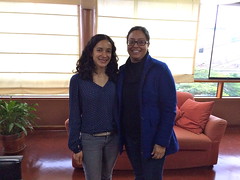

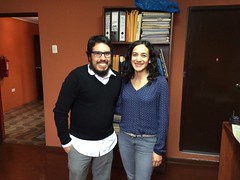


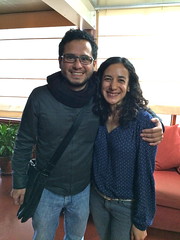

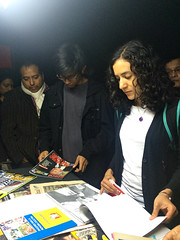
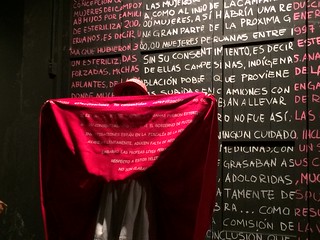
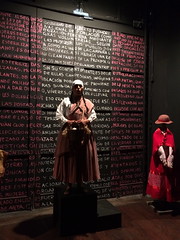
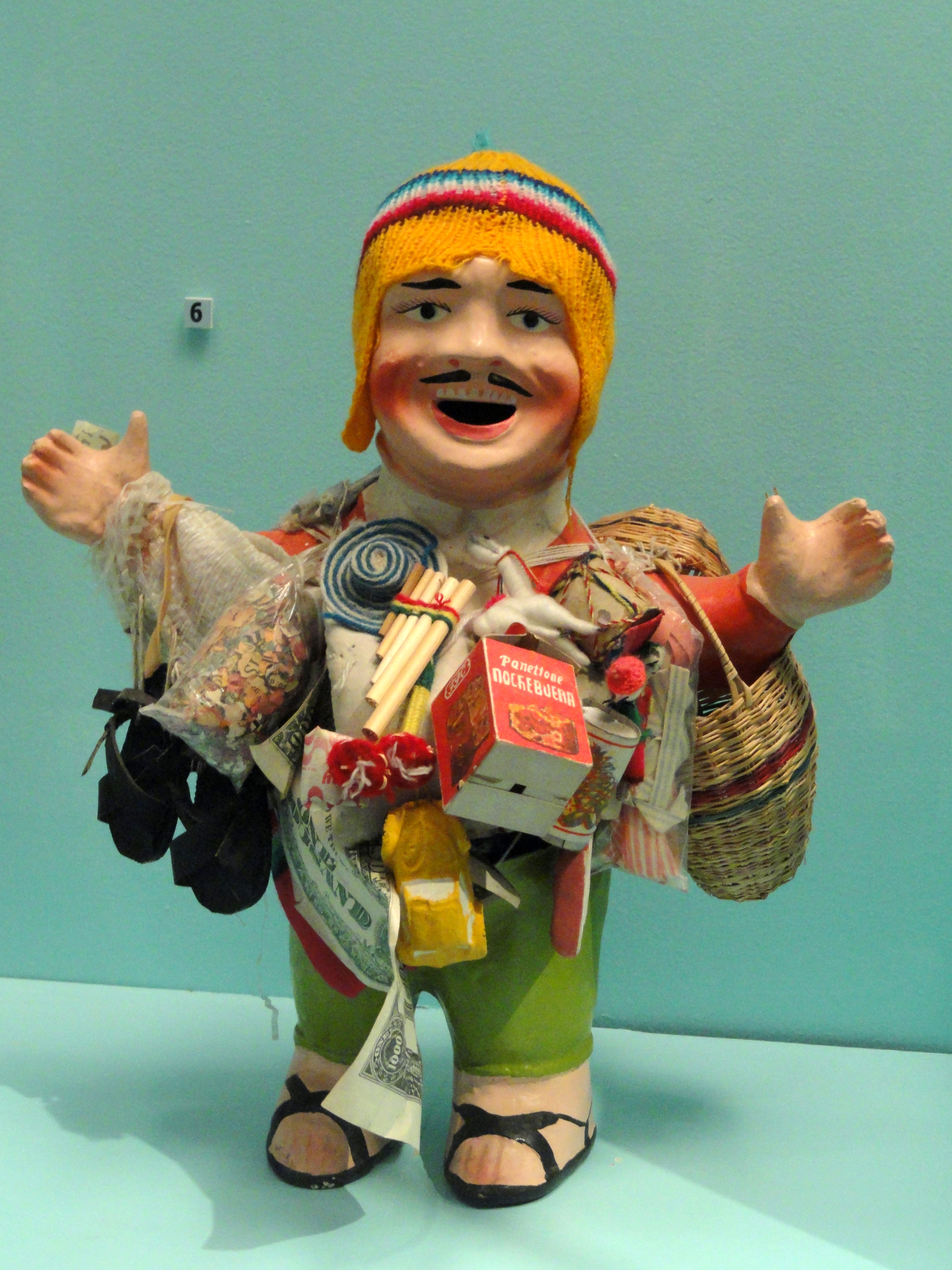
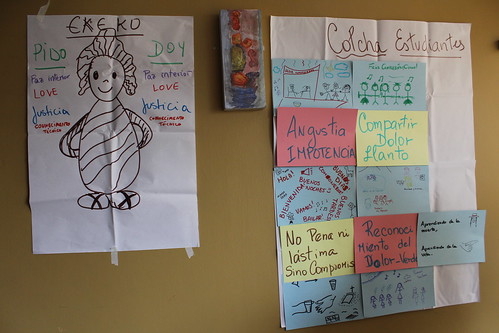
 <\/a> Ekeko. Photo: Wikimedia Commons.<\/em><\/p>\r\n
 <\/a> On the last day of the field school, we put together a \”quilt\” reflecting our most gratifying experiences, most difficult moments, and the most important things we learned.\r\n<\/em>We also built our own Ekeko.<\/em><\/p>“}]}[/content-builder]
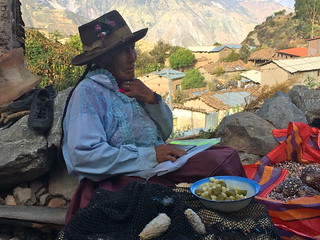


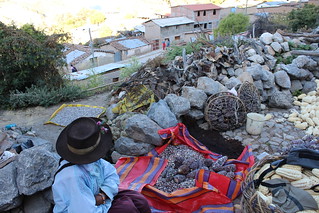

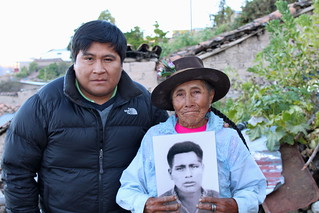
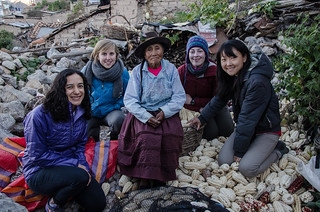
 <\/a>Mrs. Benedicta holding the bag where she keeps\u00a0the photograph of her husband\r\nand the EPAF book.<\/em><\/p>\r\n
 <\/a>\r\n
 <\/a>We take a break from the interview to help Mrs. Benedicta\r\nde-kernel some of the corn from her latest harvest.<\/em><\/p>\r\n
 <\/a>\r\n
 <\/a>Percy recently visited Mrs. Benedicta\u2019s son in Lima.\r\n<\/em>He shows Mrs. Benedicta photographs he took of her son and granddaughter.<\/em><\/p>\r\n
 <\/a>Percy from EPAF and Mrs. Benedicta. <\/em>\r\nMrs. Benedicta holds the picture of her disappeared husband,\u00a0Bernardo Ipurri Tacsi.<\/em><\/p>\r\n
 <\/a>At the end of our interview with Mrs. Benedicta (Photo by Percy Rojas, EPAF).<\/em><\/p>\r\n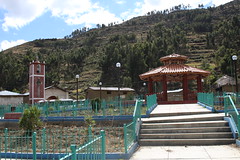
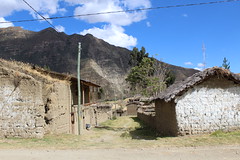

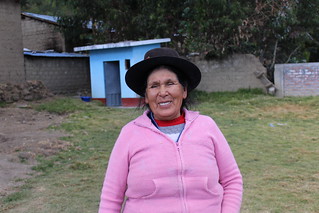

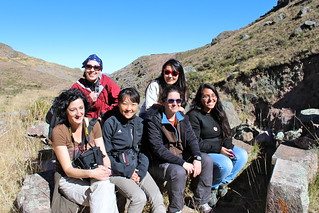
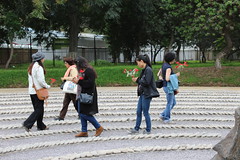
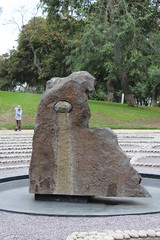
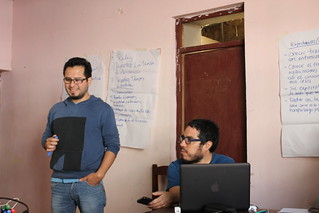

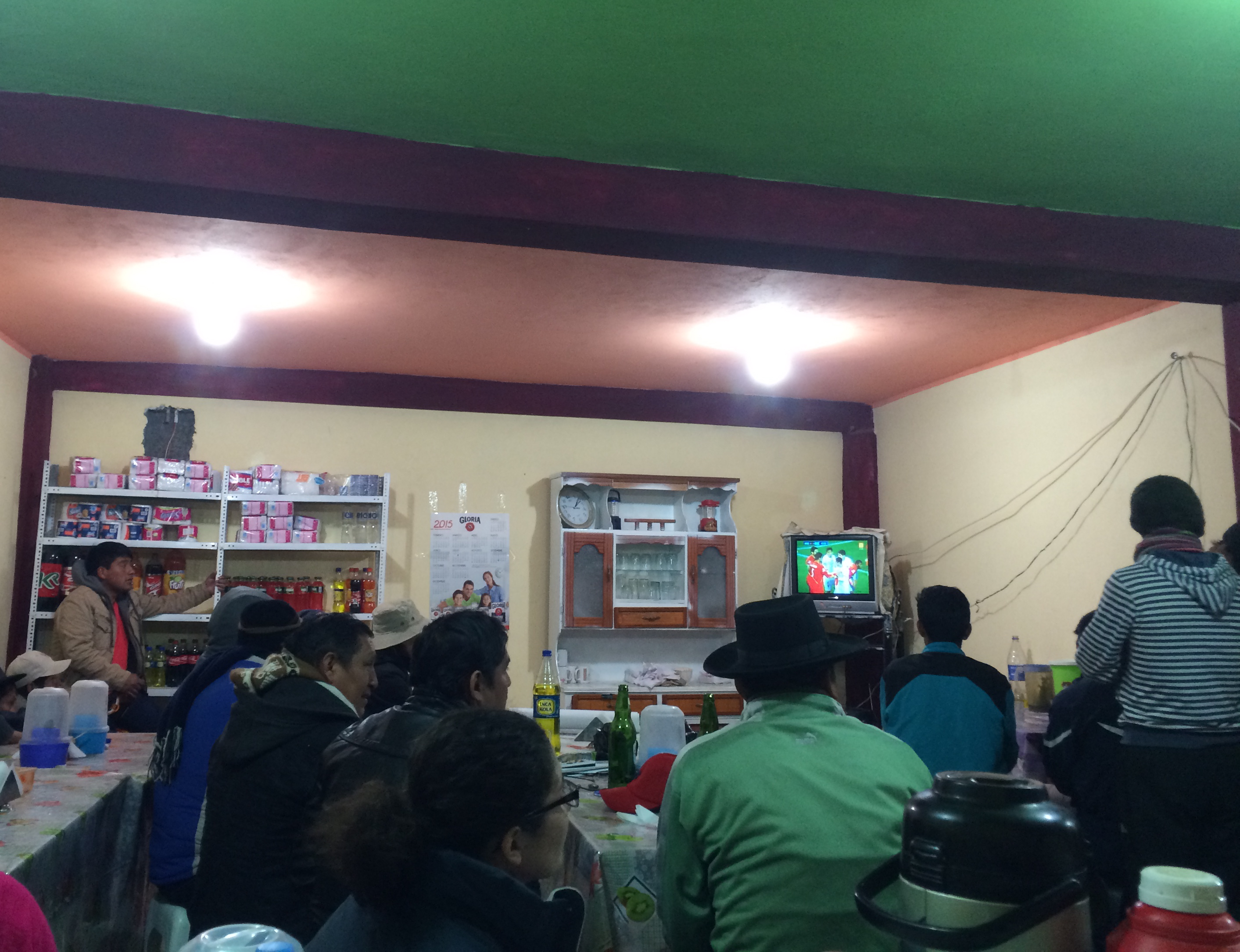
 <\/a> A very intelligent group of women: students of the EPAF Peru Field School 2015.<\/em><\/span><\/p>\n
 <\/a>
<\/a> <\/a>Students visited \u201cEl Ojo que Llora\u201d in Lima. \”The Eye that Cries\u201d has been a subject of controversy due to the decision to include only the names of \u201cinnocent\” victims. After several acts of vandalism committed against it, the memorial is now closed to the public most of the time. Peruvian NGOs have taken responsibility for visitors and for the upkeep of the memorial.<\/em><\/span><\/p>\n
 <\/a> Jesus and Franco presented lectures on memory and forensic investigations respectively.<\/em><\/span><\/p>\n
 <\/a> Bringing EPAF and field school students together: Raul led games and exercises to energize the group and show lessons learned from his work with the local communities.<\/em><\/span><\/p>
 <\/a>\n<\/span><\/p>
 <\/a> Percy editing his Bagua video.<\/em><\/p>\r\n

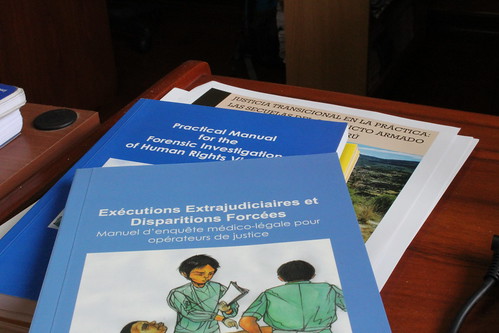
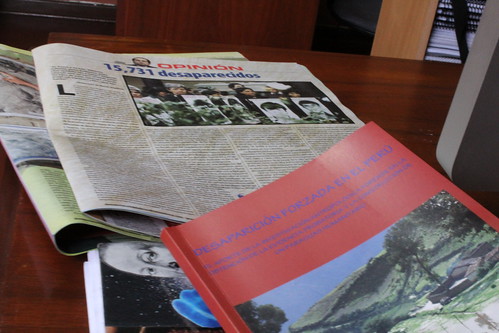
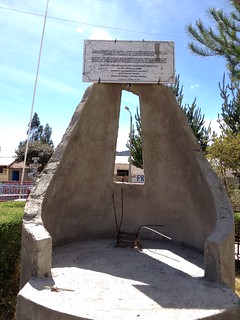
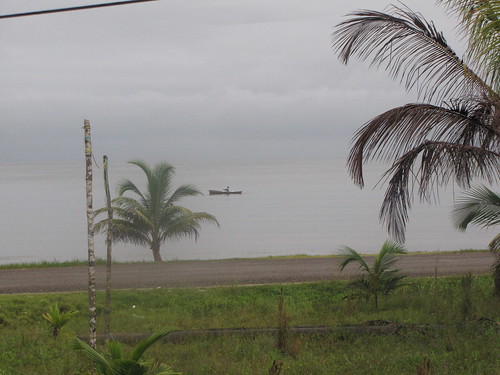

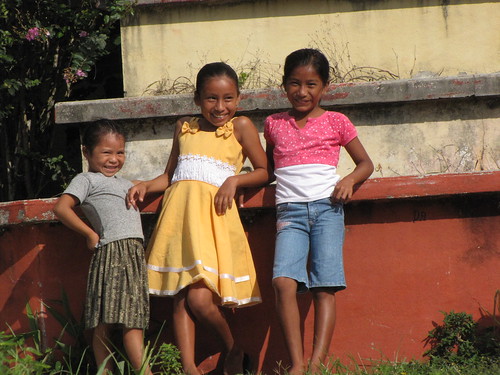
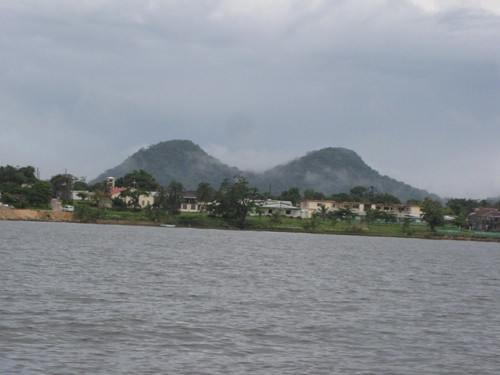
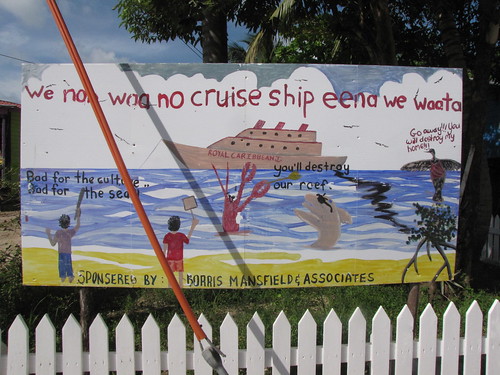
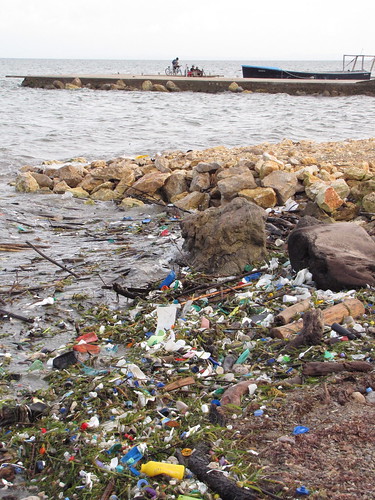
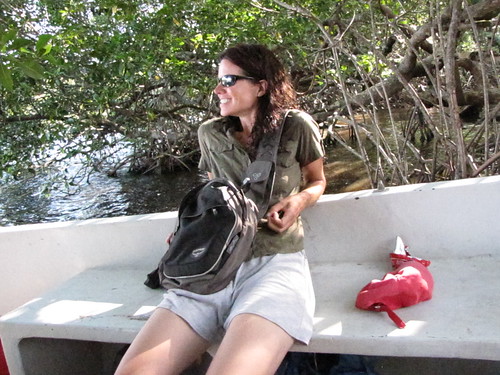
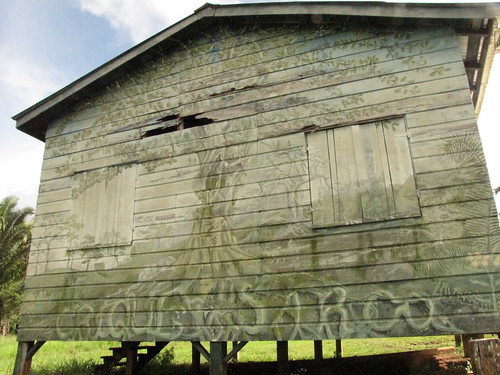
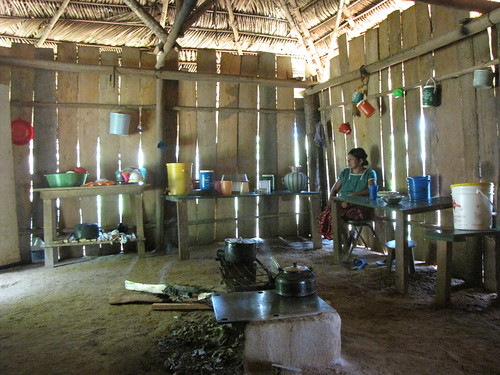
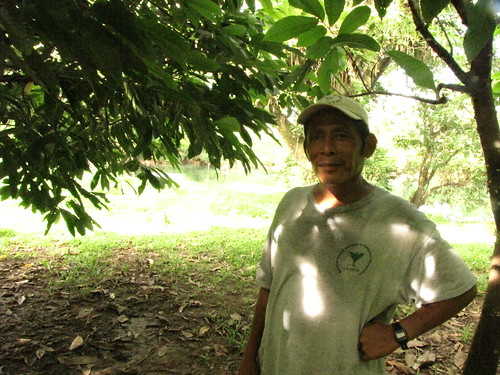
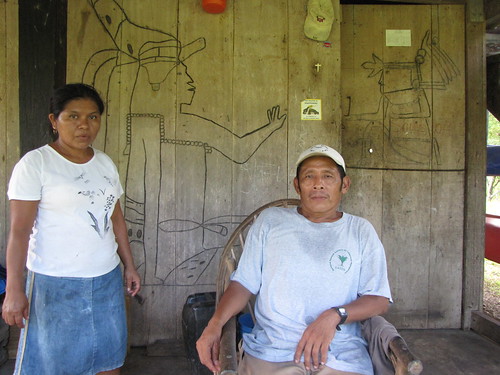
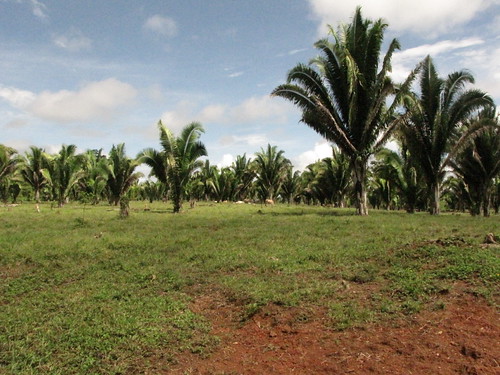
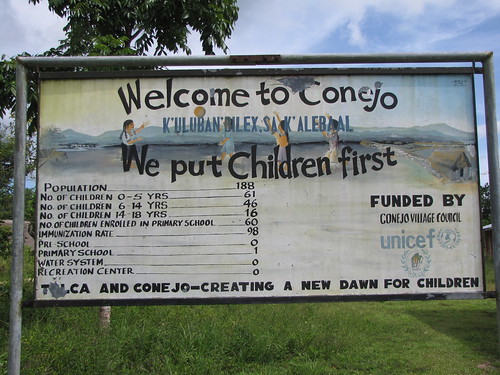
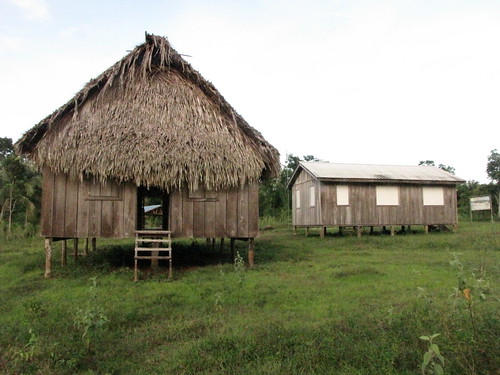
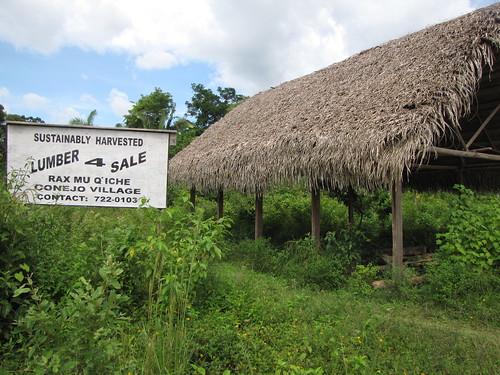
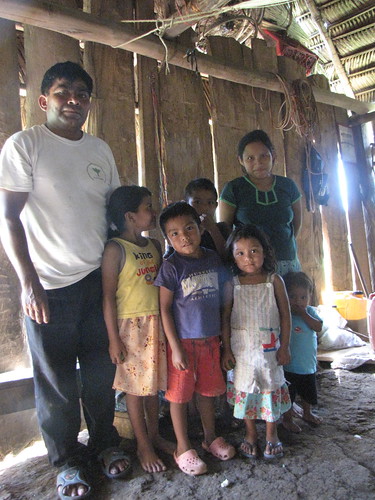
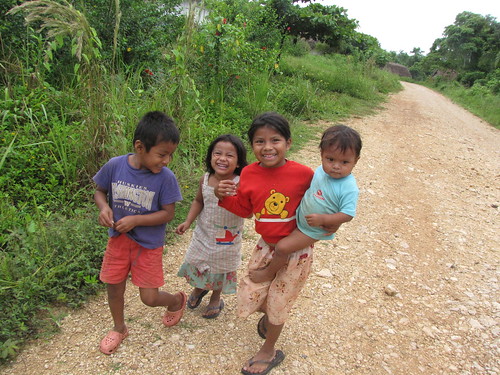








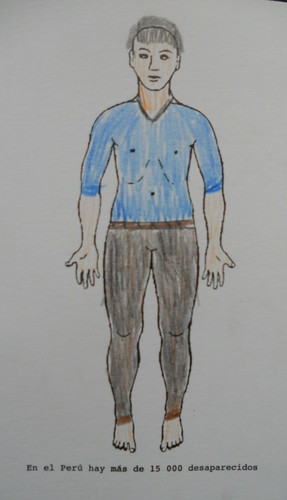
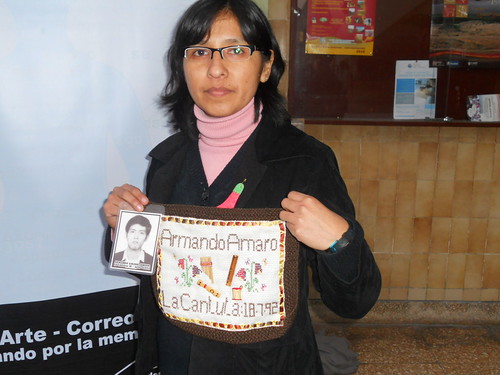


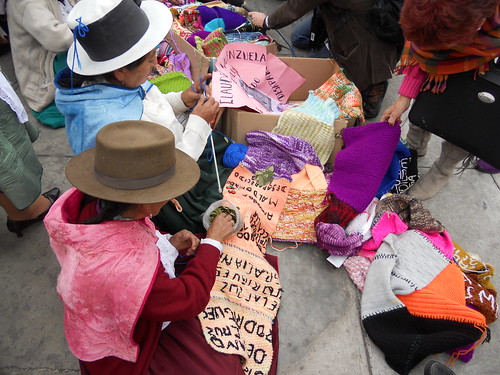


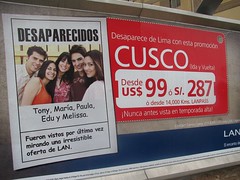
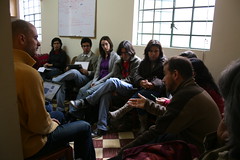
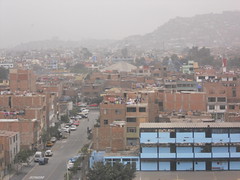
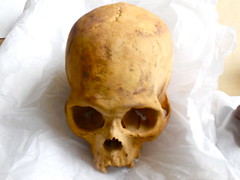
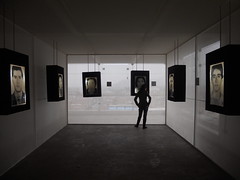
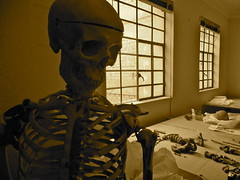



 During patrol for the Colombian military, James took a step which would alter his life forever; onto a mine so deafening he could only hear a high pitched peal. As the smoke cleared, James looked down at the splintered bone and mangled muscle of his right leg. In disbelief, James began to laugh.

 Arcesio sat wringing his hands while alternating between strained smiles and somber looks as I interviewed him. He and his cheerful wife were very kind to meet me at Fundación ArcÁngeles. Bogotá’s traffic and shear size can make trips across the city take an hour or more during rush hour.
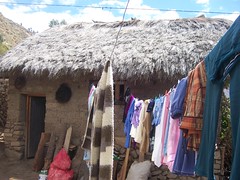
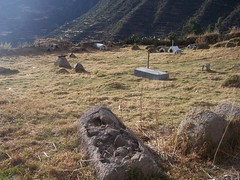


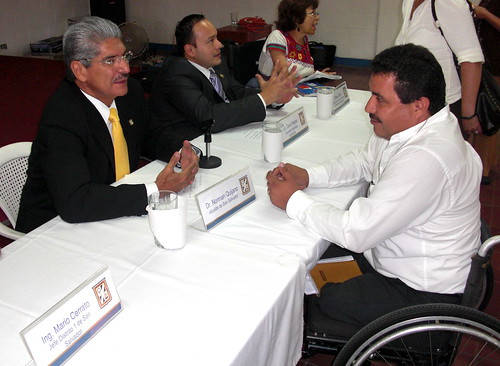


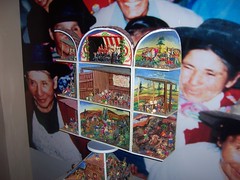

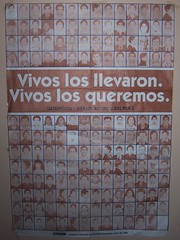


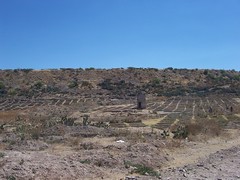

 Marina was half an hour away from being forcefully recruited to the FARC (Revolutionary Armed Forces of Colombia) guerrilla group. Female guerrillas had told her their commander wanted Marina to “work” with him. “Work” in this regard meant helping plan operations and serving as his personal escort. Marina fled to Medellín, just minutes before the female guerrillas returned to take her away, and found herself taken in by nuns in a convent. With help from the nuns, she found work at a daycare and went to school at night and on the weekends, eventually receiving her high school diploma.
 know the whereabouts of her missing son. MacGiver (right), a soft spoken of small frame, stated her son’s fate. “Your son is dead, señora,” he replied. After years without answers, she was no longer compelled to search. Although grief took the place of desparate anticipation, she had an answer.
 Don Diego feels remorse for his time as a paramilitary. He was in the autodefensas (self-defense forces) for almost four years, only a few months of which entailed an actual combat position. Don Diego was (and still is) close with a paramilitary commander named MacGiver (pronounced, mock-gee-bear), whose autodefensas career began in 1988 after the murder of his brother by the ELN guerrilla group.